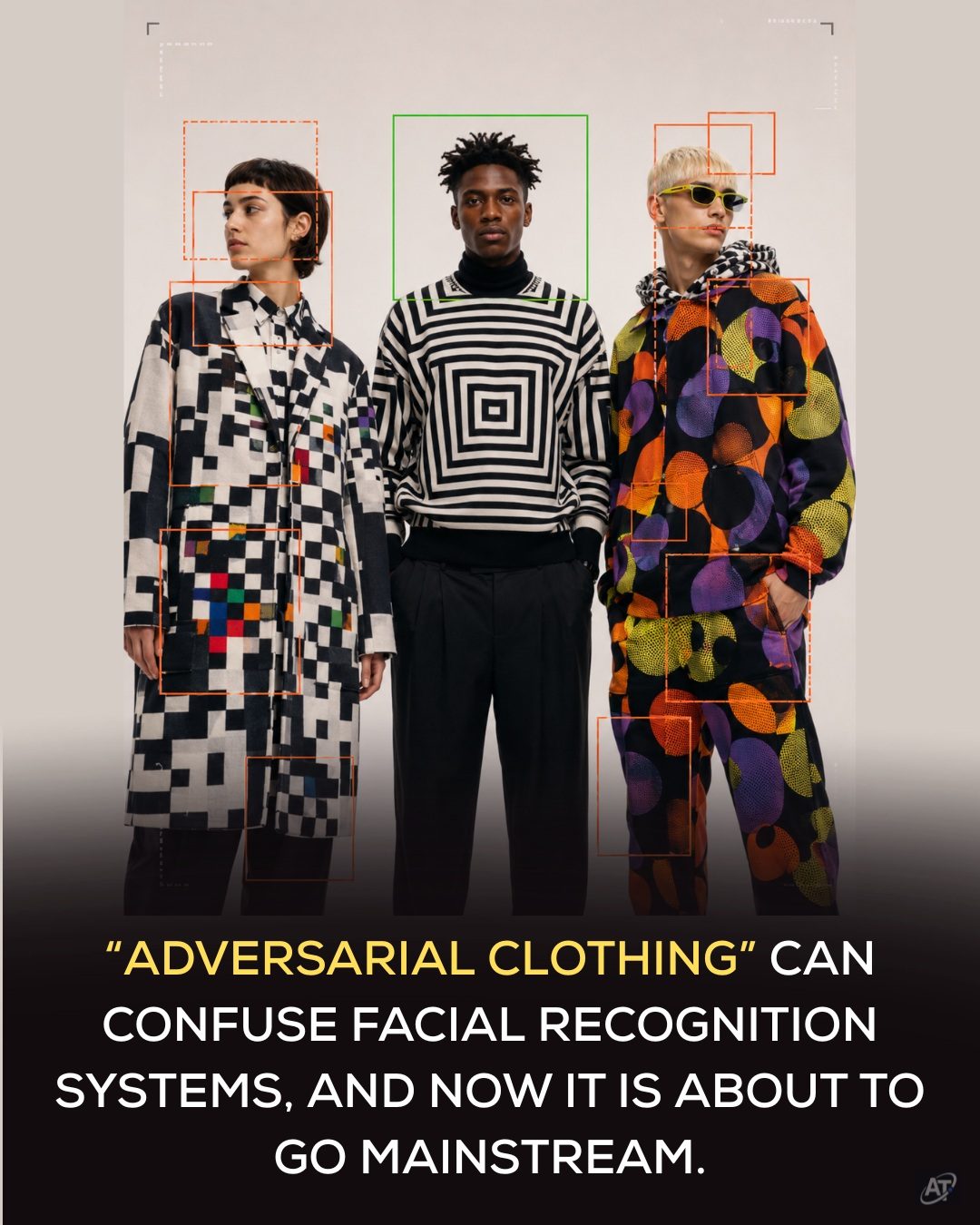
Adversarial clothing is an innovative concept blending fashion with privacy technology. This clothing is specifically designed to challenge face recognition systems. As AI-assisted cameras become increasingly capable of tracking people, designers are exploring ways to disrupt these systems using patterned garments.
AI-Driven Surveillance
AI-driven facial recognition systems are prevalent in various settings, from retail stores to public spaces. They can identify individuals and track their movements across different locations. Such systems rely on algorithms that analyze facial features to recognize and track people. This technology has raised significant privacy concerns, driving the need for solutions that can disrupt these systems.
What is Adversarial Clothing?
Adversarial clothing is designed to confuse facial recognition systems by using specific patterns, colors, and materials. These designs exploit the vulnerabilities in some computer vision systems, potentially causing them to fail or misidentify the wearer. The clothing can feature:
- Complex geometric patterns
- Repeated faces or shapes
- Unusual color combinations
- Infrared-reflective materials
This clothing is created to appear ordinary to the human eye but contains deliberate elements that disrupt AI algorithms.
The concept of adversarial clothing is grounded in the real-world applications of computer vision technology. Researchers have already demonstrated garments that can reduce the accuracy of person-detection models. For example, specially designed shirts and full-body textures have shown to be effective against certain detection models under controlled conditions. These garments are tested in environments that simulate real-world use cases, including mixed lighting and different camera angles.
How Does Adversarial Clothing Work?
Adversarial clothing exploits the weaknesses in AI algorithms by presenting confusing visual information. Here's a breakdown of how it functions:
Patterns and Colors
Patterns and colors play a crucial role in disrupting algorithms. Complex geometric designs can confuse facial recognition systems by making it difficult for the algorithm to identify distinct facial features. Similarly, unusual color combinations can disrupt the detection process, making it harder for the system to recognize the wearer.
Infrared-Reflective Materials
Some adversarial clothing uses infrared-reflective materials, which can interfere with thermal cameras. These materials can reflect infrared light in unpredictable ways, causing the system to misinterpret the data. This is particularly effective in environments where thermal cameras are used in combination with ordinary cameras.
Lighting and Camera Angles
The effectiveness of adversarial clothing can vary depending on the lighting conditions and camera angles. For example, a design that works well in bright daylight may not be as effective in low light. Similarly, a garment that disrupts detection from one angle might fail when viewed from a different perspective. This variability means that success with adversarial clothing is highly dependent on the specific conditions of its use.
Real-World Applications and Limitations
Adversarial clothing is still in the experimental phase, and its real-world applications are limited. While some designs have shown promise in controlled settings, their effectiveness in actual surveillance scenarios is less clear. These garments are not digital invisibility cloaks; they don't make the wearer completely undetectable. Instead, they aim to disrupt the accuracy of facial recognition systems, making it more difficult for them to identify individuals.
The Future of Adversarial Clothing
As AI technology continues to advance, so does the need for privacy solutions. Adversarial clothing represents an emerging intersection of fashion, technology, and political protest. The bold designs not only serve a practical purpose but also make a statement about the ethical implications of facial recognition technology. By wearing such garments, individuals can assert their right to privacy and challenge the pervasive use of surveillance systems.
Practical Tips for Wearing Adversarial Clothing
If you're interested in experimenting with adversarial clothing, here are some practical tips to consider:
Choose the Right Design
Select a garment that features complex patterns and bright colors. Look for designs that are visually appealing but also have the elements that can disrupt facial recognition algorithms.
Understand the Limitations
Be aware that adversarial clothing is not foolproof. It may not work in all situations, and its effectiveness can vary based on environmental factors. Don't rely solely on these garments for privacy protection.
Combine with Other Privacy Tools
Adversarial clothing can be part of a broader strategy to protect your privacy. Combine it with other tools like privacy apps, physical barriers, and careful behavior to enhance your privacy.
Stay Informed
Keep up with the latest developments in adversarial clothing and facial recognition technology. As the technology evolves, new designs and methods may emerge, offering better protection.
Important Takeaways
Adversarial clothing offers a unique approach to challenging AI-driven surveillance systems. By exploiting weaknesses in facial recognition algorithms, these garments can disrupt identification and tracking processes. However, their effectiveness is not guaranteed, and their performance can be influenced by various factors.
- Complex patterns and colors are key to disrupting facial recognition systems.
- Infrared-reflective materials can interfere with thermal cameras.
- Real-world effectiveness can vary based on lighting, camera angles, and specific conditions.
- Combine adversarial clothing with other privacy tools for better protection.
Conclusion
Adversarial clothing represents a creative and practical response to the increasing use of AI-assisted surveillance. As designers continue to experiment with new patterns and materials, these garments have the potential to become more effective and mainstream. Whether you're looking to make a fashion statement or protect your privacy, adversarial clothing offers an innovative solution that blends style with technology. The future of this emerging field will likely be shaped by ongoing research and real-world applications, making it an exciting area to watch.
Watch the Reel
Questions readers ask
What exactly is adversarial clothing and how does it work?
Adversarial clothing is a type of garment designed with specific patterns that disrupt AI facial recognition systems. These patterns, often incorporating intricate designs and unique textures, interfere with the algorithms that analyze facial features, making it difficult for cameras to accurately identify or track the wearer.
Can adversarial clothing be integrated into everyday fashion?
Yes, adversarial clothing is designed to blend style with functionality. These garments come in various styles, from scarves and shirts to dresses, allowing wearers to maintain their fashion sense while enjoying enhanced privacy. Many designers focus on creating fashionable pieces that can be easily incorporated into everyday wear.
Are there specific patterns that are more effective in disrupting facial recognition systems?
While the exact patterns can vary, designs that incorporate high-contrast elements, complex geometric shapes, and asymmetric patterns are often more effective. These features confuse the algorithms used in facial recognition, making it harder for the systems to process and identify faces accurately.
Is adversarial clothing only effective against certain types of facial recognition systems?
Adversarial clothing is designed to disrupt a wide range of AI-driven facial recognition systems, which operate by analyzing facial features. Because these systems rely on similar algorithms, the unique patterns on adversarial clothing can interfere with their ability to recognize and track faces, regardless of the specific technology being used.
Can adversarial fashion patterns be applied to accessories as well?
Yes, adversarial fashion patterns can be applied to a variety of accessories, including hats, scarves, and even masks. These accessories can provide additional layers of privacy by further confusing facial recognition systems, complementing the clothing in helping the wearer maintain anonymity in public spaces.
Related deep dives
Similar reads based on topic and creator.


Recent articles
Fresh deep dives from the latest Reels we unpacked.




Comments
Be the first to comment.