Acne and Body Location: Understanding the Connection
Acne, a common skin condition, can manifest in various locations on the body, each potentially indicating different underlying factors. While acne is influenced by a multitude of variables, including hormones, genetics, and overall health, the location of acne outbreaks can sometimes provide insights into specific lifestyle or skincare issues.
Context: Why This Matters
Understanding the connection between acne location and potential triggers can help individuals make targeted adjustments to their routines. This knowledge can empower people to address specific issues that may be contributing to their acne, leading to clearer, healthier skin.
Main Discussion
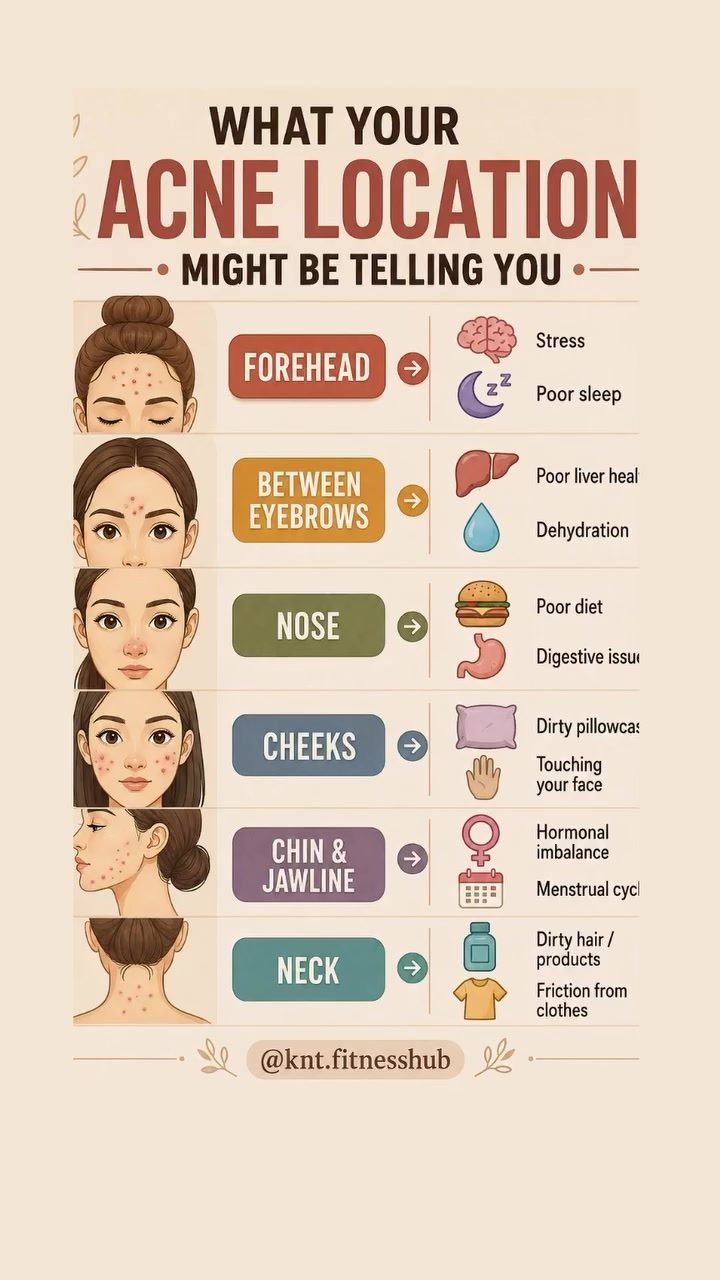
Acne can appear on different parts of the face and body, and the location can offer clues about what might be causing it. Here’s a breakdown of what your acne location might be telling you:
Forehead Acne
Acne on the forehead is often linked to stress or poor sleep. When you're under stress, your body produces more cortisol, a hormone that can stimulate oil glands and lead to acne. Similarly, inadequate sleep can disrupt your body's natural repair processes, making it harder for your skin to heal. Ensuring you get enough rest and managing stress levels can help reduce forehead acne.
Between the Eyebrows
Acne between the eyebrows can indicate dehydration or other health factors, such as poor liver health. The skin in this area is sensitive and can be affected by internal imbalances. Staying hydrated and maintaining a healthy diet can help alleviate this type of acne. If the issue persists, it might be worth consulting a healthcare provider to rule out any underlying health conditions.
Nose Acne
Acne on the nose is often related to dietary and digestive issues. Foods high in sugar, refined carbohydrates, and dairy can exacerbate acne by increasing inflammation and oil production. Maintaining a balanced diet rich in fruits, vegetables, and lean proteins can help keep your skin clear. Additionally, digestive issues can contribute to acne, so addressing any gastrointestinal problems can also be beneficial.
Cheek Acne
Cheek acne is commonly caused by dirty pillowcases or frequent face-touching. Bacteria and oils from your hands and pillowcases can transfer to your face, clogging pores and leading to breakouts. Regularly washing your pillowcases and avoiding touching your face can help prevent cheek acne.
Chin and Jawline Acne
Acne along the chin and jawline is often linked to hormonal changes, particularly those associated with the menstrual cycle. Fluctuations in hormone levels can increase oil production and lead to breakouts. Maintaining a gentle skincare routine and consulting a dermatologist for personalized advice can help manage this type of acne, especially during times of hormonal fluctuation.
Neck Acne
Acne on the neck can be caused by dirty hair products or friction from clothing. Hair products, especially those containing oils and silicones, can clog pores and lead to breakouts. Additionally, tight clothing or friction from collars can irritate the skin and contribute to acne. Keeping your hair and neck clean and wearing loose-fitting clothing can help prevent neck acne.
Practical Tips
Addressing acne requires a holistic approach that combines good skincare habits and a healthy lifestyle. Here are some practical tips to help you manage acne based on its location:
- Sleep and Stress Management: Prioritize getting enough sleep and find healthy ways to manage stress, such as meditation, exercise, or journaling.
- Stay Hydrated: Drink plenty of water throughout the day to keep your skin hydrated and support overall health.
- Balanced Diet: Consume a diet rich in fruits, vegetables, and lean proteins, and limit your intake of sugary and processed foods.
- Clean Pillowcases: Wash your pillowcases regularly to remove bacteria and oils that can clog your pores.
- Avoid Touching Your Face: Keep your hands away from your face to minimize the transfer of bacteria and oils.
- Gentle Skincare Routine: Follow a gentle skincare routine that includes cleansing, moisturizing, and using non-comedogenic products.
- Hair and Neck Care: Keep your hair and neck clean, and opt for loose-fitting clothing to reduce friction and irritation.
Important Takeaways
- Acne Location Can Provide Clues: The location of your acne can offer insights into specific lifestyle or skincare factors that may be contributing to breakouts.
- Holistic Approach: Addressing acne requires a combination of good skincare habits, a healthy lifestyle, and, in some cases, consulting a dermatologist for personalized advice.
- Consult a Professional: If your acne is severe, painful, or persistent, it's best to consult a dermatologist for personalized advice and treatment options.
Conclusion
While the location of your acne can provide valuable insights into potential triggers, it's important to remember that acne is a complex condition influenced by many factors. By understanding the connection between acne location and underlying causes, you can take targeted steps to address specific issues and support healthier skin. Maintaining a holistic approach that combines good skincare habits, a healthy lifestyle, and professional advice when needed can help you achieve clearer, healthier skin.
Watch the Reel
Questions readers ask
Why does acne appear in different locations on the face and body?
Acne can manifest in various locations due to different factors influencing the skin. These factors include hormonal fluctuations, genetic predispositions, and specific lifestyle habits. Each location can be tied to different underlying issues, making it essential to understand the connections in order to address the triggers effectively.
What does acne on the forehead typically indicate?
Acne on the forehead can often be linked to digestive issues or diet. Foods that are high in sugar or processed ingredients can trigger breakouts, especially in this area. Additionally, forehead acne can be influenced by hair products or stress, as the forehead is a common site for stress-related acne.
How can stress affect the location of acne outbreaks?
Stress can trigger acne outbreaks, particularly on the forehead and between the eyebrows. This is because stress hormones, such as cortisol, can stimulate oil production and inflammation, leading to breakouts in these areas. Managing stress through relaxation techniques, exercise, and adequate sleep can help mitigate these effects.
What role does diet play in acne location and triggers?
Diet can significantly impact acne location and triggers. Foods with a high glycemic index, such as sugars and refined carbohydrates, can cause acne in the T-zone, which includes the forehead, nose, and chin. Conversely, a balanced diet rich in fruits, vegetables, and lean proteins can help reduce inflammation and improve overall skin health.
Why is acne between the eyebrows a concern, and what might it indicate?
Acne between the eyebrows, often referred to as the 'glutamate zone,' can indicate issues with the liver or digestive system. This area is closely linked to the liver's detoxification processes, and poor liver health can lead to acne breakouts. Improving digestive health and reducing toxins in the diet can help alleviate this issue.
Related deep dives
Similar reads based on topic and creator.

Recent articles
Fresh deep dives from the latest Reels we unpacked.




Comments
Be the first to comment.