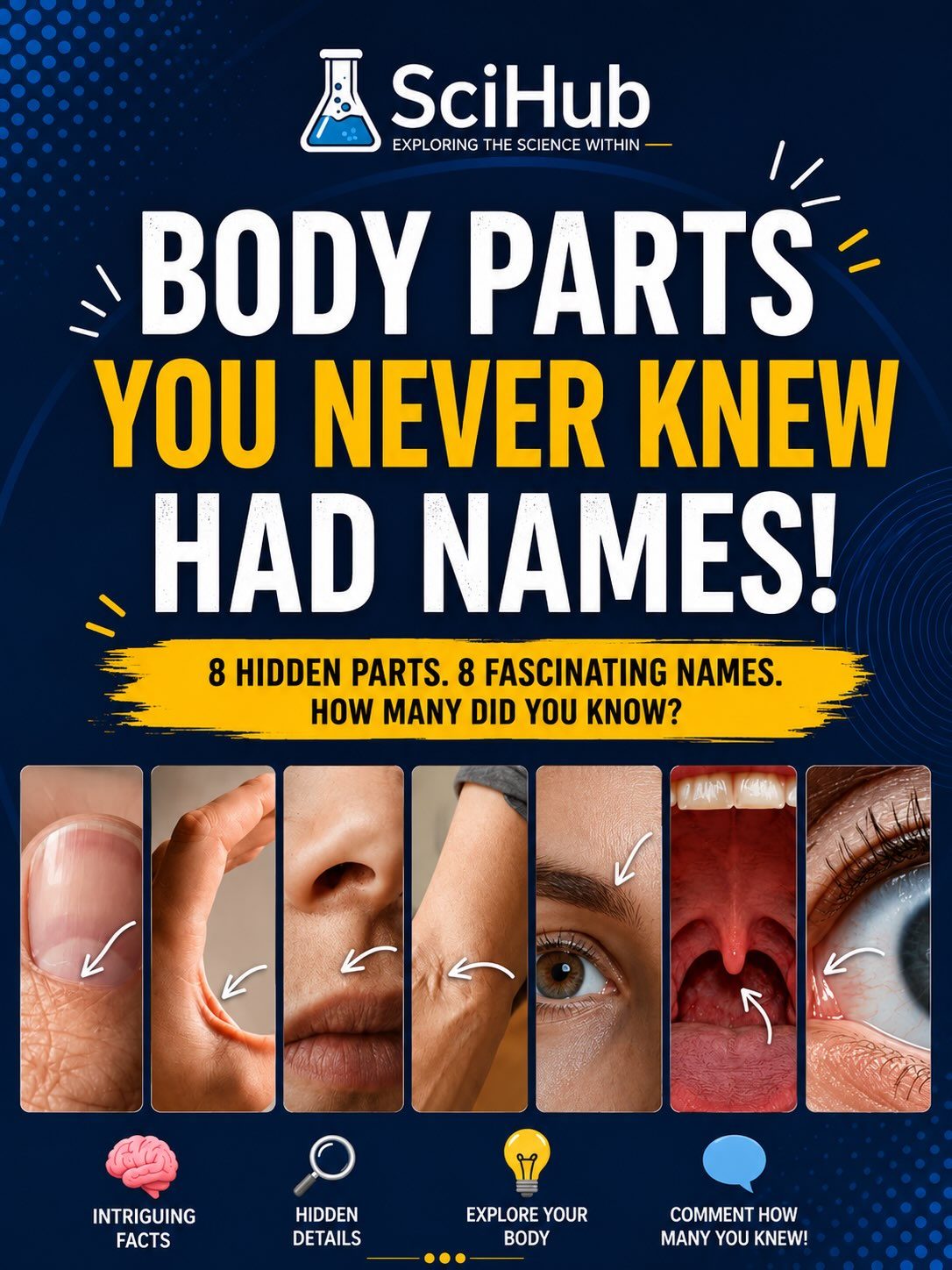
Hidden Body Parts and Their Fascinating Functions
The human body is a marvel of complexity, with many parts that go unnoticed in everyday life. From the subtle groove between your nose and upper lip to the smooth area between your eyebrows, these often-overlooked structures play crucial roles in our daily functions. Let's delve into some of these hidden body parts, their names, and the roles they play in our anatomy.
Context / Why this matters
Understanding the names and functions of these lesser-known body parts can deepen your appreciation for the intricacies of the human body. Whether you're curious about the science behind everyday functions or simply want to impress friends with your knowledge of anatomy, knowing these parts can be both fascinating and useful.
Main discussion
The Philtrum: More Than a Facial Landmark
Located between the upper lip and the nose, the philtrum is a small groove that may seem insignificant at first glance. However, this tiny structure plays a significant role in both speech and facial expressions. The philtrum aids in the formation of certain sounds, supports the movements involved in smiling and frowning, and even helps maintain the structure and moisture of the face. Interestingly, every person's philtrum is unique, much like a fingerprint, adding a personalized touch to this often-overlooked feature.
The Glabella: Protecting and Expressing
The glabella refers to the smooth area between the eyebrows. This region is rich in nerves and plays a crucial role in protecting underlying nerves and blood vessels. It also aids in various facial expressions, making it an integral part of nonverbal communication. Additionally, the glabella is one of the first areas to show signs of stress and aging, making it a telltale indicator of overall well-being and emotional state.
The Lunula: The Base of Healthy Nail Growth
The lunula is the tiny white half-moon shape at the base of your nail. This part of the nail matrix is responsible for producing new nail cells. While its size and visibility can vary from person to person, the lunula is essential for healthy nail growth and integrity. Observing the lunula's health can also provide insights into overall nail health and potential underlying issues.
The Purlicue: Precision in Hand Movement
The purlicue is the web of skin between your thumb and index finger. This area is often underestimated but is crucial for the precision and dexterity of hand movements. It helps your hand grip, stretch, and move with incredible precision, making everyday tasks like writing, holding a cup, or opening a bottle much easier. The purlicue's ability to support these movements is a testament to the body's remarkable design for functionality and efficiency.
The Cubital Fossa: A Hub for Vital Vessels and Nerves
The cubital fossa is the hollow area inside your elbow. This region is home to important blood vessels and nerves, which is why it is commonly used by healthcare professionals for procedures like blood draws and IV insertions. Its strategic location makes it an essential part of the body's vascular and nervous systems, facilitating various medical interventions and diagnostic procedures.
Practical tips
-
Explore Your Body: Take a moment to observe and appreciate the intricate structures of your body. Understanding these parts can enhance your overall awareness of your physical well-being.
-
Observe the Lunula: Check the health of your lunula for insights into your nail and overall health. This can help you spot any potential issues early on.
-
Pinch the Purlicue: Experiment with gently pinching the purlicue and notice the precision and control it provides. This can help you appreciate the intricate design of your hand movements.
-
Focus on Facial Expressions: Pay attention to the role of the philtrum and glabella in facial expressions. This can enhance your nonverbal communication skills and awareness of emotional cues.
-
Recognize the Cubital Fossa: Understand the significance of the cubital fossa in medical procedures. This knowledge can alleviate anxiety and provide a clearer understanding of medical interventions.
Important takeaways
Understanding the lesser-known structures of the human body can provide a deeper appreciation for the complexity and functionality of our anatomy. The names and roles of these parts, such as the philtrum, glabella, lunula, purlicue, and cubital fossa, reveal the intricate design of the body and its remarkable abilities. By exploring and recognizing these parts, you can gain a greater understanding of your physical well-being and the functions that support daily life.
Conclusion
The human body is a testament to the marvels of anatomy and physiology. From the philtrum to the glabella, and from the lunula to the purlicue and cubital fossa, these often-overlooked parts play crucial roles in our daily functions. By exploring and understanding these hidden body parts, you can enhance your appreciation for the intricate design of the human body and the remarkable abilities it possesses.
Watch the Reel
Questions readers ask
What is the philtrum and what is its function in facial expressions?
The philtrum is the vertical groove in the middle area of the upper lip, just below the nose. Its function is to separate the right and left sides of the upper lip and it plays an important role in speech and facial expressions. It helps to guide the movement of the facial muscles during facial expressions, such as smiling or pouting.
Where is the glabella located and what is its significance?
The glabella is the smooth area between the eyebrows, just above the nose. It is significant because it houses important muscles and nerves. The glabella has two main muscles, the corrugator and the procerus, that play a key role in facial expressions, such as frowning.
What is the lunula and why is it important?
The lunula is that tiny, white, half-moon shaped area at the base of your fingernails. Despite being small, it is important because it serves as an indicator of overall health. Changes in the lunula can sometimes signal underlying health issues, such as nutrient deficiencies or circulatory problems.
What are some hidden body parts that aid in everyday movements?
Some hidden body parts that aid in everyday movements include the pterygoid muscles, which help with chewing, and the transversus abdominis, which supports the torso and aids in movements like lifting and turning. These muscles work behind the scenes to facilitate essential tasks.
What is the purpose of the mentum in the human anatomy?
The mentum, also known as the chin, serves several purposes in human anatomy. It houses the mental protuberance, which is the bony structure that gives the chin its shape. The mentum also plays a role in supporting the lower teeth and in the mechanics of speech and eating.
Are there any hidden body parts that help in speech?
Yes, there are several hidden body parts that aid in speech. For example, the uvula, which is the small, fleshy piece of tissue that hangs down at the back of the throat, helps to close off the nasal passages during swallowing and speech, preventing food and liquids from entering the nose and also aids in the production of certain sounds and speech.
What is the role of the saddle joint in the human body?
The saddle joint, also known as the carpometacarpal joint, is located at the base of the thumb. It plays a crucial role in the flexibility and movement of the thumb, enabling it to oppose the fingers and perform tasks that require fine motor skills, such as grasping, pinching, and manipulating objects.
Related deep dives
Similar reads based on topic and creator.



Recent articles
Fresh deep dives from the latest Reels we unpacked.




Comments
Be the first to comment.