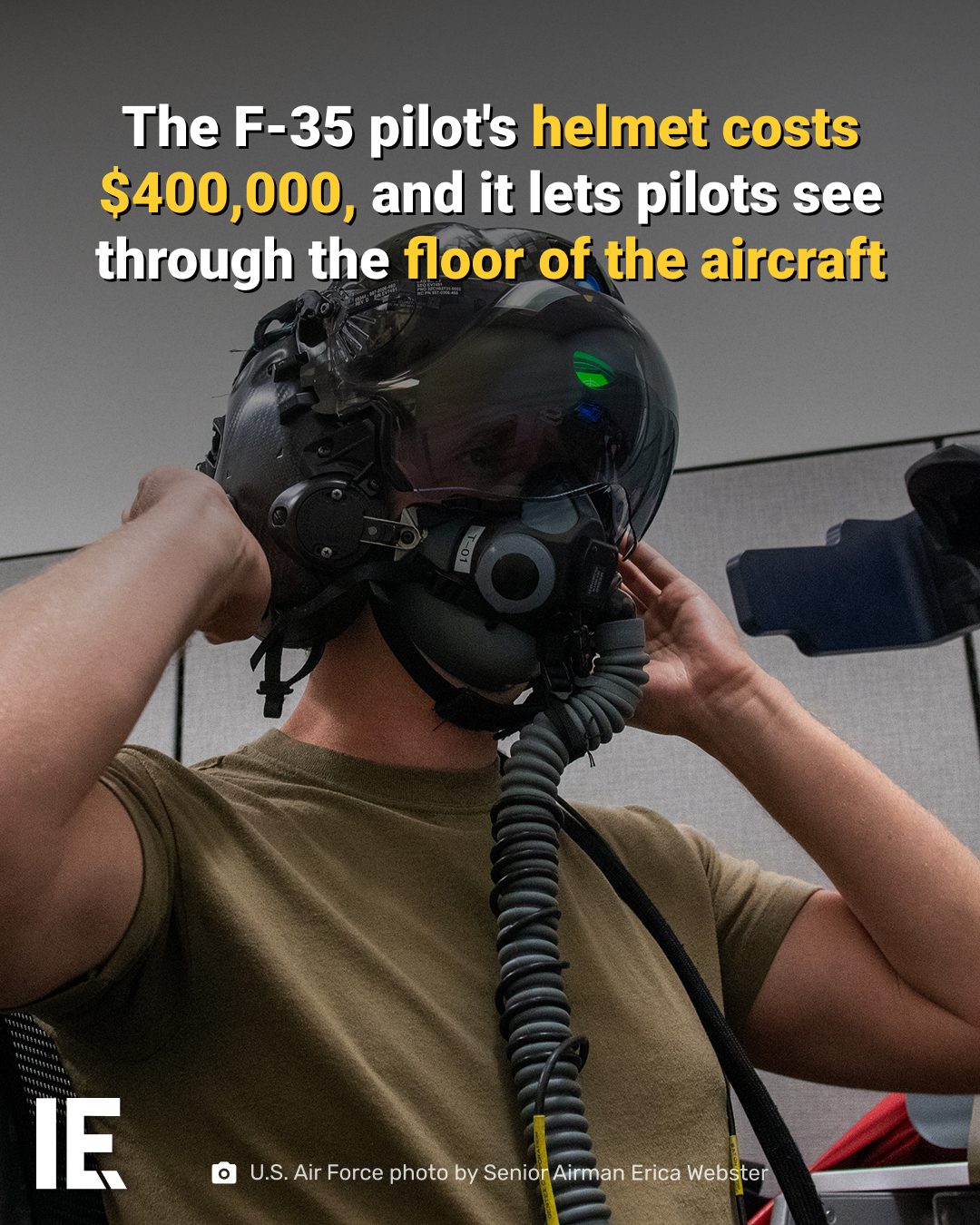
F-35 Pilot Helmet: The Ultimate in Military Wears
The helmet worn by F-35 pilots is a marvel of modern military technology, with a price tag to match. At roughly $400,000 per unit, it is arguably the most sophisticated piece of wearable technology ever mass-produced for military use. This helmet integrates six cameras mounted around the aircraft's fuselage into a single seamless feed, allowing pilots to look down and effectively see through the floor of the jet. This gives them a 360-degree view of their surroundings, projected directly onto the visor. In addition to this, the helmet displays crucial information such as targeting data, night vision, flight parameters, and threat warnings, making the traditional heads-up display obsolete.
Why This Matters
The F-35 pilot helmet represents a fundamental shift in how fighter pilots interact with their aircraft. Historically, the cockpit was a static environment around the pilot, but with this helmet, the cockpit is effectively on their face. This change has profound implications for situational awareness, decision-making, and overall mission effectiveness.
Main Discussions
Advanced Features of the F-35 Pilot Helmet
The helmet's ability to integrate six cameras into a single feed is a groundbreaking feature. This means that pilots can have a comprehensive, 360-degree view of their surroundings without needing to physically turn their head or rely on multiple displays. The high-definition cameras provide a clear, uninterrupted view, enhancing the pilot's ability to monitor the environment and make critical decisions.
Integrating Critical Data
In addition to the visual feed, the helmet displays targeting data, night vision, and flight parameters. This means that pilots have all the essential information they need right in front of their eyes, eliminating the need to look down at a heads-up display or other instruments. This integration reduces the time it takes for pilots to process information and react to changing conditions, improving overall mission effectiveness.
Night Vision and Threat Warnings
The helmet's night vision capabilities allow pilots to operate effectively in low-light conditions. This is crucial for nighttime operations, where visibility can be severely limited. Additionally, the helmet displays threat warnings, providing pilots with real-time alerts to potential dangers. These features enhance the pilot's situational awareness and ability to respond to threats quickly and effectively.
Challenges and Improvements
Earlier versions of the helmet faced significant issues, including image lag and a green glow that affected visibility. These problems were resolved through years of dedicated engineering and testing, highlighting the importance of continuous improvement in military technology. The current version of the helmet has addressed these issues, providing a clear, reliable visual feed and enhanced situational awareness.
Practical Tips
For those interested in the technology behind the F-35 helmet, consider studying the following areas:
Understanding the Technology
To fully appreciate the helmet's capabilities, it is essential to understand the underlying technology. This includes the integration of multiple cameras, the use of high-resolution displays, and the seamless projection of data onto the visor. Gaining a deeper understanding of these technologies can provide valuable insights into their applications in other fields.
Training and Adaptation
For pilots transitioning to the F-35, extensive training is required to fully utilize the helmet's capabilities. This includes learning to interpret the visual feed, understanding the data displays, and adapting to the new way of interacting with the cockpit. Pilots must also be trained to respond to the helmet's alerts and warnings, ensuring they can react quickly and effectively to changing conditions.
Maintenance and Upkeep
Given the high cost and sophisticated nature of the helmet, proper maintenance and upkeep are crucial. Regular inspections and maintenance ensure that the helmet remains in optimal condition, providing reliable performance during missions. Understanding the maintenance requirements and following best practices can help extend the helmet's lifespan and maintain its effectiveness.
Important Takeaways
The F-35 pilot helmet is a cutting-edge piece of military technology that represents a significant advancement in how fighter pilots interact with their aircraft. Its ability to provide a 360-degree view, display critical data, and enhance situational awareness makes it an invaluable tool for modern warfare. However, the high cost and sophisticated nature of the helmet also require continuous improvement, extensive training, and proper maintenance to ensure optimal performance.
Conclusion
The F-35 pilot helmet is a testament to the advancements in military technology and its impact on modern warfare. Its integration of multiple cameras, display of critical data, and enhancement of situational awareness provide pilots with unparalleled capabilities. As military technology continues to evolve, the F-35 helmet serves as a blueprint for future innovations, setting new standards for wearable technology in the military.
Watch the Reel
Questions readers ask
Why is the F-35 pilot helmet so expensive?
The F-35 pilot helmet's high cost is due to its advanced features, including six integrated cameras for a 360-degree view and a visor displaying critical flight data. The materials and technology used in its construction contribute to its $400,000 price tag.
How does the F-35 helmet provide a 360-degree view?
The F-35 helmet achieves a 360-degree view by integrating six cameras mounted around the aircraft's fuselage. These cameras provide a seamless feed that is projected onto the helmet's visor, allowing pilots to see in all directions, including through the floor of the jet.
What kinds of information are displayed on the F-35 helmet's visor?
The F-35 helmet's visor displays a range of crucial information, including targeting data, night vision, flight parameters, and threat warnings. This information is vital for pilots to make informed decisions while flying.
How does the F-35 helmet enhance night vision?
The F-35 helmet incorporates night vision capabilities directly into the visor display. This allows pilots to see clearly in low-light conditions, enhancing their situational awareness and operational effectiveness, especially in nighttime missions.
Can the F-35 helmet technology be adapted for other military aircraft?
While the F-35 helmet's specific design is tailored to the F-35 aircraft, its underlying technologies—such as 360-degree view integration and heads-up displays—could potentially be adapted for other military aircraft. However, such adaptations would require significant customization and may not be directly transferable.
What makes the F-35 helmet one of the most advanced in military history?
The F-35 helmet stands out due to its integration of multiple advanced technologies, including a 360-degree view system, sophisticated heads-up display, and comprehensive data integration. These features provide pilots with unparalleled situational awareness and operational capabilities, making it one of the most advanced helmets in military history.
How does the F-35 helmet improve situational awareness for pilots?
The F-35 helmet significantly enhances situational awareness by providing a 360-degree view of the surroundings and displaying critical flight information directly on the visor. This allows pilots to maintain focus on the external environment while having immediate access to essential data, improving their decision-making and reaction times.
Related deep dives
Similar reads based on topic and creator.



Recent articles
Fresh deep dives from the latest Reels we unpacked.




Comments
Be the first to comment.