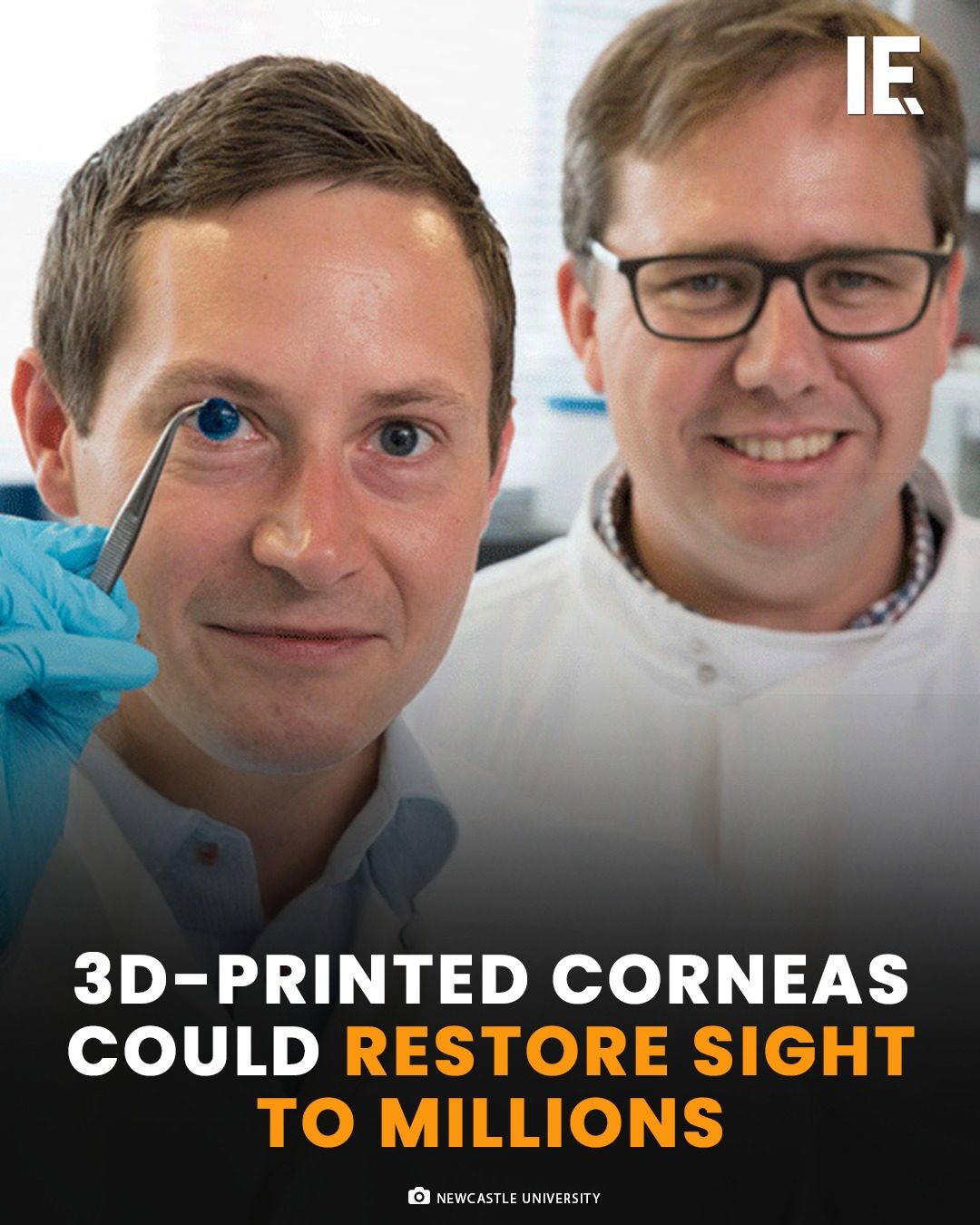
3D-Printed Corneas: Revolutionizing Vision Restoration
The world of medical technology is constantly evolving, and one of the most groundbreaking advancements in recent years is the development of 3D-printed corneas. These innovative medical devices hold the promise of restoring sight to millions of people worldwide who are awaiting corneal transplants.
Context: Why This Matters
Corneal transplantation is a common procedure for treating diseases and injuries that impair vision. Traditionally, donor corneas are used for these transplants, which can be limited in supply and may not always provide a perfect match. The advent of 3D-printed corneas could revolutionize this process by offering a more readily available and customizable solution.
The Development of 3D-Printed Corneas
In May 2018, scientists at Newcastle University achieved a significant milestone by 3D-printing the first human corneas. This groundbreaking work utilized a bio-ink made from stem cells, collagen, and alginate. The process, which takes under 10 minutes, can be tailored to each patient's specific needs, providing a more personalized approach to corneal transplants.
The Technology Behind 3D-Printed Corneas
The bio-ink used in 3D-printing corneas is a critical component. Stem cells, collagen, and alginate are combined to create a substance that can be printed in the desired shape and size. This bio-ink not only supports the structure of the cornea but also encourages cell growth, making it a viable option for transplantation.
Collagen provides the necessary structural support, while alginate acts as a gel-like substance that holds the cells in place. The stem cells, derived from the patient's own body, ensure compatibility and reduce the risk of rejection.
Main Discussion
The Printing Process
The 3D-printing process involves using a specialized printer that layers the bio-ink to form the shape of a human cornea. This method allows for precise control over the dimensions and structure of the cornea, ensuring a perfect fit for each patient. The entire process, from preparation to printing, takes less than 10 minutes, making it an efficient and practical solution for corneal transplantation.
Customization and Personalization
One of the most significant advantages of 3D-printed corneas is the ability to customize them for each patient. Traditional corneal transplants rely on donor corneas, which may not always be a perfect match. By using a 3D printer, doctors can create a cornea that is tailored to the patient's specific measurements, reducing the risk of complications and improving the overall outcome.
Potential Applications
The potential applications of 3D-printed corneas extend beyond traditional corneal transplants. They could also be used in research to study corneal diseases and develop new treatments. Additionally, 3D-printed corneas could be used in training programs for ophthalmologists, providing them with a realistic model to practice their surgical techniques.
Practical Tips
For Patients
If you are considering a corneal transplant, it is essential to discuss the option of 3D-printed corneas with your doctor. While this technology is still in its early stages, it holds great promise for the future. Ask your ophthalmologist about the latest advancements and whether 3D-printed corneas are a viable option for you.
For Medical Professionals
Staying informed about the latest developments in medical technology is crucial for providing the best care to your patients. Keep up-to-date with research on 3D-printed corneas and other innovative medical devices. Consider attending conferences and workshops that focus on emerging technologies in ophthalmology.
For Researchers
If you are involved in medical research, exploring the potential of 3D-printed corneas could lead to significant breakthroughs. Collaborate with other researchers and institutions to advance this technology and make it more accessible to patients in need.
Important Takeaways
- 3D-printed corneas offer a customizable and efficient solution for corneal transplants.
- The bio-ink used in the process is made from stem cells, collagen, and alginate, providing structural support and encouraging cell growth.
- The 3D-printing process allows for precise control over the dimensions and structure of the cornea, ensuring a perfect fit for each patient.
- The potential applications of 3D-printed corneas extend beyond traditional transplants, including research, training, and treatment development.
- Staying informed about the latest advancements in medical technology is essential for both patients and medical professionals.
Conclusion
3D-printed corneas represent a significant advancement in the field of medical technology. With the ability to customize and personalize corneal transplants, this innovative solution holds the promise of restoring sight to millions of people worldwide. As research continues, the potential applications and benefits of 3D-printed corneas are likely to expand, offering new hope to patients in need.
The future of vision restoration looks brighter than ever, and 3D-printed corneas are leading the way. Whether you are a patient, medical professional, or researcher, staying informed about this groundbreaking technology is crucial for making a positive impact on the world of ophthalmology.
Watch the Reel
Questions readers ask
How are 3D-printed corneas created?
3D-printed corneas are made using a bio-ink composed of stem cells, collagen, and alginate. This bio-ink is used in a 3D printer to create a customized cornea in less than 10 minutes. The process involves layering the bio-ink material to build the complex structure of the cornea.
What are the benefits of 3D-printed corneas over traditional donor corneas?
3D-printed corneas offer several benefits, including a more readily available supply and customizable sizing for individual patients. Traditional donor corneas can have limited availability and may not always match the patient's specifications. Additionally, 3D-printed corneas can be produced quickly, reducing wait times for patients in need.
Who developed the 3D-printed cornea technology?
Newcastle University has been at the forefront of developing 3D-printed corneas. Researchers there have used a specialized 3D bio-printer to create corneas that mimic the natural structure of a human cornea, using bio-ink that includes stem cells and other essential materials.
How do 3D-printed corneas help in vision restoration?
3D-printed corneas assist in vision restoration by providing a precise and readily available alternative to donor corneas. This technology can help treat diseases and injuries that impair vision, making it a promising solution for those awaiting corneal transplants. The customization aspect ensures a better fit and function for each patient.
What is the significance of using stem cells in 3D-printed corneas?
Stem cells are a crucial component in 3D-printed corneas as they enable the creation of bio-ink that can mimic the natural properties of human tissue. Stem cells have the ability to differentiate into various cell types, making them ideal for creating a bio-ink that can support the growth of new, healthy cornea tissue.
How quickly can 3D-printed corneas be produced?
3D-printed corneas can be produced in under 10 minutes, making this technology highly efficient. This rapid production time can significantly reduce wait times for patients in need of corneal transplants, addressing the critical need for quick and effective vision restoration solutions.
Related deep dives
Similar reads based on topic and creator.



Recent articles
Fresh deep dives from the latest Reels we unpacked.




Comments
Be the first to comment.