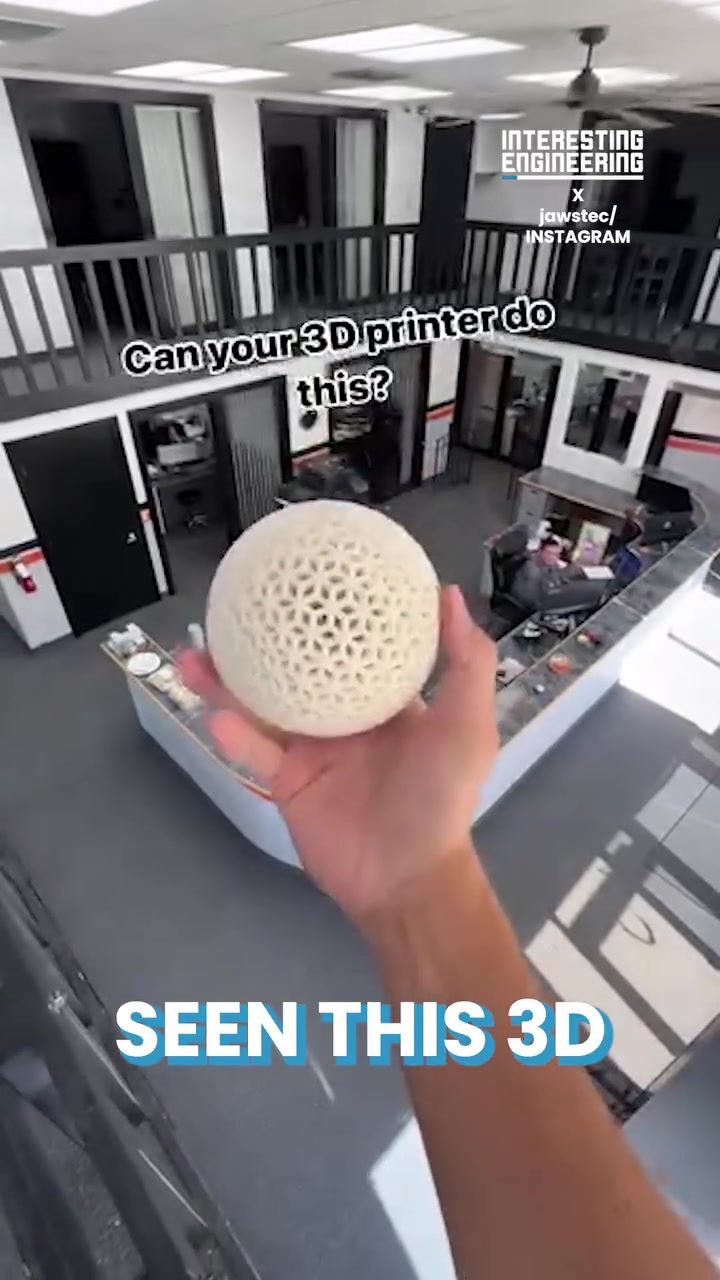
3D Printing: Bouncing Balls and Beyond
The worlds of technology and manufacturing have seen remarkable advancements, particularly in the realm of 3D printing. This technology has evolved to the point where it can produce items that were once thought impossible. One such example is the creation of a 3D-printed bouncing ball. This isn't just a novelty item; it showcases the incredible capabilities of modern 3D printers and the innovative filaments they use.
Context / Why This Matters
3D printers have come a long way since their inception. Initially, they were used primarily for prototyping and creating simple plastic objects. However, with the introduction of new filament types and advancements in printing technology, the possibilities have expanded significantly. The ability to produce a 3D-printed ball that can withstand the impact of bouncing demonstrates the durability and resilience of modern 3D-printed materials. This is a testament to the progress made in the field, and it opens up new possibilities for a wide range of applications.
Demonstrating the 3D Printed Ball
The Capabilities of a 3D Printer
Advancements in 3D printing technology have made it possible to create objects with intricate designs and unique properties. A 3D-printed ball, for instance, can be designed to have a porous structure that allows it to absorb impact without cracking. This is a significant improvement over previous technologies, which would have resulted in a brittle object that couldn't withstand the force of a bounce. The new filaments and printing techniques used today enable the creation of durable, resilient objects that can be used in various applications.
The Role of New Filament Types
The introduction of new filament types has been a game-changer in the world of 3D printing. These filaments are designed to be more flexible and durable, allowing for the creation of objects that can withstand greater stress and strain. For example, the filament used in the 3D-printed ball is designed to be porous, which means it can absorb impact and bounce back into shape. This is a remarkable achievement, as previous filaments would have made the ball too brittle to function as a bouncing ball.
Durability and Resilience
The durability and resilience of a 3D-printed bouncing ball are crucial factors in its success. The ball is designed to withstand the impact of bouncing without cracking or breaking. This is achieved through the use of advanced printing techniques and high-quality filaments that can withstand the stress and strain of repeated bounces. The result is a ball that not only looks impressive but also functions as intended, demonstrating the capabilities of modern 3D printers.
Practical Tips
Choosing the Right Filament
When attempting to print a durable object like a bouncing ball, it's essential to choose the right filament. Look for filaments that are known for their flexibility and durability. Some popular options include TPU (Thermoplastic Polyurethane) and PLA (Polylactic Acid) with added elasticity. These filaments are designed to withstand stress and strain, making them ideal for creating objects that need to be flexible and resilient. Always refer to the filament's specifications to ensure it meets your needs.
Adjusting Printing Settings
In addition to choosing the right filament, adjusting your printer's settings is crucial for achieving the best results. Factors such as print speed, layer height, and infill pattern can all impact the final product's durability. For a bouncing ball, a slower print speed and a higher infill percentage are generally recommended. This ensures that the ball has enough structural integrity to withstand the impact of bouncing.
Post-Processing Techniques
Post-processing is an often-overlooked aspect of 3D printing, but it can significantly impact the final product's quality. Techniques such as smoothing, painting, and applying a protective coating can enhance the ball's durability and appearance. For example, applying a thin layer of sealant can help protect the ball from moisture and other environmental factors, extending its lifespan.
Important Takeaways
- Modern 3D printers and filaments have advanced to the point where they can create objects that were once thought impossible, such as a 3D-printed bouncing ball.
- The durability and resilience of a 3D-printed ball are achieved through the use of advanced printing techniques and high-quality filaments.
- Choosing the right filament, adjusting printing settings, and using post-processing techniques are all essential for creating a durable 3D-printed object.
Conclusion
The 3D-printed ball is a remarkable example of the advancements in 3D printing technology. It demonstrates the capabilities of modern 3D printers and the innovative filaments they use. By understanding the principles behind its creation, we can push the boundaries of what's possible with 3D printing and explore new applications for this technology. Whether you're a hobbyist or a professional, the world of 3D printing offers endless possibilities for creating durable, resilient objects that can withstand the test of time.
Watch the Reel
Questions readers ask
What types of materials are used to 3D print bouncing balls?
3D printed bouncing balls are typically made from advanced filaments like Thermoplastic Polyurethane (TPU) or other flexible materials, which provide the necessary elasticity and durability for effective bouncing. These materials are designed to withstand the impact and maintain their shape over time, ensuring a reliable bounce.
Can 3D printers make bouncing balls for specific sports or activities?
Yes, 3D printers can create custom bouncing balls tailored to specific sports or activities. By adjusting the design and material properties, it's possible to produce balls with varying levels of bounce, size, and weight, making them suitable for different applications, such as basketball, soccer, or even specialized recreational activities.
What are the benefits of 3D printing custom bouncing balls compared to traditional manufacturing methods?
3D printing custom bouncing balls offers several benefits. It allows for rapid prototyping and iteration, enabling quick design adjustments. Additionally, 3D printing can produce complex geometries that are difficult or impossible to achieve with traditional methods, and it reduces waste by using only the material needed for each ball.
Are 3D-printed bouncing balls as durable as traditionally manufactured ones?
3D-printed bouncing balls can be very durable, especially when printed with high-quality, resilient materials like TPU. While traditionally manufactured balls may have a slight edge in some durability aspects due to decades of refinement, advancements in 3D printing technology are continually closing this gap, making 3D-printed balls a viable option for many applications.
What are some unique applications of 3D-printed bouncing balls beyond sports?
Beyond sports, 3D-printed bouncing balls can be used in various creative and practical applications. For example, they can be designed as stress-relief toys, used in art installations, or even incorporated into physics experiments to demonstrate principles like momentum and energy transfer. The versatility of 3D printing allows for endless customization and innovation.
What are the key factors to consider when 3D printing a bouncing ball?
Key factors include choosing the right filament for the desired level of bounce and durability, adjusting the print settings for optimal layer adhesion and flexibility, and designing the ball shape and size to suit the intended use. Additionally, post-processing steps like smoothing the surface or adding coatings can enhance the ball's performance and aesthetics.
Related deep dives
Similar reads based on topic and creator.


Recent articles
Fresh deep dives from the latest Reels we unpacked.




Comments
Be the first to comment.