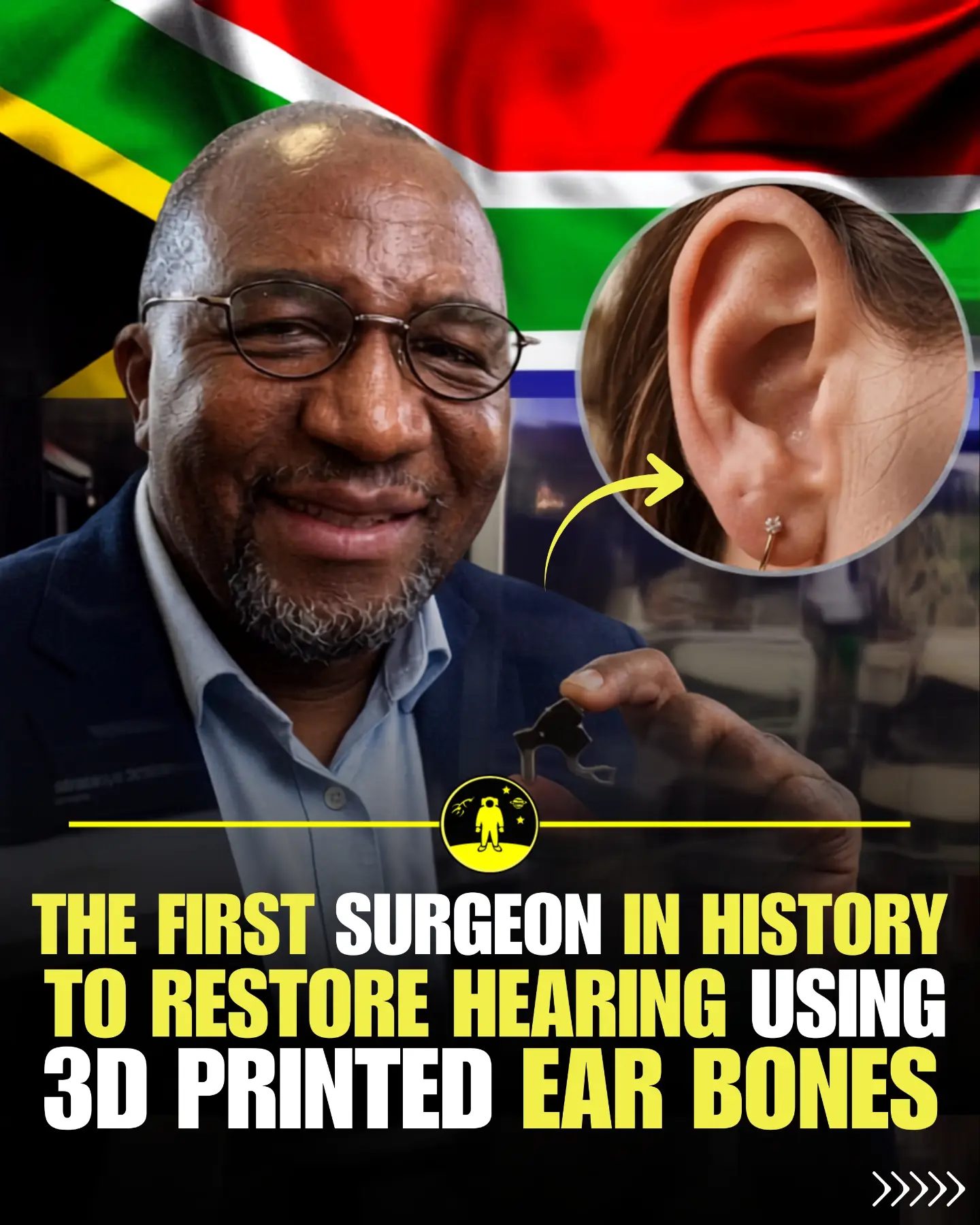
3D Printed Ear Bones Surgery
The world of medicine is always evolving, and one recent breakthrough showcases the potential of 3D printing in the field. Dr. Mashudu Tshifularo from South Africa performed the world's first successful middle ear transplant using 3D-printed titanium bones. This innovation is a significant step forward in hearing restoration, especially for those suffering from conductive hearing loss due to injury, infection, or congenital defects. This type of hearing loss is specifically associated with damage to the tiny bones in the middle ear. These implants, which are no larger than a grain of rice, have the potential to revolutionize treatment for this particular form of deafness.
Why This Matters
Middle ear bone implants, also known as ossicular prostheses, are not a new concept. However, the use of 3D-printed titanium bones represents a significant advance in personalized medicine. Traditional implants are often pre-designed and may not fit perfectly in an individual's ear. The custom-made 3D-printed implants, on the other hand, can be tailored to the patient's specific anatomy. This level of precision is crucial, considering the delicate structures involved in human hearing and the potential for invasive complications.
The Surgical Procedure and its Development
The journey to this breakthrough was not short. It took close to a decade of research and development to perfect the technique. Dr. Tshifularo’s work involved not just the creation of the implants but also the surgical methods to place them accurately.
The surgical process involves removing the damaged middle ear bones and replacing them with 3D-printed implants. The middle ear includes three tiny bones—the malleus, incus, and stapes—all of which play a crucial role in transmitting sound waves from the eardrum to the inner ear. If any of these bones are damaged, sound transmission is disrupted, leading to conductive hearing loss. The 3D-printed titanium implants can restore this function by bridging the gap left by the damaged bones.
The Benefits of 3D-Printed Implants
Customization
One of the most significant advantages of 3D-printed implants is their customization. Traditional implants are mass-produced and may not fit perfectly within the distinct anatomy of each patient. 3D-printed implants can be designed to match the exact shape and size needed for an individual’s ear, which reduces the risk of complications and improves the overall success of the procedure.
Material Properties
Titanium, the material used for these implants, is well-suited for medical applications. It is biocompatible, which means it does not cause an immune reaction within the body. Additionally, titanium is strong and lightweight, making it ideal for implants in delicate areas like the middle ear. It also has the beneficial property of integrating well with bone, a quality known as osseointegration.
Surgical Precision
The 3D printing process allows for incredibly precise manufacturing of the implants. This precision means the surgeon can place the implant with the exact positioning needed for optimal hearing restoration.
The Future of 3D-Printed Medical Implants
While the initial results of this technique have been promising, larger clinical studies are still needed to validate its effectiveness and safety. Dr. Tshifularo’s work has shown encouraging outcomes, but more research is necessary to fully understand the long-term benefits and potential risks. As with any new medical procedure, widespread adoption will depend on rigorous clinical trials and regulatory approval.
Current Limitations
One of the main limitations of this technique is its current availability. Given the specialized nature of the procedure and the need for custom implant design, it may not be accessible to patients outside of research settings just yet. However, as the technology becomes more mainstream and surgeons gain expertise in the procedure, it is expected to become more widely available.
Expanding Applications
Beyond middle ear implants, 3D printing has the potential to revolutionize other areas of medicine as well. Customized implants could be used for various parts of the body, from orthopedic devices to dental implants. The ability to create personalized medical solutions could lead to better patient outcomes and a broader range of treatment options.
Practical Tips for Patients
Understanding Conductive Hearing Loss
Conductive hearing loss is a specific form of hearing loss that occurs when sound waves are unable to travel through the outer or middle ear to the inner ear. Conditions such as otosclerosis, cholesteatoma, and congenital absence of the ossicles are common causes. Understanding the type of hearing loss you have is crucial to determining the best course of treatment.
Consulting a Specialist
If you suspect you have conductive hearing loss, it is essential to consult with an ENT (Ear, Nose, and Throat) specialist. They can perform a series of tests to diagnose the type and extent of your hearing loss. Early intervention can prevent further damage and improve the chances of successful treatment.
Exploring Treatment Options
Treatment for conductive hearing loss can vary widely depending on the cause and severity. Options range from medication and surgery to hearing aids and assistive devices. In some cases, surgery to repair or replace damaged bones in the middle ear, such as the 3D-printed titanium implants, may be recommended.
Important Takeaways
The Promise of Personalized Medicine
The use of 3D-printed titanium middle ear implants represents a significant step forward in personalized medicine. By tailoring implants to the individual’s anatomy, this technique can improve outcomes and reduce complications.
Ongoing Research
While the initial results are encouraging, more research is needed to fully understand the long-term benefits and potential risks of this technique. Larger clinical studies will play a crucial role in validating its effectiveness.
The Role of Technology
Advances in 3D printing and biomedical engineering are paving the way for groundbreaking medical innovations. These technologies have the potential to transform various aspects of healthcare, from personalized implants to surgical techniques.
Conclusion
The work of Dr. Mashudu Tshifularo in developing 3D-printed titanium middle ear implants is a testament to the power of innovation in medicine. This breakthrough offers new hope for individuals suffering from conductive hearing loss, providing a more personalized and effective treatment option. As the technology continues to advance, it is expected to have far-reaching implications for the future of healthcare, offering new pathways for improving patient outcomes and transforming medical treatments.
Watch the Reel
Questions readers ask
What are 3D printed ear bones and how do they help in hearing restoration?
3D printed ear bones are tiny, custom-made implants created using 3D printing technology. They are designed to replace damaged bones in the middle ear, helping to restore hearing loss, particularly in cases of conductive hearing loss. These implants are typically made from titanium and are tailored to fit each patient's unique anatomy.
Who was the first surgeon to perform a middle ear transplant using 3D-printed titanium bones?
Dr. Mashudu Tshifularo from South Africa was the first surgeon to successfully perform a middle ear transplant using 3D-printed titanium bones.
What is conductive hearing loss and how can 3D printed implants help?
Conductive hearing loss occurs when there is damage to the tiny bones in the middle ear, preventing sound from being conducted properly. 3D-printed implants can help by replacing these damaged bones, allowing sound to be conducted to the inner ear and restoring hearing.
What are the advantages of using 3D-printed implants for middle ear surgery?
3D-printed implants offer several advantages, including precise customization to fit each patient's unique anatomy, improved outcomes due to better fitting, and the potential to revolutionize treatment for conductive hearing loss. These implants are also made from biocompatible materials like titanium, reducing the risk of rejection.
How do 3D-printed hearing aids differ from traditional ones?
While traditional hearing aids amplify sound, 3D-printed ear bones work by replacing damaged bones in the middle ear, allowing sound to be conducted more naturally. This can result in a more natural hearing experience and improved outcomes for patients with conductive hearing loss.
What are the benefits of personalized 3D printed implants in hearing restoration surgery?
Personalized 3D-printed implants offer a tailored fit for each patient, which can improve the success of the surgery and enhance hearing outcomes. This level of customization is particularly beneficial for individuals with unique or complex ear structures.
What materials are typically used to create 3D-printed ear bone implants?
Titanium is the most commonly used material for 3D-printed ear bone implants due to its biocompatibility, durability, and resistance to rejection by the body. This makes it an ideal choice for middle ear surgery.
Related deep dives
Similar reads based on topic and creator.


Recent articles
Fresh deep dives from the latest Reels we unpacked.




Comments
Be the first to comment.