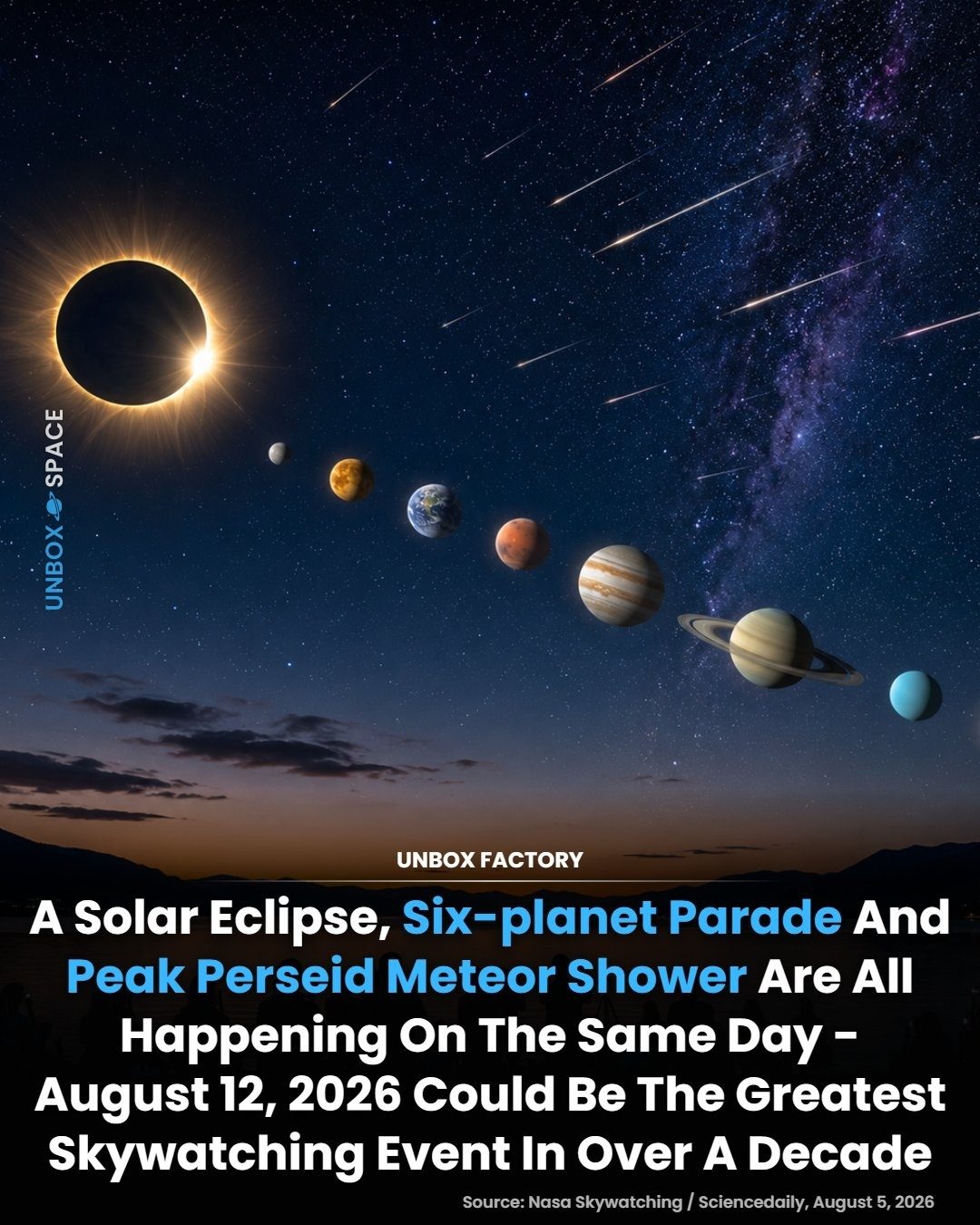
Celestial Spectacle: The Skywatching Event of a Decade
Astronomy enthusiasts are in for a treat on August 12, 2026. This is the day when a solar eclipse, six planets aligning in the sky, and the peak of the Perseid meteor show coalesce into a celestial event that will captivate viewers around the world.
Why this matters
The alignment of these celestial events into a single day represents an extraordinary opportunity for both amateur and professional astronomers. This rare confluence underscores the dynamic nature of the cosmos and offers a singular moment to observe multiple phenomena simultaneously.
Main discussion
The Total Solar Eclipse
Mark your calendars for the first of these rare celestial events. On August 12, 2026, a total solar eclipse will grace the skies. This phenomenon occurs when the Moon passes directly between the Earth and the Sun, casting a shadow on the Earth's surface and blocking out the Sun's light. It's a breathtaking sight where the Moon's shadow will cut a path across the Earth, revealing the Sun's corona and offering a unique glimpse into the solar system. The eclipse will create a profound sensation for skywatchers, as the sky darkens and the stars become visible.
The Six-Planet Parade
In addition to the eclipse, six planets will align in a rare celestial parade. This occurs when several planets align along the ecliptic, the plane of the Earth's orbit. Viewers will be able to see Mercury, Venus, Mars, Jupiter, Saturn, and Uranus all in a row. The alignment will make for a particularly stunning sight, with the planets appearing in a straight line across the night sky. The visibility of these planets will depend on your location and viewing conditions, so it's important to prepare accordingly.
The Peak of the Perseid Meteor Shower
The Perseid meteor shower is a yearly event. However, the peak of the Perseid meteor shower on August 12, 2026, will be particularly spectacular. The Perseids are known for producing 50 to 100 meteors per hour at their peak. The meteors originate from the debris left behind by Comet Swift-Tuttle as Earth passes through its orbit. This year, the shower's peak coincides with the new moon, ensuring dark skies and optimal viewing conditions. The alignment of these six planets and the Perseids yearning to be witnessed is an even more reason to mark your calendars.
Practical tips
Planning Your Viewing
To make the most of these celestial events, planning ahead is essential. Here are some tips to help you prepare:
- Choose a Dark Sky Location: Find a spot away from city lights for the best viewing experience. Darker skies allow for better visibility of meteors and planetary alignments.
- Check Weather Conditions: Clear skies are crucial for optimal viewing. Monitor the weather forecast in the days leading up to the event and be prepared to travel if necessary.
- Use Binoculars or a Telescope: While the eclipse and meteor shower can be viewed with the naked eye, binoculars or a telescope can enhance your viewing experience, especially for the planetary alignment.
- Arrive Early: Set up your viewing spot at least 30 minutes before the event begins to allow your eyes to adjust to the darkness.
- Bring a Chair and Blanket: Comfort is key when spending extended periods looking up at the sky. A reclining chair or a blanket to lie on can make your viewing experience more enjoyable.
Safety During the Eclipse
Viewing a solar eclipse requires special precautions to protect your eyes. Staring directly at the Sun can cause permanent eye damage. Here are some tips to ensure safe viewing:
- Use Approved Solar Filters: Equip your eyes with approved solar filter glasses. These filters are specifically designed to block harmful solar radiation.
- Pinhole Projection: Create a simple pinhole projector using a cardboard box, aluminum foil, and a piece of white paper. This method allows you to safely project the image of the Sun onto a surface.
- Telescope or Binoculars with Solar Filters: Use telescopes or binoculars equipped with solar filters to magnify the view of the eclipse without risking eye damage.
Capturing the Moment
For those who want to capture the celestial spectacle, here are some photography tips:
- Use a Tripod: A steady tripod is essential for long-exposure photography. It helps to keep your camera stable and reduces blur.
- Manual Settings: Set your camera to manual mode. Adjust the ISO, aperture, and shutter speed to capture the details of the eclipse and meteors.
- Remote Shutter Release: Use a remote shutter release or the camera's self-timer to avoid camera shake.
- Wide-Angle Lens: A wide-angle lens can capture the entire alignment of the planets and the meteor shower.
Important takeaways
The upcoming celestial event on August 12, 2026, is a unique and thrilling opportunity for skywatchers. The convergence of a total solar eclipse, a six-planet alignment, and the peak of the Perseid meteor shower makes this a once-in-a-decade event. It is a rare occurrence to witness multiple significant astronomical phenomena in a single night, making it a must-see for both casual stargazers and seasoned astronomers.
Conclusion
August 12, 2026, promises to be a night to remember. The combination of a total solar eclipse, a parade of six planets, and the peak of the Perseid meteor shower will create a celestial spectacle unlike any other. By preparing ahead, choosing the right location, and taking necessary safety precautions, you'll be able to fully enjoy this extraordinary event. This is a celestial event that will undoubtedly inspire a sense of wonder and appreciation for the beauty of the cosmos.
Watch the Reel
Questions readers ask
What is the significance of the celestial event on August 12, 2026?
The celestial event on August 12, 2026, is significant because it marks the rare occurrence of three major skywatching events happening on the same day. This convergence includes a total solar eclipse, a six-planet parade, and the peak of the Perseid meteor shower, making it a unique opportunity for astronomers to observe multiple phenomena simultaneously.
Which planets will be part of the six-planet parade in 2026?
The six-planet parade will include Mercury, Venus, Mars, Jupiter, Saturn. The exact alignment of the planets will be visible alongside the solar eclipse and the Perseid meteor shower, offering a breathtaking view of our solar system.
What time will the Perseid meteor shower peak in 2026?
The Perseid meteor shower is expected to peak on the night of August 12, 2026. The best time to view the meteor shower will be after midnight, when the sky is darkest and the meteors are most visible. This peak coincides with the total solar eclipse and the six-planet parade, making for a spectacular night of skywatching.
How can I safely view the total solar eclipse on August 12, 2026?
To safely view the total solar eclipse, use certified solar eclipse glasses or a solar filter for your telescope. Never look directly at the sun without proper protection. Additionally, NASA provides guidelines and resources for safe solar eclipse viewing, which can be invaluable for both amateur and professional astronomers.
Where will the total solar eclipse of 2026 be visible?
The total solar eclipse of 2026 will be visible from certain regions of the world, although the exact path of totality will need to be confirmed closer to the event. This alignment will offer a fantastic opportunity to view the event, making it a must-see for astronomy enthusiasts.
How often does a six-planet alignment occur?
A six-planet alignment is a rare occurrence, making the event on August 12, 2026, particularly noteworthy. These alignments happen infrequently, and the convergence of this event with a total solar eclipse and the Perseid meteor shower makes it an exceptional skywatching opportunity.
What should I know about photographing the celestial events of August 12, 2026?
Photographing the celestial events of August 12, 2026, requires some preparation. For the total solar eclipse, use a solar filter on your camera lens. For the Perseid meteor shower, a tripod and long exposure settings will help capture the meteors. For the planet parade, a telephoto lens can help bring the planets into clear view. Practice your techniques before the event to ensure you're ready to capture these rare occurrences.
Related deep dives
Similar reads based on topic and creator.
Recent articles
Fresh deep dives from the latest Reels we unpacked.




Comments
Be the first to comment.