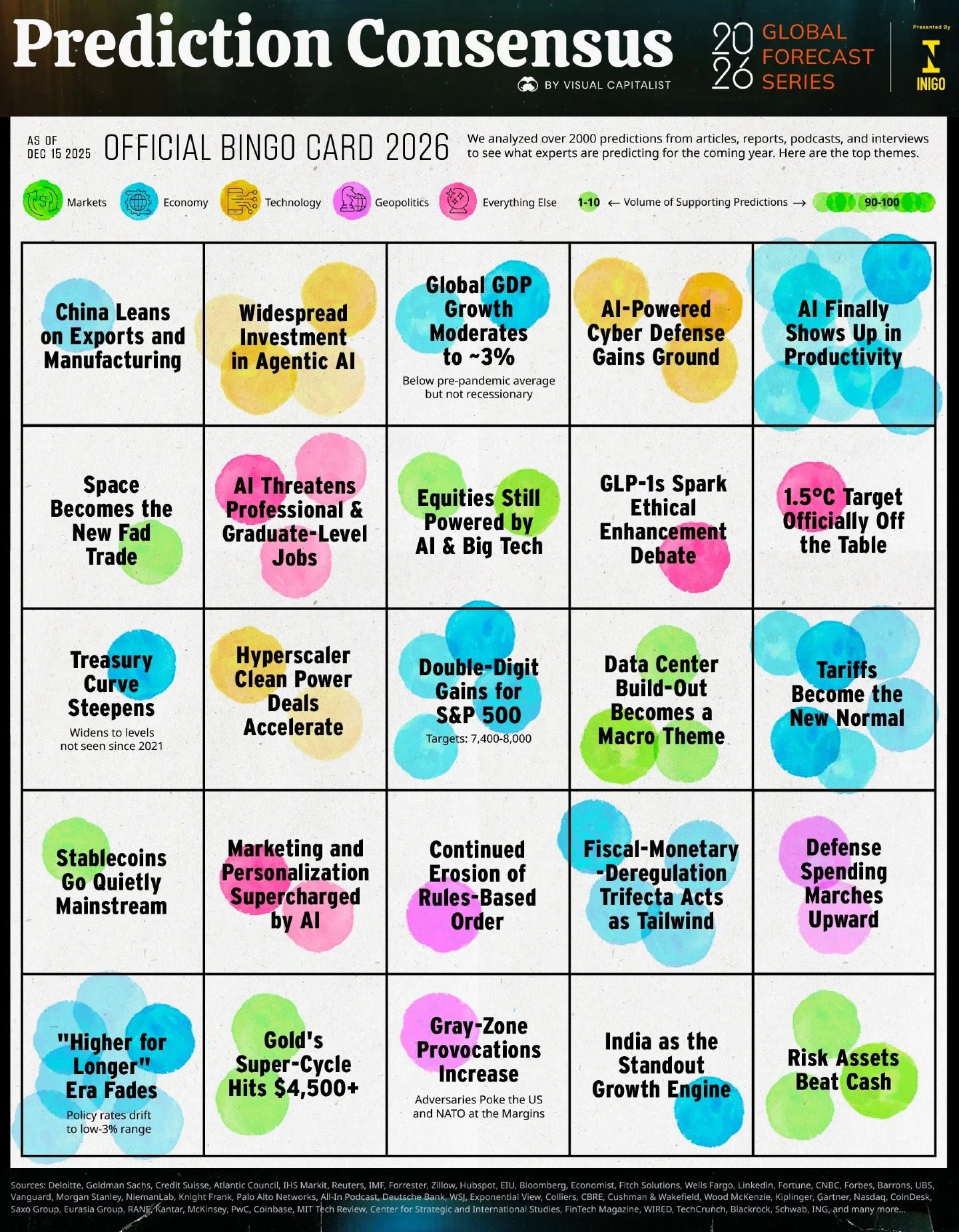
2026 Global Forecast Predictions
The world of 2026 is shaping up to be a dynamic and transformative period, marked by significant shifts across various sectors. By analyzing over 2,000 expert predictions, clear trends and consensus forecasts have emerged, providing insight into what analysts and thought leaders anticipate for the year ahead.
Why This Matters
Understanding the forecasts for 2026 is crucial for businesses, investors, and policymakers. These predictions offer a roadmap for strategic planning, identifying potential opportunities, and mitigating risks. Key areas of focus include market dynamics, economic trends, technological advancements, geopolitical shifts, and broader societal changes.
Global Economic Trends
Moderating Global GDP Growth
One of the most significant economic predictions is the moderation of global GDP growth. This trend suggests a more stable but slower pace of economic expansion, reflecting a balanced approach to economic policies and cautious optimism among economists.
The Role of China
China is expected to lean heavily on exports and manufacturing, positioning itself as a dominant force in global trade. This strategic move could reshape supply chains and influence global economic policies, making China a pivotal player in the global market.
Technological Innovations
AI and Job Market Impact
Artificial Intelligence (AI) is poised to have a profound impact on the job market, particularly on professional and graduate-level positions. As AI continues to evolve, it will likely automate many tasks, leading to significant changes in the labor market.
AI in Cyber Defense
AI-powered cyber defense mechanisms are expected to gain significant ground. With the increasing threat of cyber attacks, AI-driven solutions will be crucial in protecting digital infrastructure and ensuring cybersecurity.
Market Dynamics
Equities and AI
Equities are expected to remain strongly influenced by AI and big tech companies. The continued growth and innovation in these sectors will drive market performance, making them key areas for investment and growth.
Data Centers as a Macro Theme
The build-out of data centers is set to become a major macro theme. As data usage continues to surge, the demand for robust and efficient data centers will increase, driving significant investment and infrastructure development.
Geopolitical Landscape
Erosion of Rules-Based Order
The continued erosion of the rules-based international order is a concerning geopolitical trend. This shift could lead to increased uncertainty and potential conflicts, making it a critical area for diplomacy and policy intervention.
Defense Spending and Gray-Zone Conflicts
Defense spending is expected to rise, reflecting the growing importance of military preparedness in an uncertain world. Gray-zone conflicts, which involve actions below the threshold of open war, are also predicted to increase, adding complexity to global security dynamics.
Key Industries and Trends
Hyperscaler-Clean Power Deals
Hyperscaler-clean power deals are expected to accelerate, driven by the need for sustainable energy solutions. This trend will have significant implications for the energy sector and environmental policies.
Space as the New Fad Trade
Space exploration and investment are set to become a new fad trade, reflecting the growing interest and potential of the space industry. This trend could lead to significant innovations and economic opportunities in the space sector.
Practical Tips for Navigating 2026
Stay Informed
Keeping up-to-date with the latest trends and predictions is essential. Reliable sources and expert analyses can provide valuable insights and help you stay ahead of the curve.
Diversify Investments
Given the dynamic nature of the global economy, diversifying your investments across various sectors and regions can help mitigate risks and capitalize on emerging opportunities.
Emphasize Cybersecurity
With the increasing threat of cyber attacks, prioritizing cybersecurity measures is crucial. Investing in AI-powered cyber defense solutions can enhance your security posture and protect your digital assets.
Adapt to Technological Changes
The rapid pace of technological innovation requires adaptability. Staying agile and embracing new technologies can help you stay competitive and resilient in a rapidly changing environment.
Monitor Geopolitical Developments
Keeping an eye on geopolitical trends and their potential impacts is essential for strategic planning. Understanding the geopolitical landscape can help you anticipate and navigate potential risks and opportunities.
Important Takeaways
As we approach 2026, several key takeaways emerge from the expert predictions. The global economy is expected to grow at a moderate pace, driven by technological advancements and strategic shifts in key markets. AI will continue to reshape various sectors, including the job market and cybersecurity. Geopolitical dynamics will remain complex, requiring vigilance and strategic adaptation. Investing in sustainable energy solutions and the space industry will offer significant opportunities.
Conclusion
The year 2026 promises a world of opportunities and challenges. By understanding the predictions and trends, businesses, investors, and policymakers can navigate this dynamic landscape more effectively. Staying informed, diversifying investments, prioritizing cybersecurity, and adapting to technological changes will be crucial for success in the year ahead.
Watch the Reel
Questions readers ask
What factors are contributing to the anticipated moderation in global GDP growth by 2026?
The moderating global GDP growth is influenced by several factors, including potential shifts in global trade policies, the impact of technological advancements on productivity, and the evolving dynamics of major economies like the United States, the European Union, and China. Additionally, geopolitical tensions and changes in consumer spending patterns are expected to contribute to a more subdued global growth rate.
How will AI impact employment opportunities in 2026?
By 2026, AI is expected to significantly transform the job market, leading to both job creation and displacement. While AI will automate routine tasks, it will also create new roles in data analysis, machine learning, and AI development. Workers may need to upskill or reskill to adapt to these changes, with those in creative, strategic, and caregiving roles likely to be less affected by automation.
Why is China expected to play a pivotal role in global trade by 2026?
China's role in global trade is anticipated to grow due to its expansive infrastructure projects under the Belt and Road Initiative, its position as the world's largest manufacturing hub, and its increasing consumer market. Additionally, China's advancements in technology, such as 5G and AI, will likely boost its export capabilities and influence global supply chains.
What are some key technology trends to watch out for in 2026?
In 2026, several technology trends are expected to gain prominence, including the continued rise of AI and machine learning, advancements in 5G and 6G networks, and the expansion of the Internet of Things (IoT). Additionally, breakthroughs in biotechnology, quantum computing, and renewable energy technologies are anticipated to reshape various industries and drive innovation.
How might geopolitical shifts impact the global market by 2026?
Geopolitical shifts, such as changes in trade agreements, regional alliances, and political leaderships, could significantly impact global markets by 2026. These shifts may result in increased market volatility, changes in trade flows, and the emergence of new economic powerhouses. Businesses and investors should closely monitor geopolitical developments to navigate potential risks and opportunities.
What steps can businesses take to prepare for the 2026 global economic outlook?
To prepare for the 2026 global economic outlook, businesses should focus on enhancing agility and adaptability, investing in digital transformation, and fostering innovation. Diversifying supply chains, understanding regional market dynamics, and anticipating shifts in consumer behavior will also be crucial for successful strategic planning.
How might the future of global trade evolve by 2026, given China's rising influence?
China's rising influence is likely to reshape the future of global trade in several ways, including increased integration of Asian economies, shifts in global supply chains, and the emergence of new trade agreements. Additionally, China's focus on innovation and technology could lead to a more tech-driven trade landscape, with advancements in areas like AI, 5G, and renewable energy playing a significant role in global commerce.
Related deep dives
Similar reads based on topic and creator.


Recent articles
Fresh deep dives from the latest Reels we unpacked.




Comments
Be the first to comment.