Marketing Funnel Strategies for 2025
Marketing funnels are essential for guiding customers from initial awareness to conversion and beyond. Understanding how to align your marketing funnel stages with the right channels and key performance indicators (KPIs) is crucial for success. This guide will break down a full-stack marketing funnel into its key components and discuss the channels and KPIs for each stage.
Why This Matters
Marketing channels and KPIs are the backbone of any successful marketing campaign. Using a full-stack funnel that integrates various marketing strategies and measures the right metrics at each stage can maximize your marketing efforts and drive better results.
Context
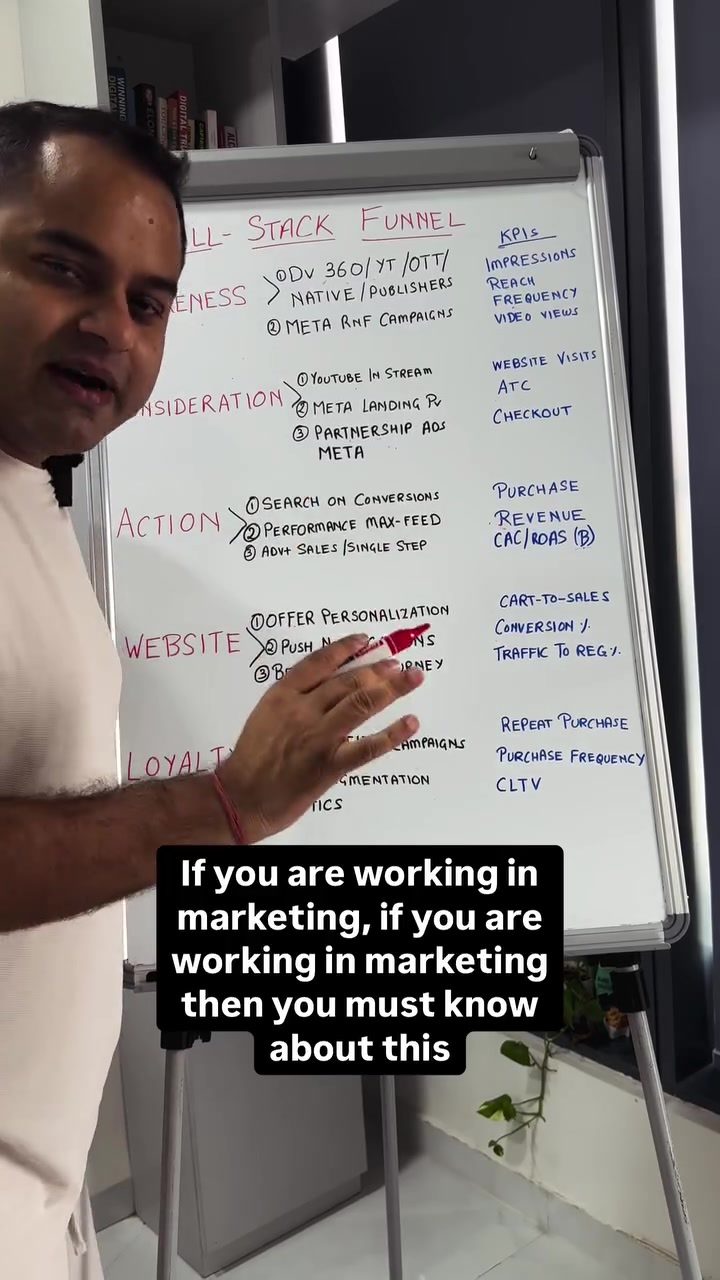
A marketing funnel typically includes several stages: Awareness, Consideration, Action, and Website Optimization. Each stage requires a different approach and focuses on specific channels and KPIs.
Awareness: Creating Brand Recognition
The first stage of the funnel is awareness, where the goal is to make potential customers aware of your business. Effective channels for this stage include:
Programmatic Ads
DV360 and similar platforms are excellent for programmatic ads, which allow you to reach a broad audience efficiently. These ads can be tailored to appear on various platforms, including:
- YouTube: Ideal for video ads that can capture attention and convey your brand message effectively.
- OTT (Over-The-Top) Platforms: Target users who stream content on platforms like Hulu or Roku.
- Native and Publisher Platforms: Integrate your ads seamlessly into content, making them less intrusive and more likely to be noticed.
Social Media Campaigns
Platforms like Meta (formerly Facebook) offer reach and frequency campaigns. These are designed to maximize your ad exposure and ensure your message reaches a wide audience multiple times.
KPIs for Awareness
Measuring the success of your awareness campaigns involves tracking the following KPIs:
- Impressions: The number of times your ad is displayed.
- Reach: The number of unique viewers who see your ad.
- Frequency: How often the average user sees your ad.
- Video Views: The number of times your video ads are watched.
Consideration: Engaging Potential Customers
Once potential customers are aware of your business, the next step is to engage them and guide them toward making a purchase. This is the consideration stage, where you focus on:
In-Stream Ads
In-stream ads on platforms like YouTube are effective for keeping your brand top-of-mind for users who are already engaged with video content. These ads can include:
- YouTube In-Stream Ads: Short video ads that play before, during, or after other videos.
- Meta Landing Page View Campaigns: Ads that direct users to a specific landing page where they can learn more about your product or service.
- Partnership Ads on Meta: Collaborate with influencers or other brands to reach a broader audience and build trust.
KPIs for Consideration
When measuring the success of your consideration campaigns, look at:
- Website Visits: The number of users who visit your website.
- Add to Cart: The number of users who add items to their shopping cart.
- Checkouts: The number of users who complete the checkout process.
Action: Driving Conversions
The action stage is where you focus on converting potential customers into paying customers. Key strategies include:
Performance Campaigns
Google's Performance Max Campaign is a feed-based campaign that leverages machine learning to optimize ad performance. It's particularly effective for e-commerce brands. In addition, you can run Advantage Plus Sales Campaigns on Meta to maximize your ad spend and drive sales.
KPIs for Action
To measure the success of your action campaigns, look at:
- Purchase: The number of transactions.
- Revenue: The total sales generated.
- CAC/ROAS (B): Customer Acquisition Cost and Return on Ad Spend at a blended level.
Website Optimization: Maximizing Conversions
Your website is the final destination where users decide whether to make a purchase. Optimizing your website for conversions involves:
Personalization and Push Notifications
Offer personalization to tailor the user experience to each visitor. Use push notifications to keep users engaged and informed about new products, promotions, and updates.
Behavioral Journey Triggers
Create behavioral journeys that guide users through the buying process. Use conversion rate optimization (CRO) techniques to improve the performance of your website and increase conversions.
KPIs for Website Optimization
Monitor the following KPIs to ensure your website is optimized for conversions:
- Cart-to-Sale Rate: The percentage of users who add items to their cart and complete the purchase.
- Conversion Percentage: The overall conversion rate.
- Traffic to Registration Rate: The percentage of visitors who sign up for your service or newsletter.
Retargeting and Analytics
Retargeting campaigns on Google and Meta are essential for re-engaging users who have visited your website but did not make a purchase. Regularly analyze user data to understand who is visiting your site, why they are not buying, and what can be done to convert them.
Key KPIs for Retargeting
- Repeat Purchases: The number of users who make multiple purchases.
- Purchase Frequency: How often users make purchases.
- Customer Lifetime Value (CLTV): The total revenue a business can reasonably expect from a single customer account throughout the business relationship.
Practical Tips
Align Channels with Funnel Stages
Align your marketing channels with the appropriate funnel stage. For example, use programmatic ads for awareness and in-stream ads for consideration.
Measure the Right KPIs
Track KPIs that are relevant to each stage of the funnel. Awareness KPIs like impressions and reach are different from action KPIs like purchases and revenue.
Optimize Your Website
Personalize the user experience and use behavioral journey triggers to guide users through the conversion process. Regularly analyze website data to make informed optimizations.
Use Retargeting
Implement retargeting campaigns to re-engage users who have shown interest but did not convert. This can significantly increase your conversion rates and overall sales.
Important Takeaways
- A full-stack funnel is essential for effective marketing. It includes awareness, consideration, action, and website optimization stages.
- Different channels and KPIs are relevant at each stage of the funnel. Use programmatic ads for awareness, in-stream ads for consideration, and performance campaigns for action.
- Optimize your website to maximize conversions. Personalization, push notifications, and behavioral triggers are crucial for guiding users through the buying process.
- Regularly analyze user data to understand user behavior and optimize your marketing strategies.
Conclusion
Matching your marketing funnel stages with the right channels and KPIs is a critical part of any successful marketing strategy. By understanding and implementing the strategies outlined in this guide, you can create a more effective marketing funnel that drives awareness, engagement, and conversions. Start by aligning your channels with each stage of the funnel, measure the right KPIs, optimize your website, and use retargeting to maximize your marketing efforts.
Watch the Reel
Questions readers ask
What are the key stages of a 2025 marketing funnel?
The 2025 marketing funnel typically includes several key stages: Awareness, Consideration, and Action. Each stage requires specific strategies and channels to effectively guide customers through the funnel.
How can programmatic ads be utilized in the 2025 marketing funnel?
Programmatic ads can be effectively used in the Awareness stage by targeting platforms like YouTube and Over-the-Top (OTT) media. These ads help increase brand visibility and reach a broader audience, making them ideal for the top of the funnel.
What role do social media campaigns play in the 2025 marketing funnel?
Social media campaigns are instrumental in both the Awareness and Consideration stages. They help build brand recognition and drive customer engagement, encouraging potential customers to explore your offerings further.
What KPIs should be monitored for the Awareness stage in the 2025 marketing funnel?
For the Awareness stage, key performance indicators (KPIs) such as reach, impressions, and engagement rates are crucial. These metrics help measure the effectiveness of your brand recognition efforts and the success of your awareness campaigns.
How can a full-stack marketing funnel benefit marketing efforts in 2025?
A full-stack marketing funnel integrates various marketing strategies and aligns them with specific stages of the customer journey. By using the right channels and measuring the right KPIs at each stage, a full-stack funnel can maximize marketing efforts and drive better results, ensuring a cohesive and effective approach.
What are some effective channels for the Consideration stage in the 2025 marketing funnel?
For the Consideration stage, channels like retargeting ads, email marketing, and content marketing are effective. These channels help nurture leads by providing valuable information and encouraging them to move closer to the decision-making process.
How can marketers measure the success of their 2025 marketing funnel?
Marketers can measure the success of their 2025 marketing funnel by tracking stage-specific KPIs and using analytics tools to monitor performance. Key metrics include conversion rates, customer lifetime value, and return on investment (ROI), which provide insights into the overall effectiveness of the marketing efforts.
Recent articles
Fresh deep dives from the latest Reels we unpacked.




Comments
Be the first to comment.