Text Message Scams Cost Americans Nearly $150 Million in 2022
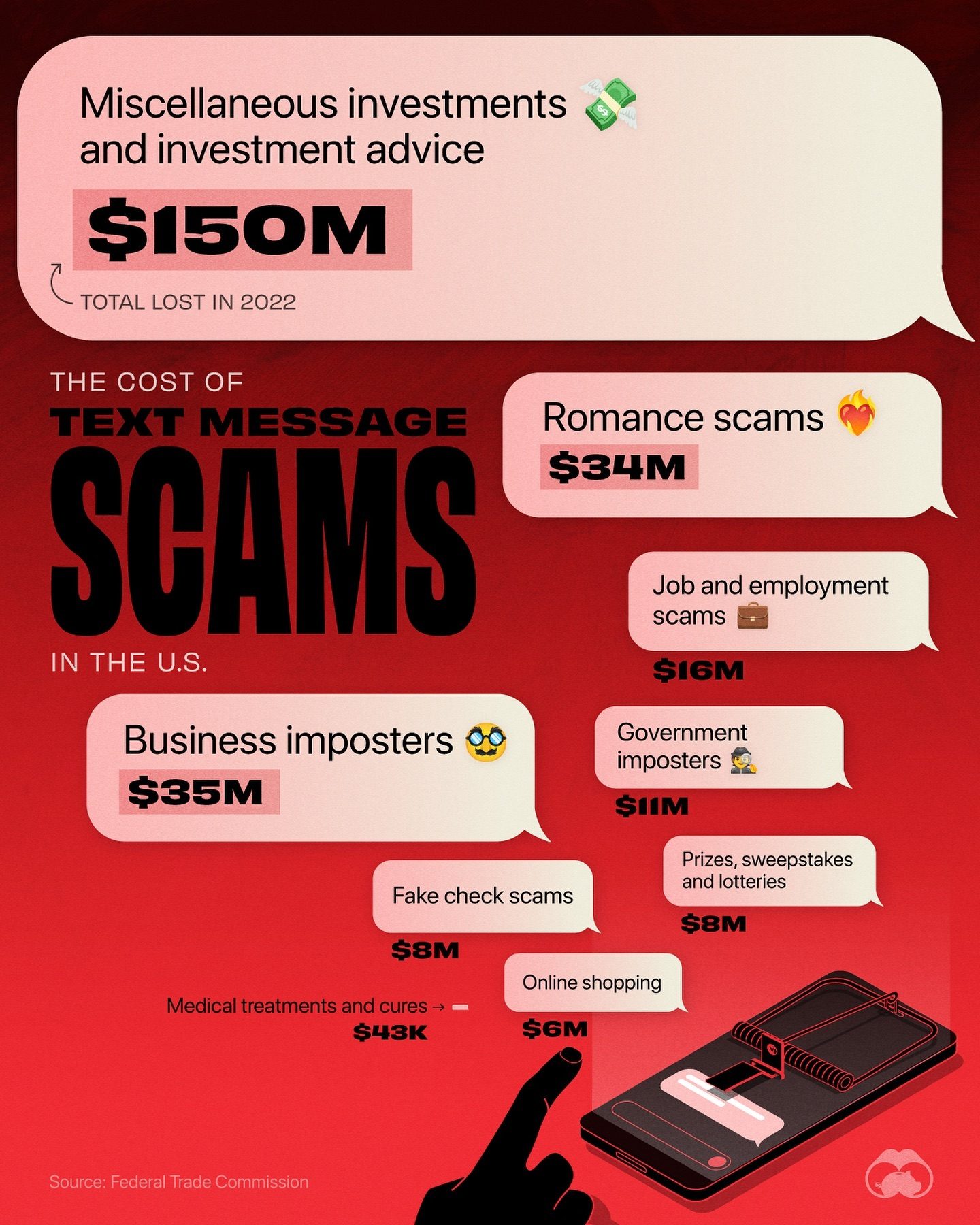
Text message scams targeting investments and investment advice have become a significant financial drain, costing Americans nearly $150 million in 2022. Despite the substantial losses, these scams remain underreported, with fewer than 6,000 complaints filed. This low reporting rate translates to a higher cost per scam compared to other categories. Understanding the scope and impact of these scams is crucial for protecting oneself from financial fraud.
Why This Matters
With the rise of digital communication, scammers have found new ways to exploit unsuspecting victims. Text message scams, in particular, have surged, preying on individuals seeking investment opportunities or financial advice. The low reporting rate indicates that many victims either do not recognize the scam or are embarrassed to report it, allowing scammers to continue their fraudulent activities.
Scam Breakdown
The financial losses from text message scams in 2022 were substantial and varied across different categories. Here's a breakdown of the amounts lost to specific types of scams:
- Business Imposters: These scams accounted for $35 million in losses. Business imposters typically pose as legitimate companies to deceive victims into transferring money or sharing sensitive information.
- Fake Check Scams: Victims lost $8 million to fake check scams, where scammers send counterfeit checks and convince recipients to deposit them, often under the pretense of a job opportunity or prize.
- Romance Scams: These scams cost victims $34 million. Romance scammers often build emotional relationships with their targets over time, gaining their trust before asking for money.
- Job and Employment Scams: This category accounted for $16 million in losses. These scams often involve job offers that require upfront fees or personal information.
- Government Imposters: Victims lost $11 million to government imposter scams, where scammers pose as government agencies to extract money or personal information.
- Prizes, Sweepstakes, and Lotteries: These scams resulted in $8 million in losses, luring victims with promises of large prizes in exchange for a small fee.
- Online Shopping: Victims lost $6 million to online shopping scams, where fake websites or listings sell non-existent or counterfeit products.
- Medical Treatments and Cures: This category accounted for $43,000 in losses, with scammers promising miracle cures or treatments for various ailments.
Common Tactics Used by Scammers
Scammers employ a variety of tactics to deceive their victims. Some of the most common methods include:
- Phishing: Scammers send text messages that appear to come from legitimate sources, such as banks or government agencies, to trick victims into providing personal information.
- Spoofing: Scammers use technology to disguise their phone numbers, making it appear as if the message is coming from a trusted source.
- Emotional Manipulation: In romance scams, for example, scammers build emotional connections with their victims, making them more likely to part with their money.
- Urgency: Scammers often create a sense of urgency, pressuring victims to act quickly without thinking critically about the situation.
Practical Tips to Protect Yourself
Protecting yourself from text message scams involves staying vigilant and recognizing the signs of fraud. Here are some practical tips:
- Be Skeptical: If a text message seems too good to be true, it probably is. Approach all unsolicited messages with skepticism.
- Verify Information: Never rely solely on the information provided in a text message. Verify the details through official channels or by contacting the supposed sender directly.
- Avoid Clicking Links: Be cautious of links in text messages, especially if they lead to unfamiliar websites. These links can be used to steal personal information or infect your device with malware.
- Report Suspicious Activity: If you receive a suspicious text message, report it to your mobile carrier and the Federal Trade Commission (FTC).
Important Takeaways
Text message scams targeting investments and investment advice are a growing threat, resulting in significant financial losses. The low reporting rate of these scams highlights the need for increased awareness and vigilance. By recognizing common tactics and taking practical steps to protect yourself, you can reduce the risk of falling victim to these fraudulent activities.
Conclusion
The financial impact of text message scams in 2022 underscores the importance of staying informed and cautious. By understanding the various types of scams and their tactics, you can better protect yourself and your finances. Always verify information, be skeptical of unsolicited messages, and report any suspicious activity to the relevant authorities. Staying vigilant is the best defense against falling prey to these deceitful schemes.
Watch the Reel
Questions readers ask
What types of scams were most common in 2022 text message fraud?
Investment and investment advice scams were particularly prominent in 2022, leading to significant financial losses. These scams often involve promises of high returns or exclusive investment opportunities. Be cautious of any text messages that guarantee returns or ask for personal financial information.
What are some common tactics used in text message scams?
Scammers use a variety of tactics, including impersonating trusted entities, creating a sense of urgency, and offering too-good-to-be-true deals. Imposter scams, where scammers pose as legitimate businesses or government agencies, are particularly common. Always verify the sender's identity and be wary of urgent requests.
How can I protect myself from text message investment scams?
To protect yourself from investment scams, never share personal or financial information via text. Verify any investment offers through official channels and be cautious of high-pressure sales tactics. Remember, legitimate investment opportunities do not require immediate action or secrecy.
What should I do if I receive a suspicious text message?
If you receive a suspicious text message, do not respond or click on any links. Instead, report it to your mobile carrier and to the Federal Trade Commission (FTC) at reportfraud.ftc.gov. Keep a record of the message in case you need to report it to authorities later.
Why are text message scams often underreported?
Text message scams are often underreported due to victims feeling embarrassed or unsure of where to report the incident. However, reporting these scams is crucial for tracking trends and preventing others from falling victim. Use resources like the FTC's complaint system to report scams and help raise awareness.
What are some other types of text message scams besides investment fraud?
In addition to investment scams, other common text message scams include romance scams, job scams, and online shopping scams. Romance scams target individuals seeking romantic relationships, while job scams offer fake employment opportunities. Online shopping scams lure victims with discounted or nonexistent products.
How can I report a text message scam to the authorities?
To report a text message scam, forward the message to the Federal Trade Commission at 7726 (SPAM) from your mobile device. This helps the FTC track and investigate scam activities. Additionally, inform your mobile provider and consider filing a complaint with the FTC through their online portal.
Related deep dives
Similar reads based on topic and creator.


Recent articles
Fresh deep dives from the latest Reels we unpacked.




Comments
Be the first to comment.