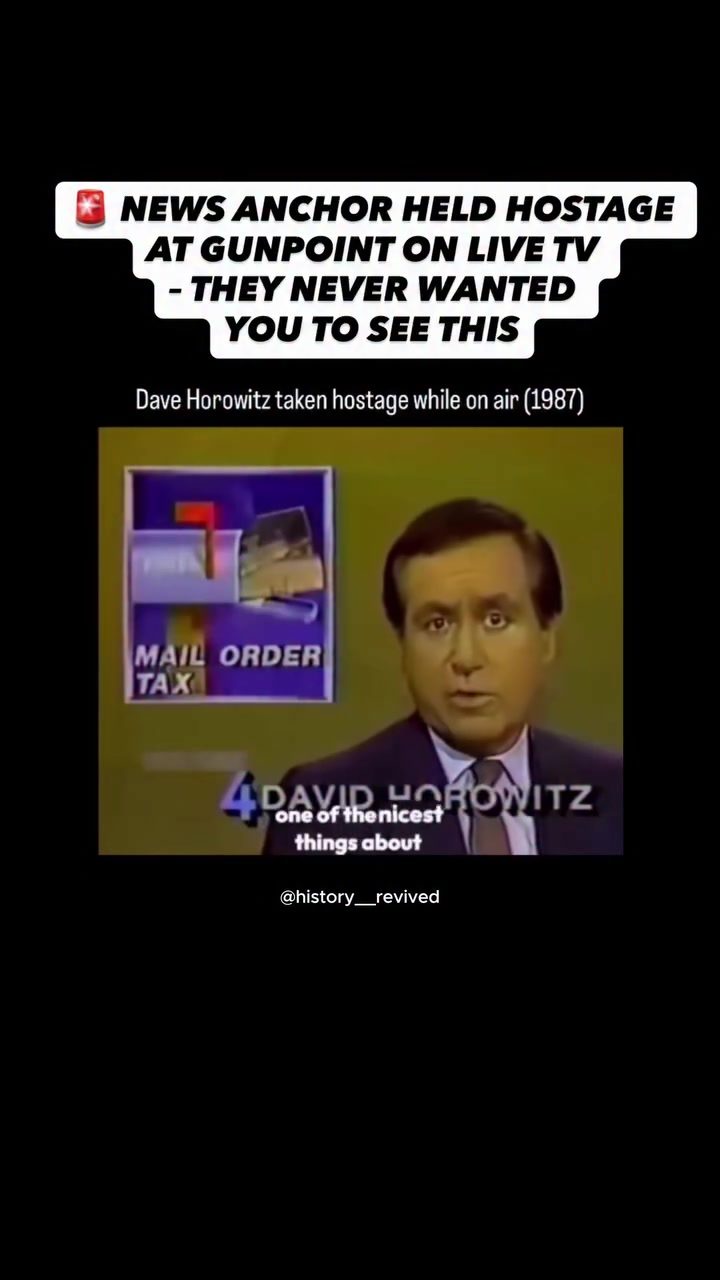
News Anchor Held Hostage at Gunpoint on Live TV
In 1987, during a live broadcast, KNBC reporter David Horowitz found himself in an unprecedented and alarming situation. Gary Stollman, the son of a former KNBC health reporter, interrupted the broadcast by pressing what appeared to be a .45-caliber handgun into Horowitz's back. Stollman forced Horowitz to read a bizarre message live on air, claiming that the CIA, UFOs, and alien forces were secretly manipulating events. Viewers saw approximately 28 seconds of this disturbing incident before the feed was cut. The station refused to air the rest of Stollman's message, leaving many questions unanswered.
Context / Why this matters
Hostage situations on live television are rare, making this event a jarring and unforgettable moment in American broadcasting history. The incident not only disrupted a routine news broadcast but also introduced conspiracy theories and suspicions about government agencies and extraterrestrial involvement, capturing public imagination and sparking intrigue.
Main discussion
The Incident
The incident unfolded quickly. Stollman, armed with a realistic-looking handgun, approached Horowitz on the set of Channel 4 News. He handed Horowitz a statement and demanded that it be read on air. The contents of the message were shocking: it alleged that the CIA, along with UFOs and alien forces, were involved in covert operations that manipulated world events. Stollman also claimed that his father, Max Stollman, a former KNBC health reporter, had been replaced by a clone created by the CIA and aliens. He went further to allege that a KNBC news anchor was also a clone. These claims, while sensational, have never been substantiated.
The Aftermath
After Horowitz finished reading the statement, Stollman calmly placed the weapon on the desk and revealed that it was a toy replica. He surrendered without incident, and no one was physically harmed. Despite the non-violent resolution, the psychological impact on viewers and the media industry was profound. The incident raised questions about broadcasting security, the boundaries of live television, and the potential for such disruptive events to occur again.
Did Stollman have a motive?
Stollman's intent remains a subject of speculation. He claimed he wanted his message to be heard, but the true motivation behind his actions is unclear. Some believe he sought to expose hidden truths about government agencies and extraterrestrial involvement. Others suggest he may have had personal grievances or mental health issues. The lack of concrete answers has left the public with more questions than answers.
Practical tips
While it is impossible to predict or prevent such unprecedented events, media outlets can take steps to enhance their security measures and protocols to minimize risks.
-
Enhance Security Protocols: Implement rigorous security checks and protocols to prevent unauthorized access to studio sets during live broadcasts. This includes limiting access to the studio and having security personnel on standby.
-
Preparation for Unforeseen Events: Train staff on how to handle unexpected and potentially dangerous situations. This includes having a clear protocol for what to do if a hostage situation or other disruptive event occurs.
-
Public Communication: Establish a plan for communicating with viewers in the event of a disruption. This could include pre-recorded messages or live updates to keep the public informed and calm.
Important takeaways
The 1987 hostage incident involving David Horowitz and Gary Stollman serves as a reminder of the vulnerabilities in live broadcasting. While the immediate aftermath saw no physical harm, the psychological impact and the lingering questions about motives and intentions highlight the need for enhanced security and preparedness in the media industry. The incident also underscores the public's fascination with conspiracy theories and the blurred lines between reality and speculation in the age of mass media.
Conclusion
The 1987 hostage incident involving KNBC reporter David Horowitz remains one of the most bizarre and memorable moments in American television history. Gary Stollman's actions, while non-violent, disrupted a live broadcast and introduced far-fetched claims about government agencies and extraterrestrial involvement. The incident serves as a reminder of the need for vigilance and preparedness in the media industry, as well as the public's enduring fascination with the unexplained and the mysterious.
Watch the Reel
Questions readers ask
Who was David Horowitz and what happened to him during the 1987 hostage crisis?
David Horowitz was a KNBC reporter who was thrust into a harrowing situation during a live broadcast in 1987. While on air, he was held at gunpoint by Gary Stollman, who forced him to read an unusual message about conspiracies involving the CIA, UFOs, and aliens. The event lasted approximately 28 seconds before the feed was cut, making it a unique and shocking moment in broadcast history.
Who was Gary Stollman and what was his motive?
Gary Stollman was the individual who interrupted the live broadcast and held David Horowitz at gunpoint. He was the son of a former KNBC health reporter. His motive behind the bizarre message about CIA, UFO, and alien conspiracies remains unclear, as the full extent of his intentions was never fully disclosed.
What was the content of the message that David Horowitz was forced to read?
The message that David Horowitz was forced to read live on air was a bizarre and cryptic statement claiming that the CIA, UFOs, and alien forces were secretly manipulating events. The specific details of the message were not fully aired, leaving many viewers with unanswered questions.
How did KNBC handle the situation during and after the broadcast?
During the broadcast, KNBC quickly cut the feed after approximately 28 seconds, refusing to air the rest of Stollman's message. After the incident, the station likely conducted an internal review and cooperated with law enforcement to address the situation, although the specific actions taken are not detailed in the provided excerpt.
Were there any similar incidents involving hostage situations on live television?
Hostage situations on live television are extremely rare, which is what makes the 1987 incident so unprecedented and memorable. While there have been other instances of live broadcasts being interrupted, the specific scenario of a news anchor being held at gunpoint and forced to read a bizarre message is unique in broadcast history.
How did viewers react to the 1987 hostage crisis?
Viewers were likely shocked and disturbed by the 28 seconds of footage they saw before the feed was cut. The unexpected and alarming nature of the incident left many viewers with unanswered questions and a sense of unease, making it a memorable and disturbing moment in broadcast history.
What happened to Gary Stollman after the 1987 hostage crisis?
The article does not provide specific details about what happened to Gary Stollman after the hostage incident. However, it is likely that he faced legal consequences for his actions, given the serious nature of the crime. Further information would require additional research into the legal proceedings that followed the event.
Recent articles
Fresh deep dives from the latest Reels we unpacked.




Comments
Be the first to comment.