Vortex Cannons: Engineering Marvels and Acoustic Phenomena
Vortex cannons are a fascinating engineering marvel that leverage compressed air to create powerful vortices. These devices have gained attention for their unique capabilities and impressive demonstrations. One notable aspect of a vortex cannon is the sound it produces. So, what does a vortex cannon sound like?
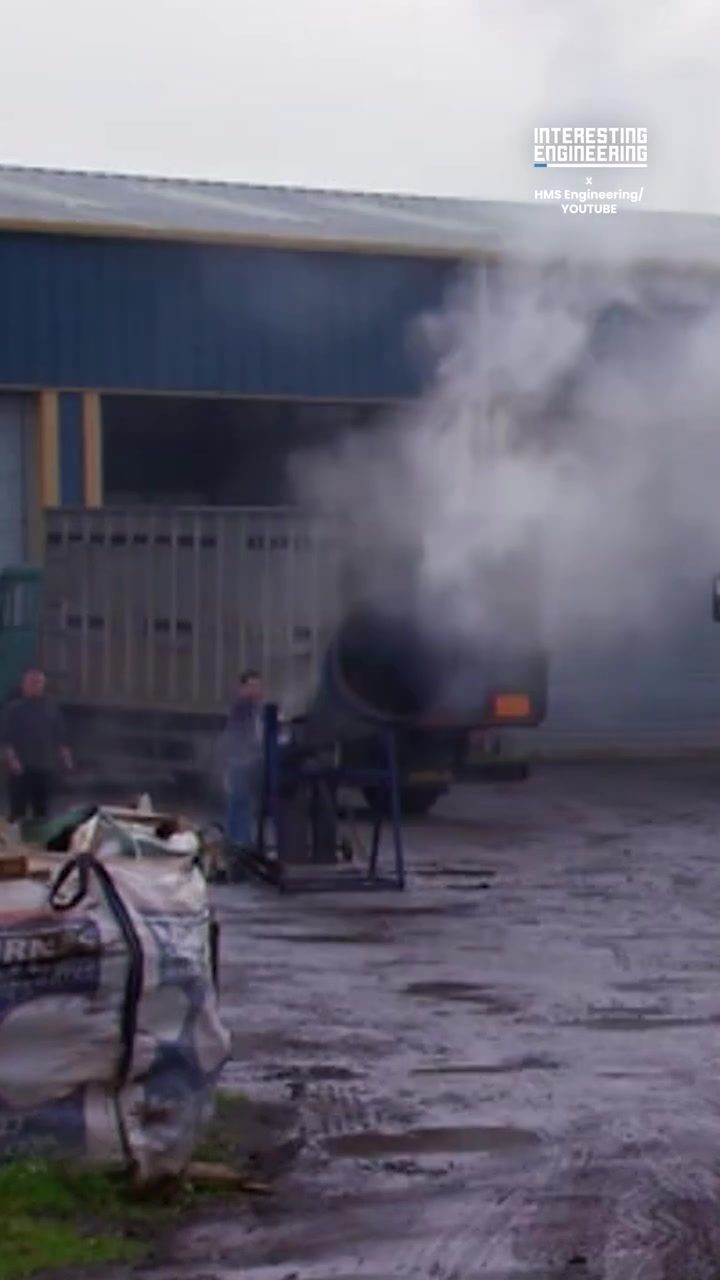
A vortex cannon fires a ring of compressed air at high velocities. This particular type of cannon can fire a vortex of air at speeds up to 185 miles per hour (mph). When the vortex is released, it creates a distinctive sonic boom that can be heard for miles around. This acoustic phenomenon is both awe-inspiring and scientifically intriguing. Let's explore the engineering behind vortex cannons, their sonic characteristics, and their applications.
Context: Engineering and Acoustics
Vortex cannons operate on the principles of fluid dynamics and compressed air. The device typically consists of a chamber where air is pressurized and then released through a specific opening. This controlled release creates a vortex—a spinning column of air that moves forward like a projectile.
The sonic boom produced by a vortex cannon is a result of the rapid expansion of air. When the compressed air is released, it expands rapidly, creating a shockwave that travels through the air. This shockwave is what we perceive as the sonic boom. The speed at which the vortex travels (up to 185 mph) and the volume of air displaced contribute to the intensity and reach of the sonic boom.
Main Discussion
The Science Behind Vortex Cannons
Vortex cannons operate on the principle of creating a vortex ring, a phenomenon that occurs when a fluid (in this case, air) is forced through a circular opening. The air forms a doughnut-shaped ring that travels forward. Several factors influence the formation and behavior of a vortex ring, including the size of the opening, the pressure of the compressed air, and the ambient conditions.
The speed at which the vortex travels is a critical factor in its sonic characteristics. The faster the vortex moves, the more intense the shockwave it produces. This is why a vortex cannon firing at 185 mph creates such a powerful and far-reaching sonic boom. The high velocity ensures that the shockwave travels a considerable distance before dissipating.
Applications of Vortex Cannons
While vortex cannons are often associated with demonstrations and experiments, they have practical applications as well. For instance, vortex cannons can be used in various industries for tasks such as cooling, cleaning, and even fire suppression. The powerful vortex of air can displace combustible gases, reducing the risk of fire. In the automotive industry, vortex cannons can be used to cool engines and other components by rapidly moving hot air away from the engine block.
The Acoustic Phenomena
The sonic boom produced by a vortex cannon is a fascinating acoustic phenomenon. The shockwave generated by the rapid expansion of air creates a sharp, loud noise that can travel long distances. This acoustic signature is not only impressive but also scientifically valuable. Engineers and scientists study the sound waves produced by vortex cannons to better understand the behavior of shockwaves and their potential applications.
Understanding the characteristics of the sonic boom can help in various fields, including aerodynamics and military technology. In aerospace, the study of shockwaves is crucial for designing faster, more efficient aircraft. In the military, understanding the acoustics of explosive devices can aid in developing better protective measures and technologies.
Practical Tips for Building a Vortex Cannon
Building a vortex cannon can be a fun and educational project. Here are some practical tips to help you create your own:
Materials Needed
- A plastic bottle or a PVC pipe for the chamber
- A rubber sheet or a flexible membrane for the opening
- A source of compressed air (such as a bicycle pump or air compressor)
- A circular opening for the vortex to form
Steps to Build
-
Prepare the Chamber: Choose a container with a cylindrical shape, such as a plastic bottle or PVC pipe. This will serve as the chamber where the air is pressurized.
-
Create the Opening: Cut a circular opening at one end of the chamber. This opening should be large enough to allow the vortex to form but small enough to maintain high pressure.
-
Attach a Membrane: Cover the opening with a flexible membrane, such as a rubber sheet. This membrane will help concentrate the air and form the vortex when released.
-
Connect a Compressed Air Source: Attach a source of compressed air to the opposite end of the chamber. This could be a bicycle pump, air compressor, or any other device that can supply pressurized air.
-
Test and Adjust: Start by pumping air into the chamber until the membrane bulges. Release the air by quickly removing the membrane or opening a valve. Adjust the size of the opening and the pressure to achieve the desired vortex effect.
Important Takeaways
Engineering Insights
Vortex cannons provide valuable insights into the principles of fluid dynamics and compressed air. Understanding how these devices work can enhance your knowledge of aerodynamics, acoustics, and mechanical engineering. The ability to create and control a vortex of air offers numerous possibilities for practical applications.
Acoustic Observations
The sonic boom produced by a vortex cannon is a testament to the power of fluid dynamics. The rapid expansion of air and the resulting shockwave create a unique acoustic signature that can be heard for miles. Studying this phenomenon can contribute to advancements in various fields, including aerospace and military technology.
Practical Applications
Vortex cannons have several practical applications beyond demonstrations. They can be used for cooling, cleaning, and fire suppression, among other tasks. The versatile nature of these devices makes them useful in various industries, from automotive to aerospace.
Conclusion
Vortex cannons are an engineering marvel that combines the principles of fluid dynamics and acoustics to create a powerful and impressive display. The sonic boom produced by these devices is a result of the rapid expansion of air and the resulting shockwave. Understanding the science behind vortex cannons and their applications can provide valuable insights and practical benefits. Whether you're interested in building your own vortex cannon or simply fascinated by the acoustic phenomenon, these devices offer a unique and captivating experience.
Watch the Reel
Questions readers ask
How does a vortex cannon generate its powerful air vortex?
A vortex cannon uses compressed air, which is released in a controlled manner to create a powerful vortex. The compressed air is forced through a circular opening, causing it to form a ring-shaped vortex that propels outward at high speeds, up to 185 mph.
What causes the sonic boom produced by a vortex cannon?
The sonic boom is generated when the air vortex travels faster than the speed of sound. This rapid movement creates a shockwave, similar to that of a supersonic jet, which results in the distinctive boom heard from a distance.
Can vortex cannons be built in large scales for public demonstrations?
Yes, vortex cannons can be built in large scales to enhance their impressive displays. Larger cannons can create even more powerful and visible vortices, along with a more audible sonic boom. These large-scale models are often used in public demonstrations to showcase the power of fluid dynamics and air compression.
What are the key principles of physics behind the operation of a vortex cannon?
The operation of a vortex cannon is based on principles of fluid dynamics and air compression. When compressed air is forced through a specific opening, it forms a vortex due to the conservation of angular momentum. The high-speed rotation of the air creates a powerful and stable vortex that can travel significant distances.
Are there different types of vortex cannons, and if so, how do they differ?
Yes, there are different types of vortex cannons, primarily differing in their design and size. Some are handheld devices used for smaller demonstrations, while others are large-scale models used for more impressive displays. The size and power of the vortex cannon can affect the speed and stability of the air vortex, as well as the intensity of the sonic boom.
How can vortex cannons be used in practical applications beyond demonstrations?
Vortex cannons have potential practical applications in fields like agriculture, where they can be used for pest control by disrupting pest habitats. They can also be utilized in industrial settings for cleaning or cooling purposes. Additionally, they are used in research to study fluid dynamics and high-speed airflow.
Related deep dives
Similar reads based on topic and creator.



Recent articles
Fresh deep dives from the latest Reels we unpacked.




Comments
Be the first to comment.