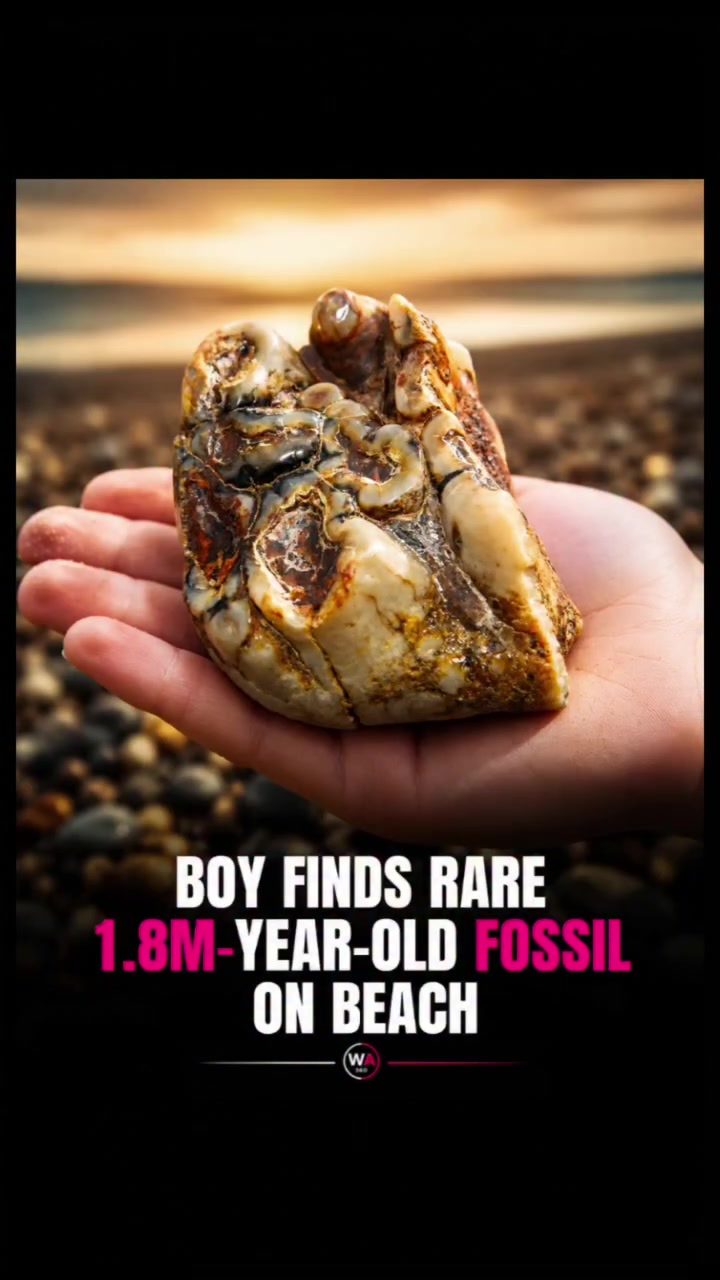
A 1.8-Million-Year-Old Fossil Found on a Beach
The discovery of a 1.8-million-year-old fossil by a young boy on a beach underscores the remarkable potential for finding significant historical artifacts in everyday surroundings. This extraordinary find, identified as a 1.8-million-year-old fossil, sheds light on the past and highlights the importance of curiosity and observation in uncovering history.
Context
Fossils are invaluable pieces of evidence that provide insights into the Earth's past. They offer glimpses into ancient ecosystems, climatic conditions, and the evolution of life on our planet. The discovery of a 1.8-million-year-old fossil emphasizes the potential for significant archaeological finds in seemingly ordinary locations. It underscores the idea that history is not confined to museums and archaeological digs; it can be hiding in plain sight, waiting to be discovered.
The Significance of Fossil Discoveries
Fossils are more than just relics of the past; they are time capsules that tell the story of Earth's evolution. By studying fossils, scientists can reconstruct ancient environments, understand the extinction of species, and trace the lineage of modern organisms. This particular fossil, estimated to be 1.8 million years old, is a testament to the longevity and resilience of life on Earth. It serves as a reminder that the planet has undergone significant changes over millions of years, and understanding these changes can help us appreciate the current state of our environment.
The Discovery Process
Finding a fossil that dates back 1.8 million years is an exciting and rare occurrence. The discovery began when a boy, while walking along the beach, stumbled upon what appeared to be an ordinary rock. However, upon closer inspection, it turned out to be an extraordinary glimpse into the distant past. This discovery highlights the importance of curiosity and observation. Sometimes, the greatest treasures are not made of gold; they are pieces of history that connect us to a world long before humans existed.
What the Fossil Tells Us
The fossil in question is likely a shell or similar marine organism. Given its age, it provides valuable information about the marine life that existed millions of years ago, offering a glimpse into the conditions of the Earth at that time. Studying this fossil can help scientists understand the ecosystem, climate, and geological processes that shaped our planet over the past 1.8 million years.
The Importance of Natural Heritage Conservation
The discovery of this fossil emphasizes the importance of protecting our natural heritage. As we continue to explore and understand the world around us, it is crucial to preserve these ancient artifacts and the environments they come from. By safeguarding these treasures, we can ensure that future generations have the opportunity to learn from and appreciate the history of our planet.
Protecting Fossil Sites
Conservation efforts for fossil sites and natural environments are essential for preserving the historical and ecological information they contain. Protecting these areas from development and ensuring they are accessible for scientific research can yield valuable insights into the Earth’s past and future. This includes safeguarding beaches, cliffs, and other geological formations where fossils are often found.
Encouraging Curiosity and Observation
Curiosity and observation are key to uncovering hidden treasures and understanding our world better. Encouraging these traits in individuals, especially young people, fosters a sense of discovery and appreciation for natural history. It also highlights the importance of being mindful of our surroundings, even in seemingly ordinary places.
Practical Tips for Fossil Hunting
While not everyone may be lucky enough to find a 1.8-million-year-old fossil, there are practical tips for fossil hunting that can increase the chances of making a significant discovery.
Know the Best Places to Look
Fossils are often found in areas with significant geological activity, such as near cliffs, riverbeds, and beaches. These locations have undergone erosion and sediment deposition, which can expose fossils over time.
Use the Right Tools
Having the right tools can make a significant difference in fossil hunting. Essential tools include a geological hammer, a chisel, a brush, and a magnifying glass. These tools help in carefully extracting fossils without damaging them.
Be Patient and Observant
Finding fossils requires patience and a keen eye for detail. It is often the case that fossils are hidden among ordinary rocks and stones. Taking the time to closely examine the environment can lead to significant discoveries.
Follow Ethical Guidelines
When fossil hunting, it is essential to follow ethical guidelines to preserve the integrity of the fossils and their sites. This includes respecting private property, obtaining necessary permits, and reporting significant finds to local authorities or museums.
Important Takeaways
The discovery of a 1.8-million-year-old fossil on a beach highlights several key points:
- History is not confined to museums and archaeological digs; it can be found in ordinary places.
- Curiosity and observation are essential for uncovering hidden treasures and understanding our world.
- Fossils provide valuable insights into ancient life, climates, and geological processes.
- Protecting our natural heritage is crucial for preserving historical and ecological information.
- Following ethical guidelines and using the right tools can enhance the chances of making significant fossil finds.
Conclusion
The discovery of a 1.8-million-year-old fossil by a young boy on a beach serves as a reminder of the potential for significant historical finds in everyday surroundings. It underscores the importance of curiosity, observation, and protecting our natural heritage. Fossils are invaluable pieces of evidence that provide insights into the Earth's past, and their discovery can rewrite our understanding of history. Whether you are a seasoned fossil hunter or simply someone who enjoys a beach walk, keeping your eyes open for unusual rocks and stones can lead to extraordinary discoveries.
Watch the Reel
Questions readers ask
What makes the discovery of a 1.8-million-year-old fossil on a beach so significant?
This discovery is significant because it underscores the potential for finding historically important artifacts in everyday, ordinary locations, such as a beach. It also shows that ancient history is not confined to well-known archaeological sites, but can be found in places where people commonly visit.
Who found the 1.8-million-year-old fossil and how did they do it?
The fossil was discovered by a young boy during what was likely an ordinary beach walk. His find highlights the importance of curiosity and observation, as well as the potential for anyone to make a remarkable discovery.
What can fossils, like the 1.8-million-year-old one, teach us about Earth's past?
Fossils provide invaluable insights into ancient ecosystems, climatic conditions, and the evolution of life. The 1.8-million-year-old fossil, in particular, offers a glimpse into the past and contributes to our understanding of Earth's history.
Are there other instances of significant fossil discoveries in ordinary locations?
Yes, while the 1.8-million-year-old fossil is an extraordinary find, there have been other noteworthy discoveries in ordinary locations. Many fossils have been found in places like beaches, parks, and even backyards, showing that history can be hidden in plain sight.
How can I increase my chances of finding a significant fossil like the 1.8-million-year-old one?
To increase your chances of finding a significant fossil, keep an eye out during beach walks or visits to other natural locations. Be curious, observe your surroundings, and look for anything unusual in the landscape. It's also helpful to learn about local geology and history before exploring.
What should I do if I think I've found a significant fossil?
If you believe you've discovered a significant fossil, it's important to document the find with photos and notes, then contact a local museum or university with a paleontology department. Do not attempt to remove the fossil yourself, as this could cause damage.
What are the chances of finding a 1.8-million-year-old fossil on a beach?
The chances of finding a 1.8-million-year-old fossil on a beach are low, but the possibility is not impossible. The more you explore and observe, the better your chances of making a significant discovery. Although it is rare, the discovery emphasizes the importance of curiosity and observation in revealing Earth's past.
Related deep dives
Similar reads based on topic and creator.



Recent articles
Fresh deep dives from the latest Reels we unpacked.




Comments
Be the first to comment.