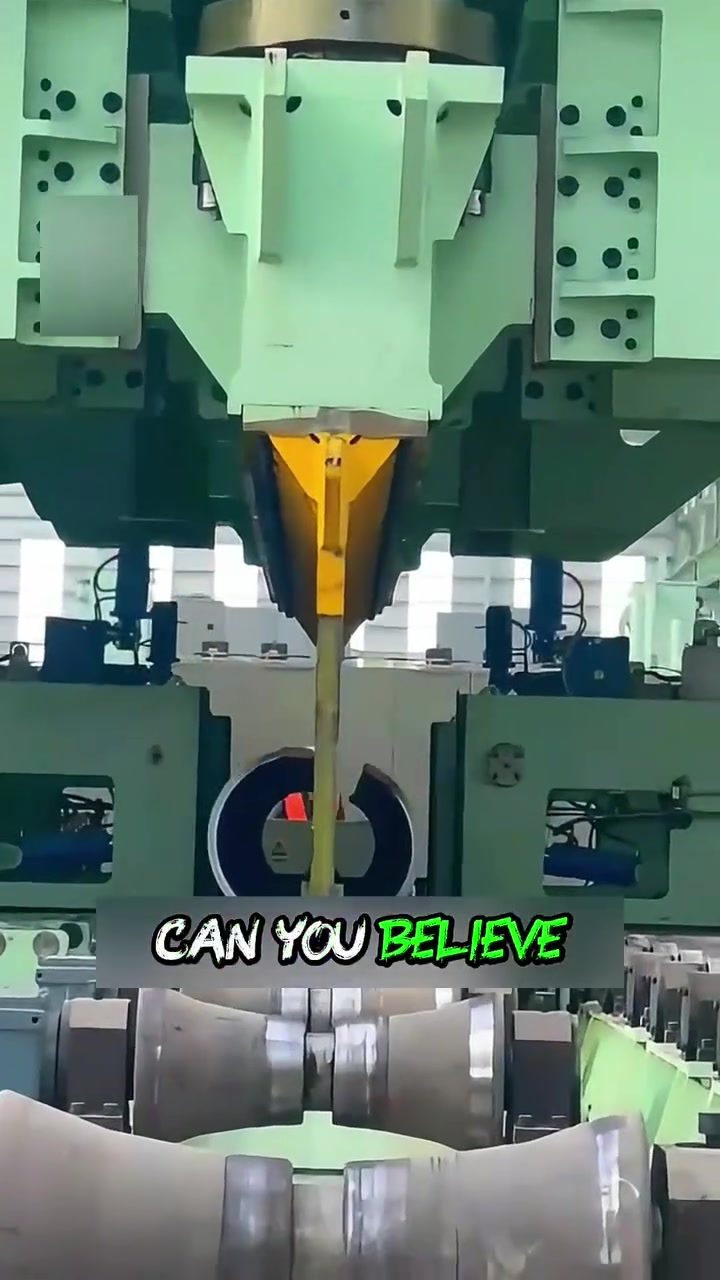
Hydraulic Press Demos
A 10,000-ton hydraulic press, specifically a CNC JCO forming machine, demonstrates the immense power of industrial machinery. This demonstration involves bending a 40 millimeter thick plate of Q355D special steel. The process is not magic, but pure industrial power.
CNC Forming Machine
The JCO forming machine uses a 10,000-ton force to bend and shape steel. The hydraulic press operates on a CNC (Computer Numerical Control) system, which means it can be programmed to perform precise, repeatable movements. CNC machines are a staple in modern manufacturing, used for tasks ranging from metal cutting to drilling and forming.
The C in CNC stands for ‘computer’ and N for ‘numerical’. It’s a system that takes a software program and converts it to actual movements of the machine’s components. CNC machines can perform complex tasks with high precision and consistency. They are widely used in the manufacturing industry due to their high productivity, accuracy, and versatility.
The forming machine showcased in this demonstration is designed to handle extremely thick and tough materials. The steel plate being worked on is 40 millimeters thick and made of a special type of steel, Q355D, which is renowned for its strength. Q355D steel is often used in construction and industrial applications where high strength and durability are required, such as in building foundations and heavy machinery.
Why Hydraulic Presses Are Used
You might wonder, why not just cast the pipe? The answer lies in the extreme conditions that materials must withstand. In oil and gas operations, pipes are subjected to immense pressures and corrosive environments. Materials that can survive these conditions at depths of thousands of meters beneath the ocean are quite rare. The hydraulic press allows for the precise forming of these materials into the required shapes, ensuring that they can withstand the harsh environments they will encounter.
The JCOE Process
The process being demonstrated is the JCOE (J-Shaped to C-Shaped to O-Shaped) process. This method is particularly useful for forming large-diameter pipes. The process involves several steps:
- J-Shaped Forming: The flat steel plate is first pressed into a J-shape. This initial step prepares the plate for further forming by giving it a basic curved shape.
- C-Shaped Forming: The J-shaped plate is then pressed into a C-shape. This step further bends the plate, creating an opening that will eventually become the pipe’s interior.
- O-Shaped Forming: Finally, the C-shaped plate is sealed into a perfect O-shape, forming the pipe. The edges are pressed together tightly, ensuring a seamless and strong weld.
This method is compared to wrapping a dumpling, illustrating the precision and control involved in the process. The JCOE process is widely used in the manufacturing of large-diameter pipes for industrial applications, including oil and gas, construction, and infrastructure.
Benefits of JCOE Process
Strength and Durability
The JCOE process ensures that the resulting pipe is extremely strong and durable. The cold bending force applied by the hydraulic press does not heat the metal, which can weaken it. Instead, the process uses raw, cold bending force, maintaining the metal’s integrity and strength. This is crucial for applications where the pipes must withstand extreme pressures and harsh conditions.
Precision and Consistency
The CNC system allows for precise and consistent forming of the pipes. The machine can be programmed to produce pipes of exact dimensions and shapes, ensuring uniformity and reliability in the final product. This level of precision is essential in industries where any deviation can lead to catastrophic failures.
Efficiency
The JCOE process is highly efficient, enabling the production of large-diameter pipes in a relatively short amount of time. This efficiency is a result of the powerful hydraulic press and the precise control offered by the CNC system. The machine can handle large and thick plates, reducing the need for multiple forming operations and speeding up the production process.
The Role of Hydraulic Presses
At the heart of this process is the hydraulic press, a key component in modern industrial operations. Hydraulic presses use fluid pressure to generate immense force, which is transmitted through a piston to perform tasks such as bending, punching, and shaping. These presses are highly versatile and can be used in a variety of applications, from automotive and aerospace to construction and manufacturing.
Versatility
Hydraulic presses are highly versatile and can be used for a wide range of tasks. They can handle materials of varying thicknesses and hardnesses, making them suitable for different types of industrial applications. Furthermore, hydraulic presses can be easily adjusted to perform different types of operations, making them a valuable addition to any manufacturing facility.
Precision
The hydraulic press used in this demonstration is equipped with a CNC system, which allows for precise and repeatable movements. This ensures that the forming process is consistent and can produce pipes of exact dimensions.
Power
The 10,000-ton hydraulic press used in this demonstration is an impressive example of the power of industrial machinery. This level of force is required to bend and shape the thick and tough Q355D steel plate. The hydraulic press generates this force using fluid pressure, which is transmitted through a piston to perform the bending operation.
Practical Tips
Safety First
Safety is paramount when operating industrial machinery like a 10,000-ton hydraulic press. Operators should always follow proper safety protocols and wear appropriate personal protective equipment (PPE). This includes safety glasses, gloves, and protective clothing to shield against flying debris and other hazards.
Regular Maintenance
Maintaining the hydraulic press is crucial for its optimal functioning and longevity. Regular maintenance tasks include checking and replacing hydraulic fluid, inspecting for leaks, and ensuring that all moving parts are in good working condition. Regular inspections should also be conducted to identify any potential issues before they become major problems.
Proper Programming
For CNC machines, proper programming ensures precise and repeatable results. Operators should be well-versed in the programming software and understand the specific requirements of the task at hand. Any errors in the programming can lead to defective products, downtime, and increased costs.
Important Takeaways
Hydraulic presses play a crucial role in modern manufacturing, enabling the production of high-quality, durable, and precise components. The JCOE process demonstrated in this demonstration showcases the versatility and power of hydraulic presses. Here are some important takeaways:
- The JCOE process is an effective method for forming large-diameter pipes from thick and tough materials.
- The 10,000-ton hydraulic press used in this demonstration exemplifies the immense power and precision of industrial machinery.
- The CNC system allows for precise and repeatable movements, ensuring consistent and high-quality results.
- Regular maintenance and proper programming are essential for the optimal functioning of hydraulic presses.
Conclusion
The 10,000-ton CNC JCO forming machine and JCOE process provide a glimpse into the incredible capabilities of industrial machinery. Through the use of raw, cold bending force, this machine can shape and bend some of the toughest materials, ensuring the creation of durable and reliable components. Hydraulic presses, with their versatility and precision, are indispensable tools in modern manufacturing, enabling the production of high-quality products that can withstand the demands of various industries.
Watch the Reel
Questions readers ask
What makes a 10,000-ton hydraulic press suitable for bending 40mm steel?
A 10,000-ton hydraulic press, such as the CNC JCO forming machine, is suitable for bending 40mm steel due to its immense force. This force allows it to handle thick, durable materials with precision, making it ideal for heavy-duty applications in construction and industry.
How does a CNC system enhance the capabilities of a hydraulic press?
A CNC (Computer Numerical Control) system allows a hydraulic press to perform precise, repeatable movements. By programming the machine, operators can ensure consistency and accuracy in tasks such as bending and forming steel, which is crucial for creating high-quality components.
What is the significance of the Q355D special steel used in the demonstration?
Q355D special steel is a high-strength, low-alloy structural steel with excellent weldability and toughness. The fact that a 10,000-ton hydraulic press can bend a 40mm thick plate of this material showcases the extreme power and capability of the machine.
What are some common uses for a 10,000-ton hydraulic press in industrial settings?
Industrial settings utilize 10,000-ton hydraulic presses for a variety of applications, including metal bending, shaping, and forming. These presses are essential for creating durable, precise components required in construction, heavy-duty machinery, and other industrial applications.
How does the hydraulic press force help in metal bending?
The hydraulic press force is crucial in metal bending as it provides the necessary pressure to deform and shape the metal. In the case of a 10,000-ton press, this force is exceptionally high, allowing it to bend even thick materials like 40mm steel with precision and reliability.
What kind of materials can be processed with a CNC hydraulic press?
A CNC hydraulic press can process a variety of materials, but it's particularly suited for metals. These machines are often used for bending and forming heavy-duty materials like steel. The CNC system allows for precise control, making it versatile for different metalworking tasks.
What safety measures are typically in place when operating a powerful hydraulic press?
When operating a powerful hydraulic press, safety measures typically include proper training for operators, regular machine maintenance, and the use of personal protective equipment. Additionally, safety barriers and emergency stop controls are often in place to prevent accidents and ensure safe operation.
Recent articles
Fresh deep dives from the latest Reels we unpacked.




Comments
Be the first to comment.