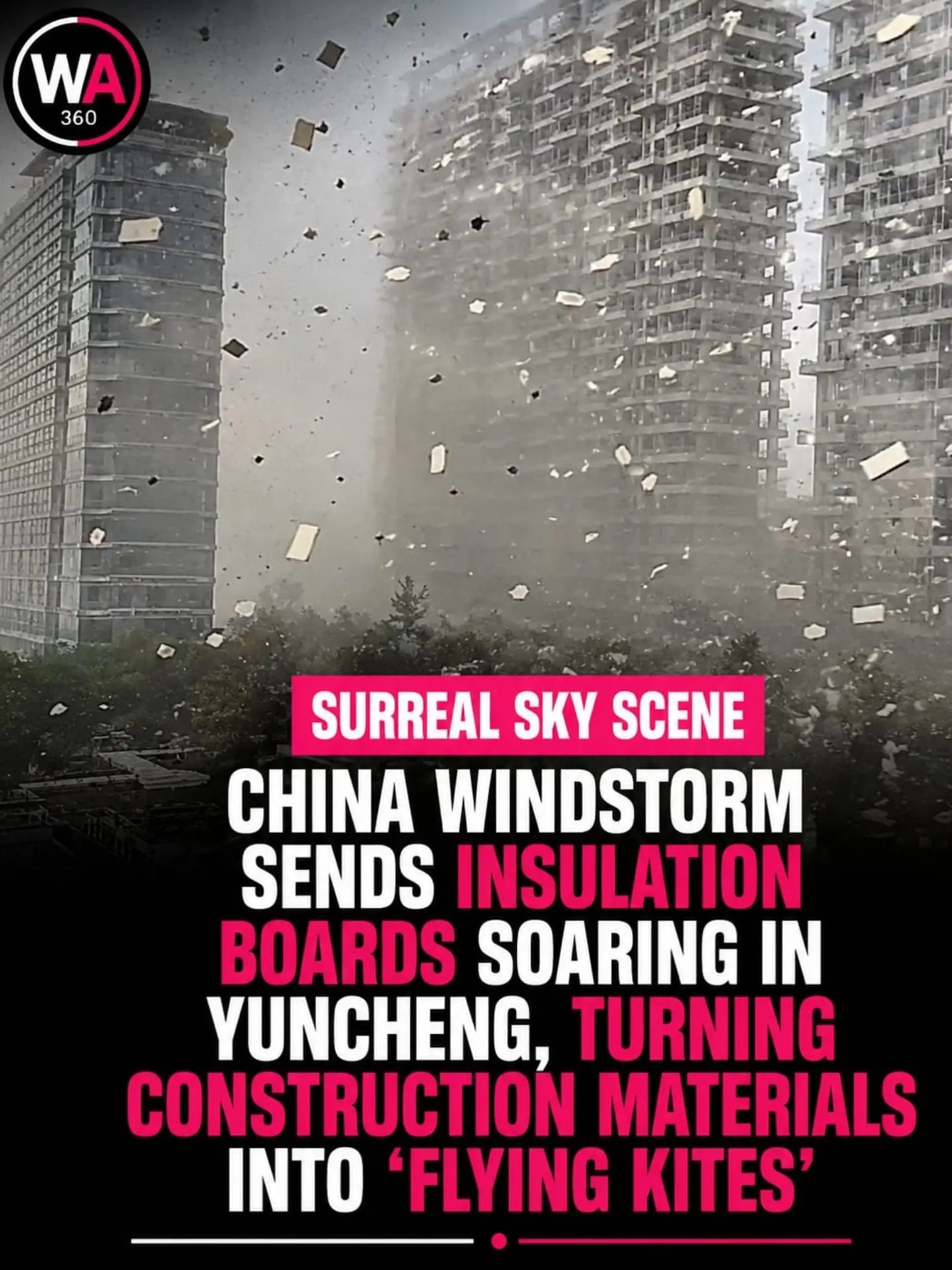
Windstorms and Urban Construction: The Yuncheng Insulation Board Incident
In Yuncheng, China, a powerful windstorm turned a typical day into a scene of extraordinary destruction and awe. Massive gusts tore insulation boards from construction sites, transforming them into airborne debris that floated like giant kites across the city. This surreal spectacle highlighted the raw power of nature and the unexpected hazards that extreme weather can bring to urban environments.
Context: Why This Matters
Extreme weather events are becoming more frequent and intense, posing significant threats to public safety and infrastructure. The Yuncheng incident underscores the importance of preparedness and robust safety measures, particularly in urban areas where construction is ongoing. As climate patterns shift, understanding the impact of windstorms on construction materials and urban landscapes becomes crucial for mitigating risks and ensuring public safety.
The Power of Nature
The windstorm in Yuncheng demonstrated the incredible force of nature. Insulation boards, typically used as a protective and weatherproofing material in construction, were sent soaring high above the city. This surreal scene, which looked almost cinematic, served as a stark reminder of how quickly nature can alter the landscape.
Urban Construction and Extreme Weather
Urban areas, with their dense concentration of buildings and infrastructure, are particularly vulnerable to extreme weather events. Construction sites, often located in the heart of cities, present unique challenges. Materials such as insulation boards, while essential for building projects, can become hazardous projectiles during high winds. This highlights the need for secure construction practices and reinforced safety protocols.
Main Discussion
The Yuncheng Windstorm
The windstorm in Yuncheng was a dramatic display of nature's raw power. Massive gusts ripped insulation boards from construction sites, turning them into airborne debris that floated like giant kites across the city. This surreal scene stunned residents and quickly spread across social media, highlighting the incredible force of nature and the unexpected risks that extreme weather can create in urban areas.
Construction Materials and Windstorms
Construction materials, especially lightweight and flexible ones like insulation boards, are particularly susceptible to high winds. The Yuncheng incident underscores the importance of securing these materials properly. During extreme weather events, it is crucial to ensure that all construction sites are well-prepared to withstand high winds and other severe conditions.
Public Safety During Severe Weather
Extreme weather events pose significant threats to public safety, especially in urban areas. The Yuncheng incident serves as a reminder of the importance of preparedness and robust safety measures. As climate-related weather extremes become more frequent, it is essential to have strong protocols in place to reduce potential hazards.
Climate Change and Weather Extremes
Climate change is altering weather patterns, leading to more frequent and intense extreme weather events. This shift requires urban planners and construction professionals to adapt their practices to mitigate risks. Strong preparation and safety measures are essential to ensure that urban environments are resilient to nature's fury.
Practical Tips
Secure Construction Sites
Ensure that construction sites are well-secured to withstand high winds and other severe weather conditions. This includes using heavy-duty materials and securing all loose items, especially lightweight and flexible materials like insulation boards.
Public Awareness and Education
Raise awareness among residents about the potential risks of extreme weather events. Public education campaigns can help communities understand the importance of preparedness and safety measures.
Implementing Robust Safety Protocols
Develop and implement robust safety protocols for construction sites and urban environments. This includes regular inspections, secure storage of materials, and immediate action plans during severe weather alerts.
Urban Planning and Resilience
Incorporate resilience into urban planning to mitigate the risks of extreme weather events. This includes designing buildings and infrastructure to withstand high winds and other severe conditions, as well as creating emergency response plans.
Important Takeaways
Extreme weather events, such as the windstorm in Yuncheng, highlight the need for robust safety measures and preparedness. Urban construction sites, with their concentration of materials and infrastructure, are particularly vulnerable to such events. Implementing secure construction practices, raising public awareness, and planning for resilience are essential steps to mitigate risks and ensure public safety.
Conclusion
The Yuncheng windstorm serves as a stark reminder of nature's power and the risks it poses to urban environments. As climate-related weather extremes become more frequent, it is crucial to be prepared and to implement strong safety measures. Ensuring that construction sites are well-secured and urban planning incorporates resilience can help mitigate the risks and protect communities from extreme weather events.
Watch the Reel
Questions readers ask
What caused the insulation boards to fly through the air in Yuncheng?
A powerful windstorm in Yuncheng, China, generated strong gusts that tore insulation boards from construction sites, turning them into airborne debris. The boards, lightweight and large, were easily picked up and carried by the wind, creating a spectacular and hazardous scene.
What does the Yuncheng incident reveal about urban construction?
The Yuncheng incident highlights the vulnerabilities of urban construction, particularly the risk posed by loose, lightweight materials. It serves as a stark reminder of the importance of securing construction sites and materials to prevent them from becoming hazardous projectiles during extreme weather events.
How can cities better prepare for extreme weather events like the Yuncheng windstorm?
Cities can enhance preparedness by implementing robust safety measures, such as securing construction materials, reinforcing structures, and having emergency response plans in place. Regular inspections and maintenance of construction sites, especially during extreme weather alerts, can also mitigate potential risks.
What are the potential impacts of flying construction materials during a windstorm?
Flying construction materials can cause significant damage to property and pose serious threats to public safety. They can break windows, damage vehicles, injure or even harm pedestrians, and create chaos in urban areas, as seen in the Yuncheng incident.
What measures can construction sites take to prevent similar incidents?
Construction sites can take several measures to prevent similar incidents, including securing loose materials, using weather-resistant covers, and installing wind barriers. Regular weather monitoring and having an emergency protocol in place can also help ensure that materials are properly secured before a storm hits.
Why is it important to address construction site safety during extreme weather events?
Addressing construction site safety during extreme weather events is crucial to protect public safety and minimize property damage. By securing materials and enforcing safety protocols, cities can reduce the risks associated with flying debris and ensure the well-being of residents and infrastructure.
Recent articles
Fresh deep dives from the latest Reels we unpacked.




Comments
Be the first to comment.