Deep-Sea Discovery: Unraveling the Yellow Brick Road of the Pacific
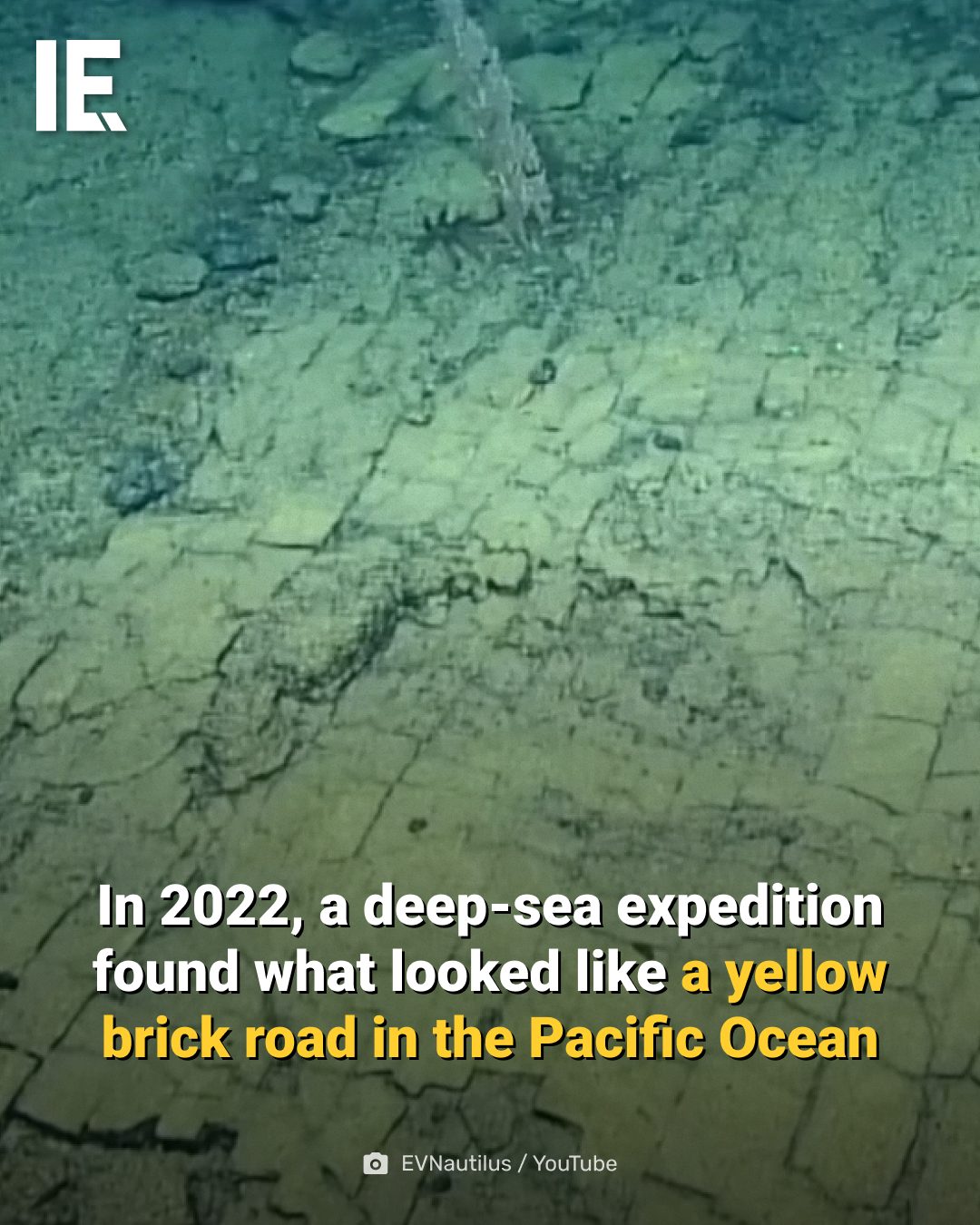
In 2022, researchers aboard the exploration vessel Nautilus discovered a mysterious formation on the seafloor of the Pacific Ocean. The discovery was made while surveying the Lili'uokalani Ridge, north of Hawaii, part of the Papahānaumokuākea Marine National Monument, one of the largest protected marine areas on Earth. The formation, resembling a yellow brick road, has captivated the scientific community and highlighted the vast unexplored territories of our planet's oceans.
Why This Matters
The deep sea remains one of the most remote and least understood environments on Earth. Despite advancements in technology, humans have visually explored only a tiny fraction of the deep seafloor. According to a 2025 study, this exploration amounts to somewhere between 0.0006 and 0.001 percent. Discoveries like the yellow brick road underscore the importance of continued exploration, as they provide insights into the geological processes and historical events that have shaped our planet.
The Discovery
Location and Context
The discovery was made during a deep-sea expedition in 2022. The exploration vessel Nautilus, equipped with remotely operated vehicles (ROVs), was surveying the Liliʻuokalani Ridge, a part of the Papahānaumokuākea Marine National Monument. This monument is one of the largest protected marine areas on Earth, spanning over half a million square miles.
Geological Formation
The formation was identified as hyaloclastite, a type of volcanic rock formed during high-energy eruptions. This rock is characterized by its distinctive 90-degree grid pattern, which was created by repeated cycles of heating and cooling from multiple volcanic eruptions. The unique texture and pattern of the hyaloclastite make it stand out against the more usual seafloor landscape.
The Ancient Lakebed
The formation sits atop an ancient dried lakebed on the summit of a seamount. This discovery offers a glimpse into the geological history of the area, suggesting that the seamount was once above sea level and experienced significant geological activity. The dried lakebed provides further context, indicating that the area was once a site of substantial volcanic and hydrological activity.
The Significance of the Discovery
Geological Insights
The discovery of the hyaloclastite formation provides valuable insights into the geological processes that have shaped the Pacific Ocean. The 90-degree grid pattern is a clear indicator of the intense volcanic activity that occurred in the area. This discovery helps scientists better understand the geological history of the region and the processes that continue to shape it.
Technological Advancements
The discovery was made possible by the advanced technology aboard the exploration vessel Nautilus. The ROVs used in the expedition are equipped with high-resolution cameras and other scientific instruments, allowing them to explore and document the deep-sea environment with unprecedented detail. These technological advancements are crucial for further exploration and research in the deep sea.
Conservation Efforts
The Papahānaumokuākea Marine National Monument is a protected area, and the discovery highlights the importance of such conservation efforts. Protecting these areas ensures that valuable scientific data and rare geological formations can be preserved for future study. The monument's vast size and remote location make it an ideal site for deep-sea exploration and conservation.
Practical Tips for Deep-Sea Exploration
Data Collection
Effective data collection is essential for deep-sea exploration. High-resolution cameras and other scientific instruments should be used to document the environment in detail. Collecting samples of geological formations, such as the hyaloclastite, is also crucial for further study and analysis.
Collaboration
Collaboration between scientific institutions and organizations is key to successful deep-sea exploration. Sharing data and resources allows for more comprehensive research and ensures that discoveries are thoroughly documented and understood.
Sustained Exploration
Given the vastness of the deep sea, sustained exploration efforts are necessary to uncover more of its mysteries. Continued investment in technology and research is essential for advancing our understanding of the deep-sea environment.
Important Takeaways
The discovery of the yellow brick road in the Pacific Ocean serves as a reminder of how much of the deep sea remains unexplored. This discovery highlights the importance of continued exploration, as well as the need for advanced technology and collaboration in scientific research.
Conclusion
The discovery of the yellow brick road formation in the Pacific Ocean is a testament to the wonders that still await us in the deep sea. As we continue to explore and document these remote and unexplored environments, we gain valuable insights into the geological processes that have shaped our planet. The collaborative efforts of scientists and advanced technology will play a crucial role in unraveling the mysteries of the deep sea and preserving its unique formations for future generations.
Watch the Reel
Questions readers ask
What is the significance of the 2022 deep sea discovery in the Pacific Ocean?
The 2022 discovery aboard the E/V Nautilus revealed a unique 90-degree grid pattern on the Lili'uokalani Ridge. This formation, resembling a yellow brick road, is significant because it is a type of volcanic rock that has not been documented before. The discovery underscores the vast amount of mysteries that still lie in the deepest parts of the ocean.
How was the yellow brick road formation discovered?
The yellow brick road formation was discovered during a routine survey of the Lili'uokalani Ridge. The discovery was made while mapping the seafloor as part of the exploration efforts in the Papahānaumokuākea Marine National Monument. Researchers on the E/V Nautilus were using advanced technology to explore the deep sea and came across this unusual pattern.
What is the composition of the yellow brick road formation?
Scientists have identified the formation as a unique type of volcanic rock. The grid pattern is composed of minerals that have been formed over thousands of years due to volcanic activity. The formation is a testament to the geological processes that shape the ocean floor.
Why is the deep sea exploration important?
The deep sea remains one of the most remote and least understood environments on Earth. Exploring the deep sea helps to uncover ancient mysteries and understand the geological processes that have shaped our planet. The discovery of the yellow brick road formation highlights the need for continued exploration and research in this vast frontier.
Where is the Lili'uokalani Ridge located?
The Lili'uokalani Ridge is located in the Pacific Ocean, north of the Hawaiian Islands. It is part of the Papahānaumokuākea Marine National Monument, one of the largest protected marine areas on Earth. This area is an important site for deep sea exploration and research.
What kind of technology is used for deep sea exploration?
Deep sea exploration relies heavily on advanced technology, such as remotely operated vehicles (ROVs) and autonomous underwater vehicles (AUVs). These tools allow researchers to explore the deepest parts of the ocean and collect data and samples. The E/V Nautilus, equipped with state-of-the-art technology, was used for the 2022 discovery of the yellow brick road formation.
Recent articles
Fresh deep dives from the latest Reels we unpacked.




Comments
Be the first to comment.