U.S. Inflation Overview
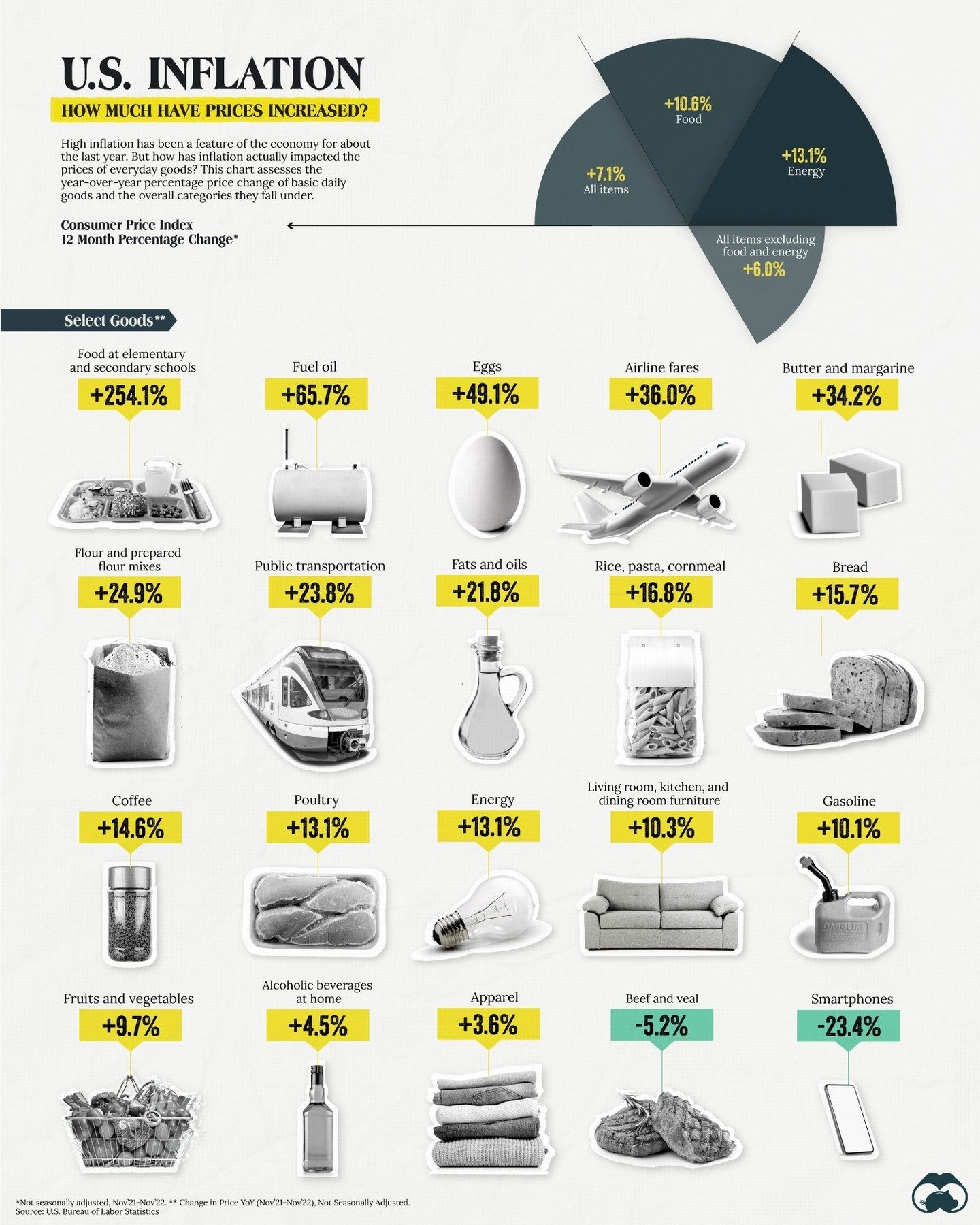
Inflation has been a dominant economic storyline over the past year, affecting nearly every aspect of daily life. But how exactly has it impacted the prices of everyday goods and services? To understand this, let's delve into the specifics of how inflation has influenced the cost of essential items from November 2021 to November 2022.
Context / Why This Matters
Understanding the impact of inflation on daily consumer goods is crucial for making informed financial decisions. Whether it's planning a grocery budget, considering public transportation options, or evaluating energy costs, knowing how prices have changed can help individuals and families navigate the economic landscape more effectively.
Main Discussion
Food and Beverages
The cost of food and beverages has seen significant increases across various categories. Here are some notable changes:
- Eggs: Experienced a substantial price increase of 49.1%.
- Butter and margarine: Saw a rise of 34.2%.
- Flour and prepared flour mixes: Increased by 24.9%.
- Poultry: Increased by 13.1%.
- Coffee: Increased by 14.6%.
- Fruits and vegetables: Rose by 9.7%.
- Rice, pasta, and cornmeal: Increased by 16.8%.
- Bread: Rose by 15.7%.
- Beef and veal: Decreased by 23.4%, making it a notable exception in the food category.
- Alcoholic beverages at home: Rose by 4.5%.
These changes reflect the broader trend of increasing food prices, which can significantly impact household budgets.
Energy
Energy costs have also surged, affecting both residential and transportation sectors:
- Fuel oil: Increased by 65.7%.
- Gasoline: Rose by 10.1%.
- Energy: Overall energy costs increased by 13.1%.
These increases can be attributed to various factors, including supply chain disruptions and geopolitical events.
Transportation
Transportation costs have also seen notable changes:
- Airline fares: Increased by 36.0%.
- Public transportation: Rose by 23.8%.
- Livings room, kitchen, and dining room furniture: Increased by 10.3%.
Consumer Goods
Other consumer goods have also experienced price changes:
- Fats and oils: Increased by 21.8%.
- Smartphones: Experienced a notable decrease of 23.4%.
- Apparel: Rose by 3.6%.
These changes highlight how inflation affects a wide range of consumer goods, from essential items to more discretionary purchases.
Practical Tips
To navigate these inflationary trends, consider the following tips:
- Budgeting: Adjust your budget to account for increased prices in essential categories like food and energy.
- Shopping Smart: Look for discounted or sale items to mitigate the impact of price increases.
- Alternative Transportation: Consider public transportation or carpooling to save on fuel costs.
- Energy Efficiency: Implement energy-saving practices at home to reduce electricity and heating costs.
- Meal Planning: Plan meals to reduce food waste and take advantage of bulk buying when prices are lower.
- Investment: Consider investments that can hedge against inflation, such as inflation-indexed bonds or real estate.
Important Takeaways
Inflation has had a profound impact on the prices of everyday goods and services. From food and beverages to energy and transportation, nearly every sector has seen price increases. Understanding these changes can help individuals make more informed financial decisions and adapt their spending habits accordingly.
Conclusion
Inflation is a complex and multifaceted phenomenon that affects various aspects of the economy. By examining the year-over-year percentage changes in prices, it becomes clear how deeply inflation has impacted the cost of living. Whether it's adjusting budgets, shopping smart, or exploring alternative transportation options, being aware of these changes can help individuals and families navigate the economic landscape more effectively. Staying informed about inflation trends is essential for making sound financial decisions in an ever-changing economic environment.
Watch the Reel
Questions readers ask
What is year-over-year inflation and how does it affect consumer prices?
Year-over-year inflation measures the percentage change in prices from one year to the next. When inflation is high, it means the cost of goods and services has increased significantly. This directly affects consumers by reducing their purchasing power, making everyday items and services more expensive. For example, from November 2021 to November 2022, households saw substantial price increases in essential categories like food, energy, and transportation.
How have food and beverage prices changed due to inflation?
Food and beverage prices have seen notable increases due to inflation. From November 2021 to November 2022, the cost of food and beverages rose significantly. Common items like bread experienced price hikes, making meal planning and grocery budgets more challenging for consumers. The Consumer Price Index (CPI) for food and beverages reflects these increases, showing a steady rise in the cost of essential food items.
What factors have contributed to the rise in energy prices?
Several factors have contributed to the rise in energy prices, including increased demand, supply chain disruptions, and global market fluctuations. These factors have led to significant price increases in energy costs, which in turn have affected household budgets. Understanding these underlying causes can help consumers make more informed decisions about energy consumption and budgeting.
How has transportation cost inflation impacted consumers?
Transportation costs have significantly increased due to inflation, affecting both public and private transportation options. Higher fuel prices, increased maintenance costs, and rising public transit fares have all contributed to this trend. For consumers, this means higher expenses for commuting, travel, and maintaining vehicles, adding to the overall financial burden of daily life.
What can consumers do to manage the impact of inflation on their budgets?
Consumers can take several steps to manage the impact of inflation on their budgets. This includes reviewing and adjusting spending habits, seeking out sales and discounts, and considering more cost-effective alternatives. Additionally, understanding how inflation impacts specific goods and services can help in making informed purchasing decisions, such as buying in bulk or choosing generic brands to save on essential items.
How do year-over-year inflation rates compare to previous years?
Year-over-year inflation rates in 2022 have been notably higher compared to previous years. The significant price increases in essential goods and services have been driven by a combination of economic factors, including supply chain issues, increased production costs, and higher demand. By comparing these rates to previous years, consumers and businesses can gain insights into the current economic climate and make better- informed financial decisions.
Recent articles
Fresh deep dives from the latest Reels we unpacked.




Comments
Be the first to comment.