Gymnast Flexibility
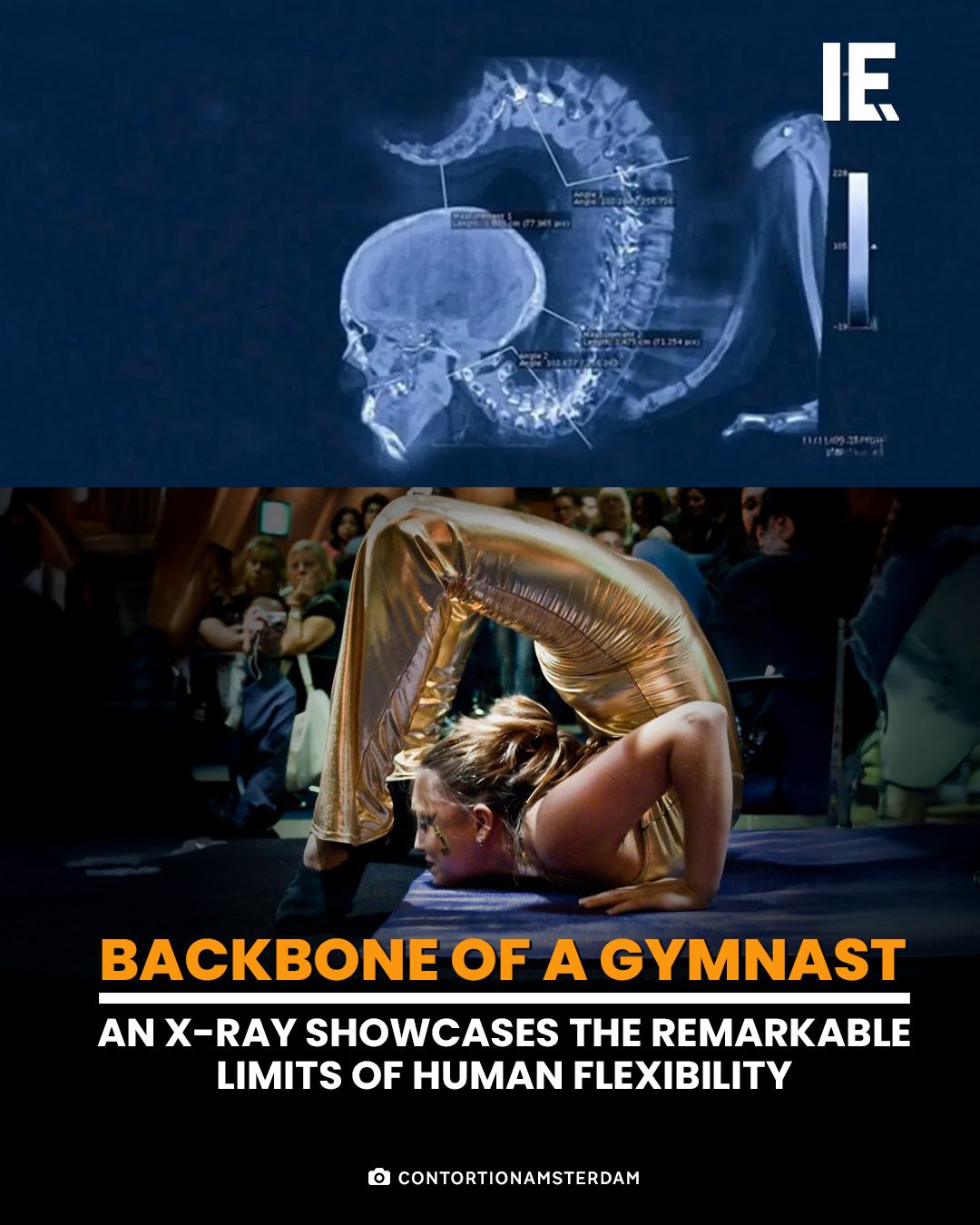
The human spine is a marvel of engineering, capable of bending in ways that often seem almost impossible. This is particularly evident in the world of gymnastics and acrobatics, where athletes push the boundaries of human flexibility. An x-ray of a gymnast showcases the remarkable limits of the human body, illustrating the extreme flexibility seen in contortionists and acrobats. This level of flexibility is not just a testament to their training and dedication but also to the unique capabilities of the human spine.
Context / Why This Matters
Flexibility is a crucial component of many athletic disciplines, including gymnastics, dance, and martial arts. It allows athletes to perform complex movements with greater ease and efficiency. For gymnasts and acrobats, flexibility is not just about aesthetics but also about performance. The ability to contort the body into seemingly impossible positions can be the difference between a perfect landing and a fall. In addition, understanding the limits of human flexibility can provide insights into the potential for injury and the importance of proper training and conditioning.
Main Discussion
The Anatomy of Flexibility
The spine is a critical component of human flexibility. It consists of 33 individual bones, or vertebrae, which are stacked on top of each other to form a flexible column. The spine's flexibility is due to the intervertebral discs, which act as shock absorbers and allow for movement. The muscles, ligaments, and tendons surrounding the spine also play a significant role in its flexibility and stability.
For gymnasts and acrobats, the spine's flexibility is essential for performing complex movements. The ability to bend and contort the body in various positions requires a high degree of flexibility in the spine. This is particularly evident in poses like the backbend, where the spine is arched backward, and the chest is pushed forward. The x-ray of a gymnast performing a backbend showcases the remarkable limits of human flexibility, highlighting the contortion of the spine and the alignment of the vertebrae.
The Role of Training
The remarkable flexibility seen in gymnasts and acrobats is not achieved overnight. It requires years of dedicated training and practice. Flexibility training involves a combination of stretching, strength, and conditioning exercises. Stretching helps to increase the range of motion in the joints, while strength training helps to build the muscles and ligaments that support the spine. Conditioning exercises, such as cardio and plyometrics, help to improve endurance and power.
The training process for gymnasts and acrobats is rigorous and demanding. It often involves hours of daily practice, focusing on specific skills and techniques. The goal is to gradually increase the range of motion in the spine and other joints, allowing for greater flexibility and control. This process requires patience, persistence, and a deep understanding of the body's capabilities and limitations.
The Science of Flexibility
The science of flexibility is a complex and multifaceted field. It involves an understanding of the biomechanics of the human body, the physiology of muscles and ligaments, and the psychology of training and performance. Researchers study the effects of different training methods on flexibility, as well as the potential risks and benefits of extreme flexibility.
One of the key areas of research in flexibility is the role of the nervous system. The nervous system plays a critical role in controlling the muscles and ligaments, allowing for movement and stability. Researchers have found that the nervous system can adapt to different training methods, leading to improvements in flexibility and performance. For example, proprioceptive neuromuscular facilitation (PNF) is a type of stretching that involves contracting and relaxing the muscles, which helps to increase the range of motion and flexibility.
Practical Tips
Achieving the level of flexibility seen in gymnasts and acrobats is a challenging but rewarding journey. Here are some practical tips for improving flexibility:
Stretching Techniques
-
Dynamic Stretching: Dynamic stretching involves moving the body through a full range of motion, rather than holding a static position. This type of stretching is particularly effective for improving flexibility and mobility in the joints.
-
Static Stretching: Static stretching involves holding a stretch for a period, typically 20-30 seconds. This type of stretching is effective for improving flexibility and reducing muscle tension.
-
PNF Stretching: PNF stretching involves contracting and relaxing the muscles, which helps to increase the range of motion and flexibility. This type of stretching is often used by athletes and physical therapists to improve flexibility and performance.
Strength Training
Strength training is essential for building the muscles and ligaments that support the spine. Focus on exercises that target the core, back, and hips, such as:
-
Planks: Planks are a great exercise for building core strength and stability.
-
Deadlifts: Deadlifts are a compound exercise that targets multiple muscle groups, including the back, hips, and legs.
-
Squats: Squats are another compound exercise that targets the legs, hips, and core.
Conditioning Exercises
Conditioning exercises help to improve endurance and power, which are essential for performing complex movements. Some effective conditioning exercises include:
-
Cardio: Activities like running, cycling, or swimming can help to improve cardiovascular health and endurance.
-
Plyometrics: Plyometric exercises involve explosive movements, such as jumping or bounding, which help to improve power and agility.
-
HIIT: High-Intensity Interval Training (HIIT) involves short bursts of high-intensity exercise followed by periods of rest or low-intensity exercise. This type of training is effective for improving cardio fitness and endurance.
Important Takeaways
The human spine is a remarkable structure, capable of bending and contorting in ways that seem almost impossible. This is particularly evident in the world of gymnastics and acrobatics, where athletes push the boundaries of human flexibility. Achieving this level of flexibility requires years of dedicated training and a deep understanding of the body's capabilities and limitations. The spinal column's flexibility is due, in part, to the intervertebral discs, which act as shock absorbers and allow for movement. The muscles, ligaments, and tendons surrounding the spine also play a significant role in its flexibility and stability.
Flexibility training involves a combination of stretching, strength, and conditioning exercises. It is essential to approach flexibility training with patience, persistence, and a deep understanding of the body's capabilities and limitations. The remarkable flexibility seen in gymnasts and acrobats is a testament to their dedication, training, and the unique capabilities of the human spine.
Conclusion
The human spine's remarkable flexibility is a testament to the incredible capabilities of the human body. Whether you are a gymnast, acrobat, or simply looking to improve your flexibility, understanding the science behind human flexibility is essential. By incorporating stretching, strength, and conditioning exercises into your training routine, you can gradually improve your flexibility and achieve your goals. With dedication and persistence, you can unlock the remarkable limits of your own body and achieve new levels of flexibility and performance.
Watch the Reel
Questions readers ask
Why is spine flexibility particularly important for gymnasts and acrobats?
Spine flexibility is crucial for gymnasts and acrobats as it enables them to perform complex movements and poses, such as backbends, bridges, and twists, with greater ease and precision. This flexibility helps in executing routines gracefully and reduces the risk of injuries during training and performances.
How does rigorous training contribute to a gymnast's spine flexibility?
Rigorous training plays a significant role in enhancing a gymnast's spine flexibility. Through consistent practice of stretching, conditioning, and specialized exercises, gymnasts can increase their range of motion and strength. This allows them to achieve impressive contortions and reduces the likelihood of injuries.
What can an x-ray reveal about a contortionist's spine?
An x-ray can reveal the incredible flexibility of a contortionist's spine, showing how it bends and twists in ways that might seem impossible to the untrained eye. It highlights the extreme range of motion and the unique capabilities of the spine, which are essential for their performances. This can also help identify any potential areas of stress or injury.
How does spine flexibility benefit athletes in dance and martial arts?
In dance and martial arts, spine flexibility allows for more fluid and dynamic movements. Dancers can achieve more graceful and expressive poses, while martial artists can execute techniques with better precision and power. This flexibility also helps in preventing injuries by distributing strain more evenly across the body.
Can everyone achieve the same level of spine flexibility as gymnasts?
While everyone can improve their spine flexibility with consistent training, not everyone can achieve the same level as elite gymnasts. Genetics, body structure, and natural flexibility play significant roles in determining an individual's potential for extreme spine bending. It's important to train safely and listen to your body to avoid injuries.
Recent articles
Fresh deep dives from the latest Reels we unpacked.




Comments
Be the first to comment.