Wyoming Leads the U.S. in New Business Applications
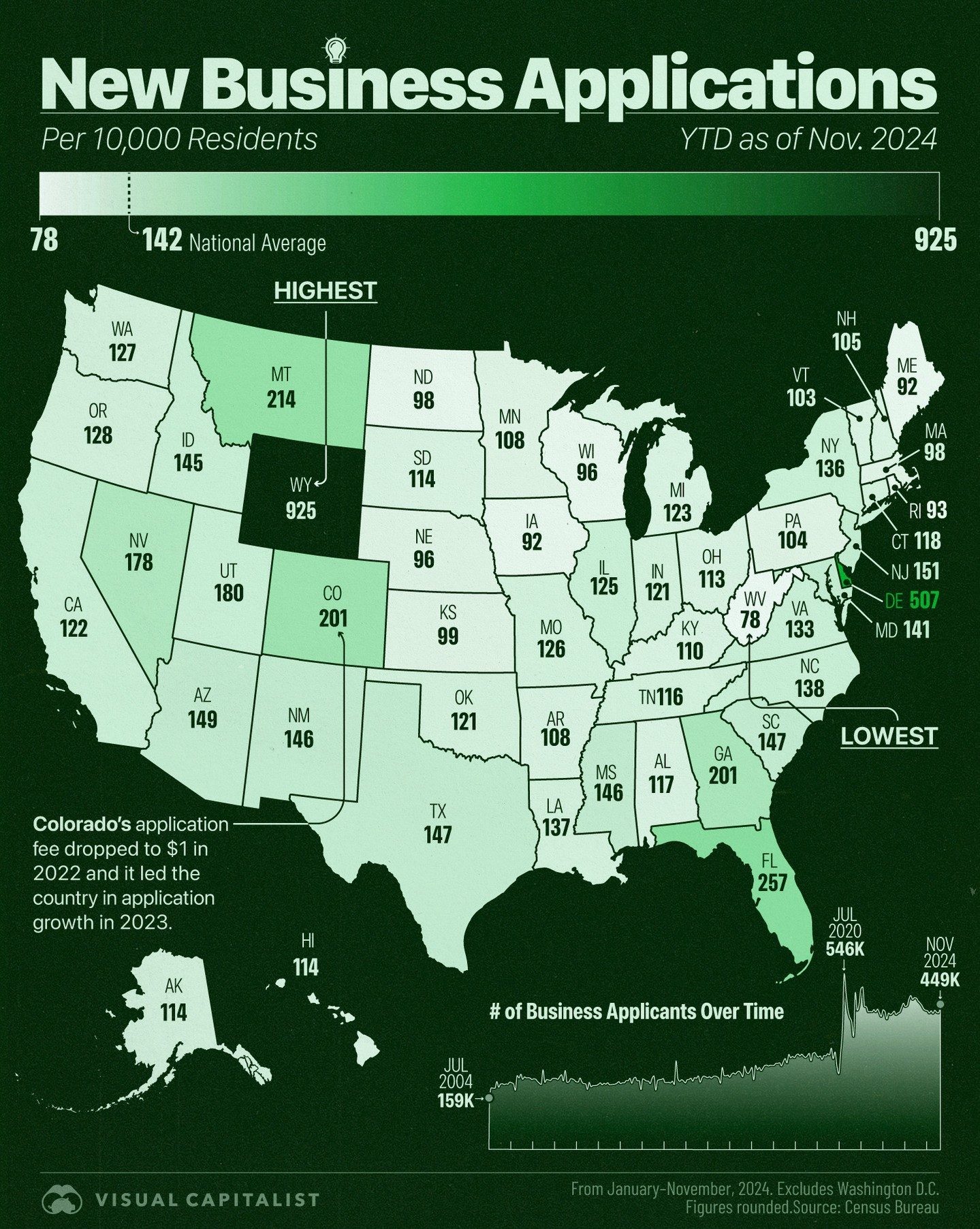
Wyoming tops the nation with 925 new business applications per 10,000 residents, nearly doubling second-place Delaware. This surge in entrepreneurial activity is driven by several factors, including tax incentives and strategic policies that promote business growth. Both Wyoming and Delaware offer attractive tax benefits, but each state has its unique advantages.
Wyoming’s tax benefits are particularly noteworthy. The state imposes no individual or corporate income tax, making it a highly attractive destination for new businesses. Moreover, Wyoming's streamlined regulatory environment and strong business support infrastructure contribute to its status as a business-friendly state. Delaware, on the other hand, does not levy corporate income tax for businesses not operating within the state, providing a different set of advantages, especially for companies looking to incorporate without immediate in-state operations.
The infographic for this analysis visualizes the number of new business applications per 10,000 residents from January to November 2024, based on Census Bureau data. This data highlights the varying levels of entrepreneurial activity across different states, offering insights into regional trends and economic dynamics.
Why This Matters
The rise in business applications signifies a burgeoning entrepreneurial spirit across the United States. This trend is particularly evident in states like Wyoming, Colorado, and Delaware, where strategic policies and tax incentives have fostered a supportive environment for new businesses. Understanding these trends can help policymakers, entrepreneurs, and investors make informed decisions about where and how to invest their resources.
Main Discussion
Wyoming and Delaware: Leading the Pack
Tax Incentives and Business-Friendly Environments
Wyoming's leadership in new business applications is largely attributable to its tax policies. The absence of individual and corporate income taxes creates a highly favorable environment for entrepreneurs and businesses. Additionally, Wyoming's low regulatory burden and efficient business processes further enhance its appeal. Delaware, while not as generous with its tax policies, offers a unique advantage for businesses looking to incorporate without incurring immediate in-state taxes. This makes Delaware a popular choice for companies seeking to establish a legal presence while minimizing tax obligations.
Colorado: A Success Story
Colorado's experience is another compelling example of how strategic policy changes can drive business growth. In 2022, Colorado reduced its business application fee to just $1, a move that has since led to significant growth in new business applications. This initiative highlights the impact of reducing barriers to entry and the importance of creating an accessible and supportive environment for entrepreneurs.
Regional Trends and Economic Dynamics
The visual representation of new business applications per 10,000 residents reveals interesting trends across different regions. For instance:
-
Western States: States like Colorado, Montana, and Utah have seen substantial growth in new business applications, indicating a robust entrepreneurial spirit in the West. Colorado, in particular, has benefited from its application fee reduction, leading the country in application growth in 2024. Western states often enjoy lower regulatory burdens and a higher quality of life, which can attract new businesses.
-
Southern States: States in the South, such as Louisiana and Mississippi, show a mixed trend. While some states have seen a surge in business applications, others lag behind, reflecting regional economic disparities and varying levels of support for entrepreneurship.
Trends in Business Applications Over Time
The data from 2004 to 2024 shows a consistent increase in the total number of business applications across the United States. This trend underscores the growing entrepreneurial activity and the increasing interest in starting new ventures. The line graph at the bottom of the infographic illustrates this upward trajectory, providing a visual representation of the growing interest in entrepreneurship.
Practical Tips
For Entrepreneurs
-
Research Tax Incentives: Before deciding where to start a business, thoroughly research the tax benefits and incentives available in different states. States like Wyoming and Delaware offer significant tax advantages that can greatly impact your bottom line.
-
Consider Regulatory Environment: Look for states with a favorable regulatory environment and low barriers to entry. Streamlined regulatory processes and efficient business support infrastructure can make a significant difference in the success of a new venture.
-
Seek Professional Advice: Consult with business advisors, accountants, and legal experts who have experience in the specific state you are considering. Their expertise can provide valuable insights and help you navigate the complex landscape of state-specific regulations and incentives.
For Policymakers
-
Promote Tax Incentives: Implement tax incentives that attract new businesses and foster economic growth. States like Wyoming and Delaware have demonstrated the effectiveness of such policies in driving entrepreneurial activity.
-
Reduce Barriers to Entry: Lower application fees and streamline regulatory processes to make it easier for entrepreneurs to start businesses. Initiatives like Colorado’s application fee reduction have proven successful in boosting new business applications.
-
Support Infrastructure: Invest in infrastructure and support systems that cater to the needs of new businesses. This includes accessibility to financing, mentorship programs, and networking opportunities for entrepreneurs.
For Investors
-
Identify High-Growth Regions: Focus on states with high business application rates and favorable entrepreneurial environments. Regions with strong growth trends and supportive policies are more likely to yield profitable investment opportunities.
-
Stay Updated: Keep abreast of new policies and incentives that can influence the business climate in different states. Understanding these changes can help you make informed investment decisions and capitalize on emerging opportunities.
Important Takeaways
The data on new business applications highlights the critical role of tax incentives and supportive policies in fostering entrepreneurial activity. States like Wyoming and Delaware have set a strong example by offering favorable tax environments and streamlined regulatory processes. Meanwhile, Colorado's experience underscores the impact of policy changes, such as reducing application fees, on driving business growth.
The increasing trend in business applications from 2004 to 2024 reflects a growing interest in entrepreneurship and the importance of creating accessible and supportive environments for new ventures. For entrepreneurs, investors, and policymakers, understanding these trends and the underlying factors can provide valuable insights and guide strategic decisions.
Conclusion
The surge in new business applications, particularly in states like Wyoming, Colorado, and Delaware, exemplifies the positive impact of tax incentives and supportive policies. As the entrepreneurial spirit continues to thrive, it is essential for stakeholders to leverage these insights to foster economic growth and innovation. By promoting favorable tax environments, reducing barriers to entry, and investing in supportive infrastructure, we can create a robust ecosystem that nurtures and sustains new businesses.
Watch the Reel
Questions readers ask
Why does Wyoming attract so many new business applications?
Wyoming's high number of new business applications is due to its favorable tax environment, which includes no individual or corporate income tax, and a regulatory environment designed to support business growth.
How does Wyoming's business application rate compare to other states?
Wyoming leads the nation with 925 new business applications per 10,000 residents, which is nearly double that of Delaware, the second-place state.
What tax benefits make Wyoming particularly appealing to new businesses?
Wyoming does not impose individual or corporate income tax. This, combined with a streamlined regulatory environment and robust business support infrastructure, makes it a highly attractive destination for new businesses.
What role do strategic policies play in Wyoming's business growth?
Wyoming's strategic policies, including tax incentives and regulatory support, create an environment that fosters an entrepreneurial spirit and encourages new business growth.
How does Delaware's business environment differ from Wyoming's?
While both states offer attractive tax benefits, Wyoming stands out with no individual or corporate income tax. Delaware, however, is known for its well-established legal framework and business-friendly laws.
What kind of support infrastructure does Wyoming offer to new businesses?
Wyoming provides a strong business support infrastructure, which includes streamlined regulatory processes and resources designed to help new businesses thrive and grow.
What other states, besides Wyoming, show a high rate of business applications?
States like Delaware and Colorado also show a high rate of business applications, reflecting strategic policies and incentives that promote business growth and entrepreneurship.
Recent articles
Fresh deep dives from the latest Reels we unpacked.




Comments
Be the first to comment.