Worst Stocks in U.S. History
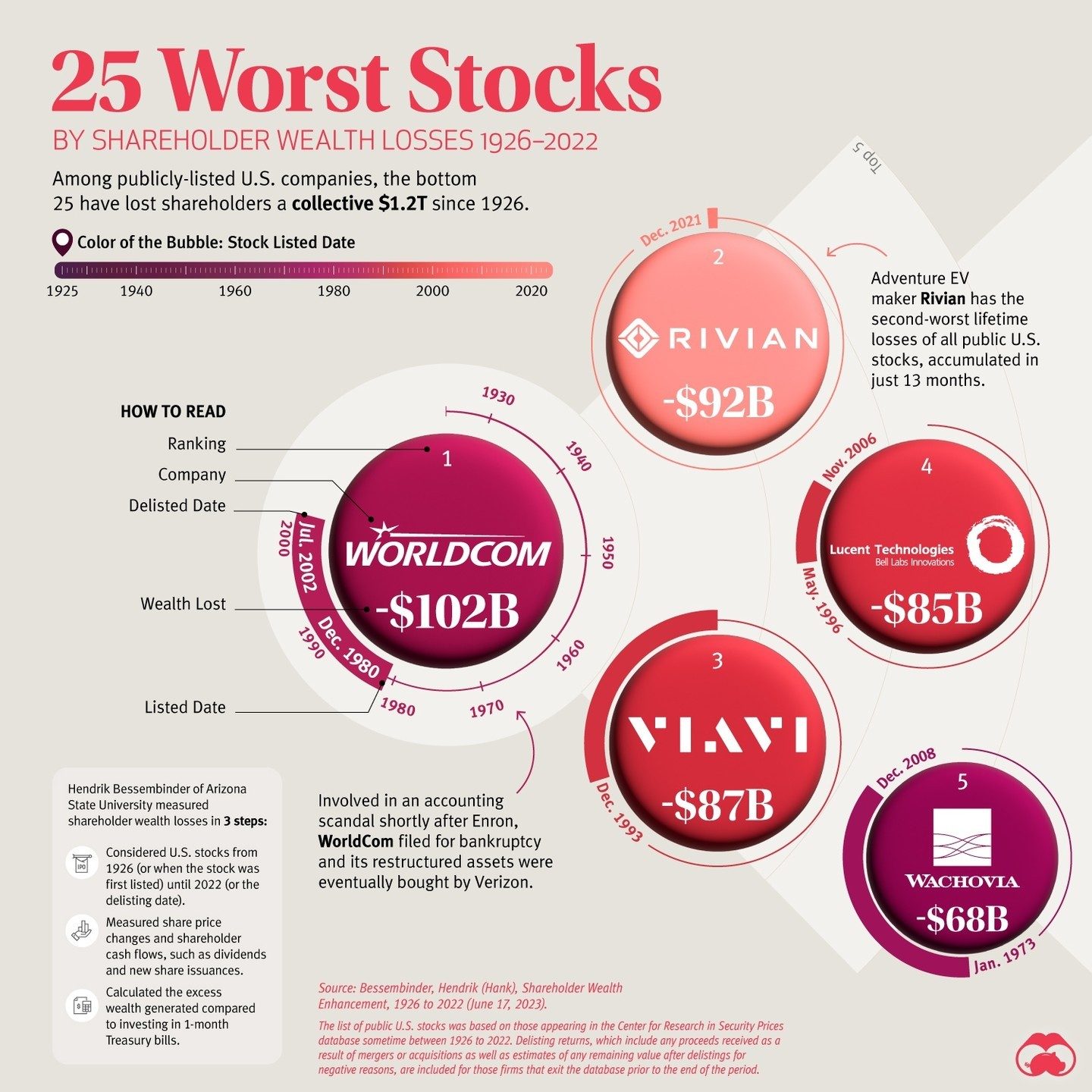
Publicly-listed U.S. companies have seen significant losses in shareholder wealth over the decades. Among these, the 25 worst-performing stocks have collectively cost investors a staggering $1.2 trillion since 1926. This figure represents a substantial 14% of all cumulative losses in shareholder wealth, despite these 25 stocks constituting only 0.1% of all stocks. This analysis delves into the data, highlighting the worst-performing stocks and the lessons they offer.
Context / Why This Matters
Understanding the worst stocks in U.S. history provides valuable insights into the risks and potential pitfalls associated with stock investments. By examining the companies that have incurred the most significant losses, we can identify common factors that contributed to their downfall. This knowledge is crucial for investors looking to mitigate risks and make more informed decisions.
Main Discussion
The Impact of Significant Losses
The financial impact of these 25 worst-performing stocks is massive. WorldCom, for instance, tops the list with an astonishing $102 billion in losses, underscoring the devastating effect that a single poorly performing stock can have on investors. Other notable mentions include Rivian, Lucent Technologies, and Wachovia, which have also caused significant shareholder losses.
WorldCom
WorldCom, once a telecom giant, began its meteoric fall in 2002, when it filed for bankruptcy following an accounting scandal. The company, which had been a major player in the telecom industry, had inflated its assets by around $11 billion, ultimately costing investors billions in lost value. The collapse of WorldCom, which was the largest corporate financial fraud in U.S. history, led to the loss of $102 billion in shareholder wealth.
The ripple effects of WorldCom's demise were felt throughout the stock market, highlighting the interconnectedness of financial markets. The scandal led to stricter accounting regulations and increased scrutiny, but for investors, it was a stark reminder of the risks associated with investing in high-growth sectors.
Recent Entries
Some of the more recent entries on the list, such as Rivian, Lucent Technologies, and Uber, also highlight the volatility associated with modern tech and transportation sectors. Lucent Technologies, a company formed from the split of AT&T, underwent a series of downsizing and restructuring efforts to cope with declining revenues. Despite these efforts, it continued to experience significant financial losses, ultimately costing shareholders millions.
Historical Perspectives
Analyzing historical data from 1926 to 2022 provides a comprehensive view of the worst-performing stocks over the years. This perspective allows for a deeper understanding of the financial landscape and the factors that have contributed to stock failures. For instance, Delisting dates and significant losses highlight the transition and restructuring efforts of companies over time, offering insight into the evolving business environment.
Common Factors in Stock Failures
Several common factors emerge when examining these worst-performing stocks. These include:
Corporate Scandals and Financial Fraud
Corporate scandals and financial fraud have played a significant role in many of the worst-performing stocks. The collapse of WorldCom, for example, was the result of an accounting scandal. Similarly, Enron's downfall was due to accounting fraud, leading to significant losses for investors.
Market Overvaluation
Market overvaluation is another common factor contributing to stock downturns. Companies that are overvalued in the market are at risk of significant losses when their stock prices correct. This was evident in the case of many companies on the list, including Lucent Technologies, which experienced substantial financial losses despite being a leader in the telecommunications industry.
Technological Disruption
Technological disruption and changing market conditions can also lead to significant losses. For example, Nortel Networks, which was once a leader in the telecommunications industry, failed to adapt to new technologies, leading to significant losses. This highlights the importance of innovation and adaptability for companies in rapidly changing markets.
Practical Tips
Investing in stocks, especially in volatile sectors, can be risky. It's crucial to conduct thorough research and understand the underlying factors that contribute to a company's success or failure. Here are some practical tips for investors:
Diversification
Diversifying your investment portfolio is essential to mitigating risks. By spreading your investments across various sectors and asset classes, you can reduce the impact of a single stock’s poor performance on your overall portfolio. Focus on building a diversified portfolio that balances high-risk, high-reward stocks with more stable investments.
Quantitative Analysis
Utilize quantitative analysis tools and metrics to assess the financial health of a company. Look for indicators such as earnings reports, debt-to-equity ratios, and cash flow statements. Conducting a thorough financial analysis can help you identify potential risks and make more informed investment decisions.
Market Research
Stay informed about the latest market trends and industry developments. Regular market research and keeping up with industry news can provide valuable insights into potential risks and opportunities. This knowledge can help you make more informed investment decisions and avoid pitfalls associated with volatile sectors.
Professional Guidance
Consider seeking guidance from financial advisors or investment professionals. They can provide expert advice and help you navigate the complexities of the stock market. Professional guidance can be invaluable, especially for investors new to the market or those considering high-risk investments.
Long-term Strategy
Develop a long-term investment strategy that aligns with your financial goals. Avoid making impulsive decisions based on short-term market fluctuations. Instead, focus on building a solid investment portfolio that can weather market volatility and provide steady returns over the long term.
Historical Analysis
Recent studies from Henrik Bessembinder of Arizona State University emphasize the importance of historical analysis in stock investing. By examining the performance of stocks over time, investors can gain valuable insights into the factors that contribute to stock success or failure. This historical perspective can help investors make more informed decisions and avoid common pitfalls.
Important Takeaways
Investing in the stock market involves significant risks, and understanding the worst-performing stocks can provide valuable insights into potential pitfalls. Key takeaways include:
- Diversification: Spread your investments across various sectors and asset classes to mitigate risks.
- Quantitative Analysis: Use financial metrics and tools to assess a company's health and performance.
- Market Research: Stay informed about market trends and industry developments.
- Professional Guidance: Seek advice from financial advisors to navigate the complexities of the stock market.
- Long-term Strategy: Develop a long-term investment plan that aligns with your financial goals.
Conclusion
Examining the worst-performing stocks in U.S. history offers valuable lessons for investors. By understanding the factors that contributed to their downfall, we can gain insights into the risks and potential pitfalls associated with stock investments. Whether it's corporate scandals, market overvaluation, or technological disruption, these factors highlight the importance of thorough research, diversification, and a long-term investment strategy. By applying these lessons, investors can make more informed decisions and build a more resilient portfolio.
Watch the Reel
Questions readers ask
What are some of the most significant factors that led to the worst stock performances of the 20th century?
The worst-performing stocks of the 20th century were often the result of a combination of factors. These include poor management decisions, economic downturns, market crashes, and industry-wide disruptions. For example, companies heavily reliant on outmoded technology or failing to adapt to new market conditions often saw significant declines.
Which companies are included in the list of the 25 worst-performing U.S. stocks of the last century?
The list includes a mix of well-known and lesser-known companies that have suffered substantial losses over the decades. Companies such as Enron, WorldCom, and Lehman Brothers are examples of major stock market failures. The full list is extensive and includes some that have completely collapsed and others that have undergone significant restructuring.
How do the cumulative losses of the worst-performing stocks compare to overall market losses?
The 25 worst-performing stocks in the U.S. have collectively cost investors around $1.2 trillion in losses since 1926. This amount represents a significant 14% of all cumulative losses in shareholder wealth, despite these stocks making up only 0.1% of all stocks. This disparity highlights the outsized impact of these failures.
What can investors learn from the historical stock disasters mentioned in the article?
Investors can learn several key lessons from historical stock disasters. These include the importance of diversification, thorough research, and understanding the risks associated with individual stocks. By studying the factors that led to the downfall of these companies, investors can make more informed decisions and potentially avoid similar pitfalls.
Are there common trends or patterns among the worst-performing stocks of the 20th century?
Yes, common trends among the worst-performing stocks include fraudulent activities, such as accounting scandals, and companies failing to adapt to technological changes. Additionally, many of these companies were impacted by broader economic downturns or regulatory changes, which exacerbated their financial troubles.
How can understanding the worst-performing stocks help in minimizing investment risks?
By examining the worst-performing stocks, investors can identify red flags and warning signs that may indicate potential risks. This knowledge can help in making more informed investment decisions, such as avoiding companies with questionable management practices or those operating in highly volatile sectors. Regularly assessing the health and adaptability of a company can also mitigate risks.
Recent articles
Fresh deep dives from the latest Reels we unpacked.




Comments
Be the first to comment.