Traffic Congestion in the U.S.
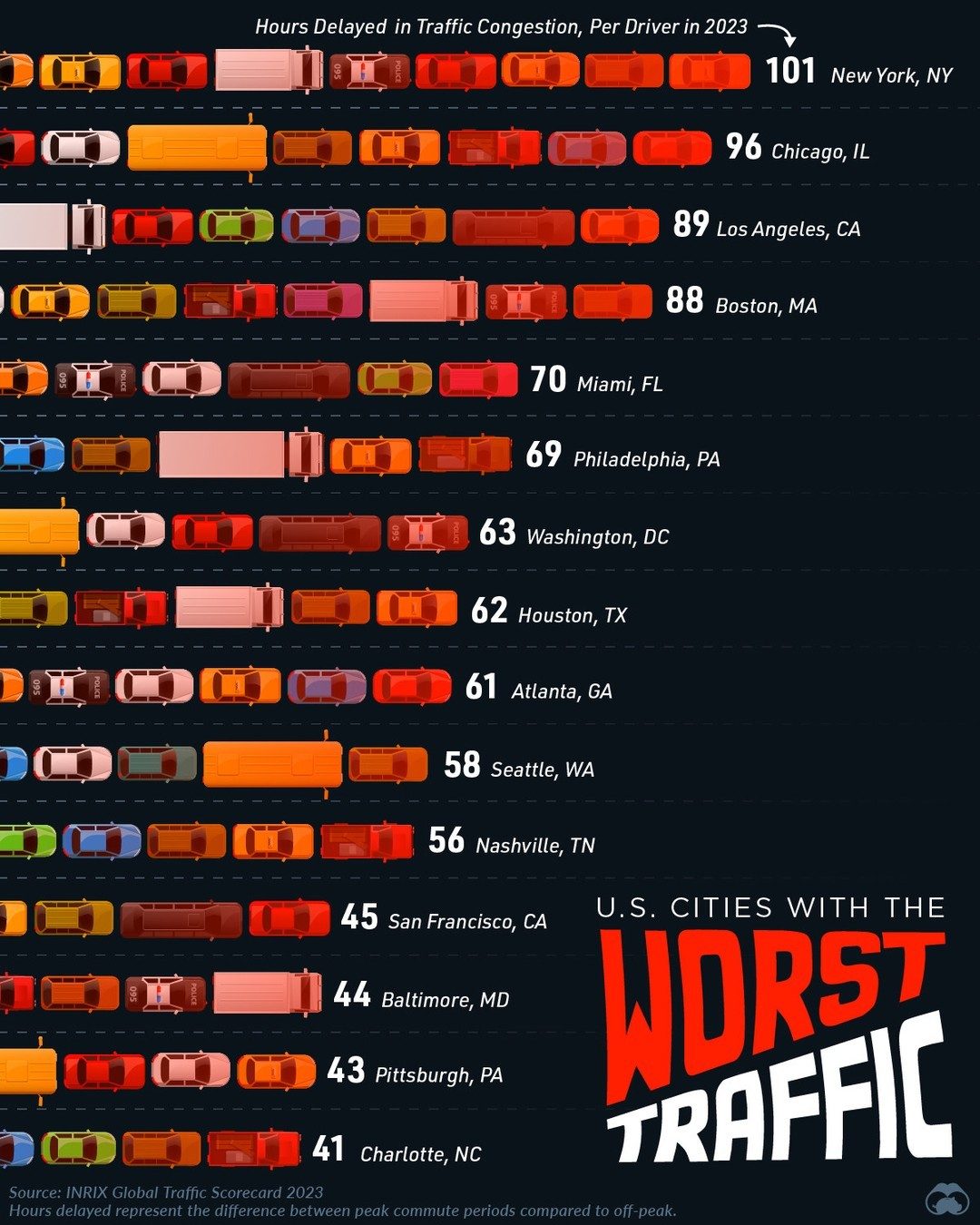
Traffic congestion is a significant issue for drivers in the United States, costing an average of 42 hours per driver in 2023. This is equivalent to a full work week lost to delays. New York City tops the list with the worst traffic congestion, where drivers faced approximately 101 hours of delay and lost around $1,700 in time and productivity. This article ranks the 15 worst U.S. cities for traffic congestion in 2023, using data from the INRIX Global Traffic Scorecard 2023.
Why This Matters
Understanding which cities have the worst traffic congestion is crucial for commuters, businesses, and urban planners. Traffic delays can significantly impact daily life, causing stress, wasting time, and affecting productivity. For businesses, traffic congestion can lead to increased operational costs and reduced efficiency. Urban planners can use this data to identify areas that need infrastructure improvements to mitigate traffic issues.
The 15 Worst Cities for Traffic Congestion
The INRIX Global Traffic Scorecard 2023 provides a comprehensive overview of traffic congestion across major U.S. cities. Here are the top 15 cities with the worst traffic congestion, ranked by the number of hours delayed per driver in 2023.
1. New York, NY
New York City drivers experienced the most significant delays, with an average of 101 hours of congestion in 2023. This high level of traffic congestion affected productivity and overall quality of life.
2. Chicago, IL
Chicago ranked second with 96 hours of delay. The city’s congested roads impacted commuters and businesses, leading to significant productivity losses.
3. Los Angeles, CA
Los Angeles followed closely with 89 hours of traffic delay. Known for its heavy traffic, Los Angeles continues to struggle with congestion, affecting both residents and visitors.
4. Boston, MA
Boston drivers faced 88 hours of delay. The city’s dense urban layout and limited road infrastructure contribute to its high traffic congestion levels.
5. Miami, FL
Miami drivers lost 70 hours to traffic congestion. The city’s congestion is exacerbated by its popularity as a tourist destination and its narrow road infrastructure.
6. Philadelphia, PA
Philadelphia ranked sixth with 69 hours of delay. The city’s aging infrastructure and high volume of traffic contribute to its congestion issues.
7. Washington, DC
Washington, DC, had 63 hours of traffic delay. As the nation’s capital, the city’s congestion is influenced by its status as a political and administrative hub.
8. Houston, TX
Houston drivers faced 62 hours of delay. The city’s rapid growth and lack of comprehensive public transportation contribute to its traffic congestion.
9. Atlanta, GA
Atlanta ranked ninth with 61 hours of delay. The city’s sprawling urban layout and heavy reliance on cars contribute to its congestion problems.
10. Seattle, WA
Seattle drivers experienced 58 hours of delay. The city’s growing population and limited road infrastructure are key factors in its traffic congestion.
11. Nashville, TN
Nashville ranked eleventh with 56 hours of delay. The city’s rapid development and increasing population contribute to its congestion issues.
12. San Francisco, CA
San Francisco drivers faced 45 hours of delay. The city’s dense urban layout and limited road infrastructure are significant contributors to its traffic congestion.
13. Baltimore, MD
Baltimore ranked thirteenth with 44 hours of delay. The city’s aging infrastructure and heavy traffic contribute to its congestion problems.
14. Pittsburgh, PA
Pittsburgh drivers experienced 43 hours of delay. The city’s layout and heavy traffic are significant factors in its congestion issues.
15. Charlotte, NC
Charlotte ranked fifteenth with 41 hours of delay. The city’s rapid growth and increasing population contribute to its traffic congestion.
Other Notable Cities
Other cities not on the top 15 list also face substantial traffic congestion, although to a lesser degree. These cities include:
- San Diego, CA
- Detroit, MI
- Riverside, CA
- Dallas, TX
- Phoenix, AZ
These cities also experience significant delays, although not as severe as the top 15.
Practical Tips to Navigate Traffic Congestion
While traffic congestion is a widespread issue, there are practical steps drivers can take to mitigate its impact:
Plan Your Route
Using navigation apps that provide real-time traffic updates can help you avoid congested areas. Apps like Waze, Google Maps, and INRIX can reroute you to less congested roads, saving you time and reducing stress.
Optimize Your Commute Time
Adjusting your commute schedule to avoid peak traffic hours can significantly reduce the time spent in traffic. Consider traveling during off-peak hours if your schedule allows.
Consider Public Transportation
Using public transportation, carpooling, or biking can help reduce your carbon footprint and avoid traffic congestion. Many cities offer reliable public transportation systems that can be more efficient than driving alone.
Incorporate Flexible Work Arrangements
If possible, discuss flexible work arrangements with your employer. Options like working from home, telecommuting, or adjusting your work hours can help you avoid the most congested periods.
Use Alternative Routes
Exploring alternative routes, especially during peak traffic hours, can help you avoid congestion and save time. Some lesser-known routes may offer a faster journey.
Monitor Weather and Events
Weather conditions and major events can significantly impact traffic. Stay informed about potential disruptions and plan your route accordingly.
Important Takeaways
Traffic congestion is a significant challenge for drivers in the United States, with some cities experiencing delays equivalent to a full work week. New York City, Chicago, and Los Angeles top the list of cities with the worst traffic congestion, while other major cities like Boston, Miami, and Philadelphia also face substantial delays. Understanding which cities have the worst traffic congestion can help commuters, businesses, and urban planners make informed decisions to mitigate its impact. By using navigation apps, adjusting commute times, and considering alternative transportation methods, drivers can minimize the effects of traffic congestion.
Conclusion
Traffic congestion is a persistent issue that affects millions of U.S. drivers every year. With data from the INRIX Global Traffic Scorecard 2023, we can identify the cities with the worst congestion and take practical steps to navigate these challenges. By planning our routes, optimizing commute times, and exploring alternative transportation methods, we can reduce the impact of traffic congestion on our daily lives.
Watch the Reel
Related deep dives
Similar reads based on topic and creator.

Recent articles
Fresh deep dives from the latest Reels we unpacked.




Comments
Be the first to comment.