Population Projections: Global Trends and Key Milestones
Population trends are a critical lens through which global shifts are observed. They influence everything from economic policies to international relations. Recent projections offer a clear picture of the upcoming decades. By the close of the 21st century, India is poised to remain the most populous country globally. Meanwhile, nations like Nigeria and the Democratic Republic of the Congo (DRC) are expected to experience significant population booms. Here’s a detailed look at the demographic changes and how they will impact the world.
Context: Why This Matters
Understanding global population trends is essential for policymakers, businesses, and individuals alike. These trends shape economic landscapes, influence resource allocation, and determine geopolitical dynamics. For instance, India's projected population growth will have tremendous implications for its economy, labor force, and social infrastructure. Countries like Nigeria and the DRC will also face unique challenges and opportunities due to their rapidly growing populations.
Main Discussion
Historical Trends
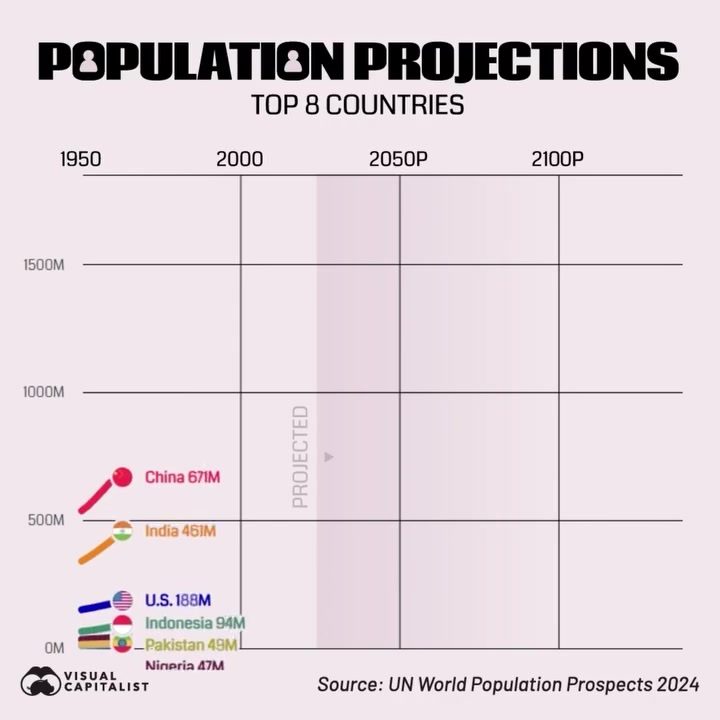
Let's start by looking at the historical population data. In 1950, the top eight countries in terms of population were China, India, the United States, Indonesia, Pakistan, the DRC, Pakistan, and Ethiopia. Over the next 70 years, these countries experienced varying degrees of population growth. For example, China and India saw significant increases due to improvements in healthcare and economic development. However, these countries' growth trajectories will diverge in the coming decades.
The Rise of India
India is set to overtake China as the world’s most populous country in 2023. This shift is driven by several factors, including India's larger historical population base and China's declining birth rate. By 2062, India's population is expected to peak at 1.7 billion people. This demographic surge will have profound implications for India’s society and economy. The country will need to invest heavily in infrastructure, education, and healthcare to support its growing population.
The Decline of China
China’s population is projected to decline due to falling birth rates and the lingering effects of its one-child policy. This trend will have significant implications for China’s economic and social stability. China will need to adapt to an aging population by implementing policies that support older citizens and encourage higher birth rates. The country will also face a shrinking workforce, which could impact its economic growth.
Emerging Powers
While India and China dominate the population landscape, other countries are also experiencing rapid growth. Nigeria and the DRC are expected to see major population booms, climbing into the top five most populous countries by 2100. These countries will need to address significant challenges, including poverty, healthcare, and education, to ensure sustainable development.
Practical Tips
For policymakers, understanding these trends is crucial for effective planning. Here are some practical tips:
- Invest in Infrastructure: Countries expecting rapid population growth need to invest in infrastructure to support their growing populations. This includes building roads, housing, and public transportation systems.
- Healthcare and Education: Prioritize healthcare and education to ensure a healthy and skilled workforce. This is particularly important in countries like Nigeria and the DRC, which are expected to see significant population growth.
- Sustainable Policies: Implement policies that promote sustainable development. This includes investing in renewable energy, managing natural resources, and promoting economic growth that benefits all citizens.
Important Takeaways
- India’s Population Peak: India is set to overtake China as the world’s most populous country. Its population will peak at 1.7 billion by 2062, presenting significant challenges and opportunities.
- China’s Decline: China’s population is expected to decline due to falling birth rates. The country will need to adapt to an aging population and a shrinking workforce.
- Emerging Powers: Nigeria and the DRC are expected to see major population booms, climbing into the top five most populous countries by 2100. These countries will need to address significant challenges to ensure sustainable development.
Conclusion
Global population trends are complex and multifaceted, but they offer valuable insights into the future. By understanding these trends, policymakers, businesses, and individuals can better prepare for the challenges and opportunities ahead. Whether it’s India’s rising population, China’s decline, or the emergence of new global powers, these trends will shape the world in profound ways.
Watch the Reel
Questions readers ask
Which countries are expected to be the most populous by 2100?
By 2100, India is projected to be the world's most populous country, with Nigeria and the Democratic Republic of the Congo (DRC) also experiencing significant population growth, ranking among the top 10 most populous countries.
When will India surpass China in population?
India is projected to surpass China in population by 2023, becoming the world's most populous country.
What is the projected peak population for India?
India's population is expected to peak at approximately 1.7 billion people by 2062.
Which countries will have the largest population growth by 2100?
Nigeria and the Democratic Republic of the Congo (DRC) are expected to have the largest population growth, significantly contributing to the world’s overall demographic expansion.
How will these population trends impact global dynamics?
These population trends will greatly influence economic policies, international relations, and resource allocation, making it crucial for governments and organizations to plan accordingly.
Why is understanding these population trends important?
Understanding these trends helps governments, businesses, and individuals anticipate future challenges and opportunities, from infrastructure needs to workforce dynamics.
What are the key milestones in global population trends up to 2100?
Key milestones include India surpassing China in population by 2023, India’s peak population in 2062, and the significant growth in countries like Nigeria and the DRC, which will reshape the global population landscape.
Recent articles
Fresh deep dives from the latest Reels we unpacked.




Comments
Be the first to comment.