Metal Mining in 2022
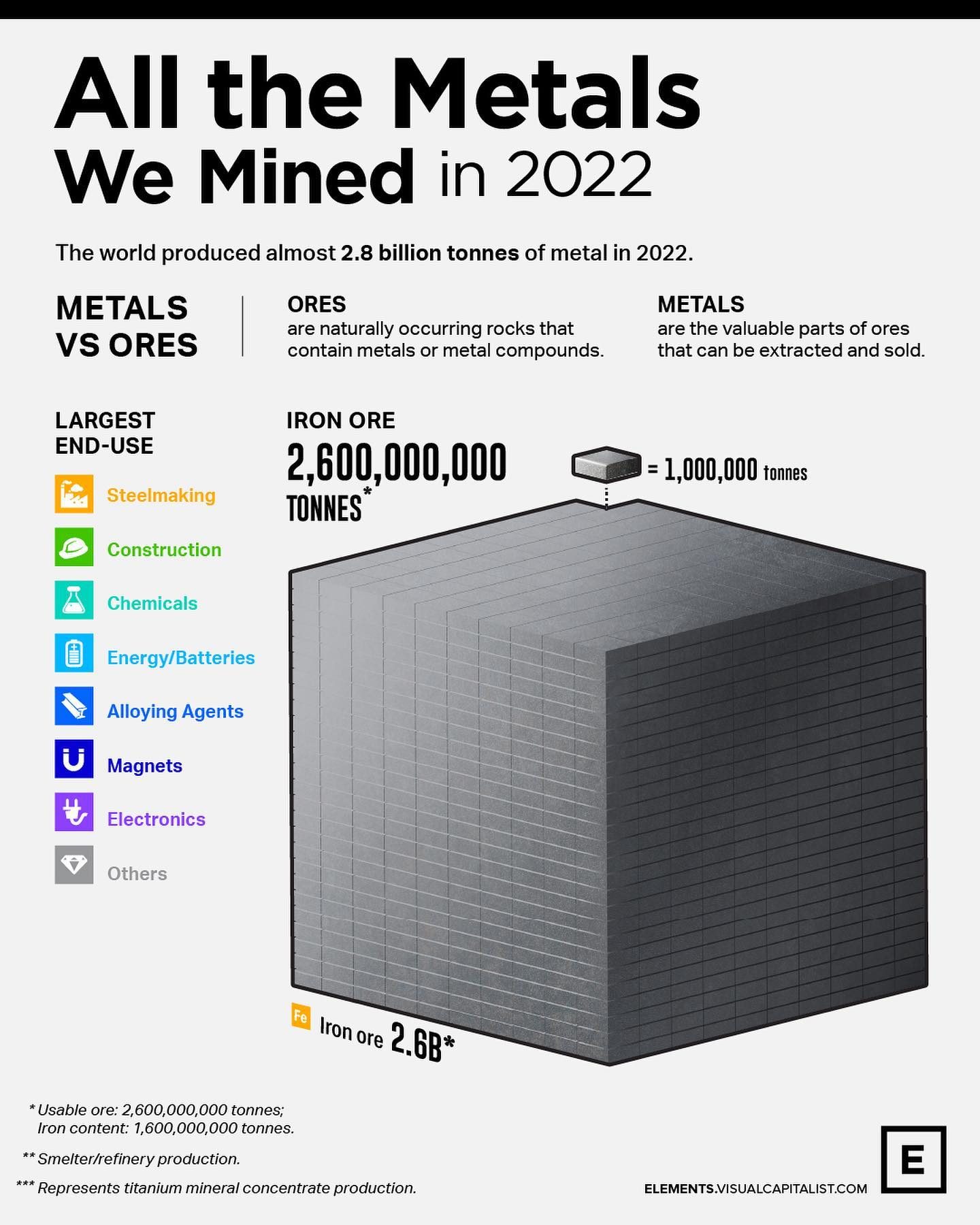
Metals are integral to modern life, embedded in the structures we inhabit and the devices we rely on daily. The mining industry plays a pivotal role in the global economy, with major industries that directly consume processed mineral materials contributing 14% to the United States' economy. In 2022, the world produced almost 2.8 billion tonnes of metals, highlighting the vast scale of metal mining operations. This infographic delves into the details of metal production, categorizing metals by their end-uses and breaking down the quantities of each type of metal extracted.
Context / Why this Matters
The Importance of Metals in Industry
Metals are not just a part of our daily lives; they are the backbone of numerous industries. From construction to electronics, from energy production to manufacturing, metals are indispensable. The infographic emphasizes this by showcasing the largest end-uses of various metals, including steelmaking, construction, chemicals, and energy/batteries. Understanding the distribution and end-uses of these metals provides insights into the economic and industrial landscapes of 2022.
Economic Contribution of Mining
Metal mining is a significant contributor to the global economy. In the United States alone, industries that directly consume processed mineral materials contribute 14% of the economy. This underscores the importance of metal mining in driving economic growth and supporting various sectors. The data from the United States Geological Survey sheds light on the sheer volume of metals mined, with iron ore alone accounting for 2.6 billion tonnes of the total 2.8 billion tonnes.
Breakdown of Metal Production
Industrial Metals
Industrial metals are essential for a variety of applications, from construction to manufacturing. In 2022, the world produced 185,111,835 tonnes of industrial metals. Key industrial metals include:
- Aluminum: 69.0 million tonnes
- Chromium: 41.0 million tonnes
- Copper: 22.0 million tonnes
- Zinc: 13.0 million tonnes
- Titanium: 9.5 million tonnes
- Magnesium: 1.0 million tonnes
- Strontium: 340,000 tonnes
- Uranium: 49,000 tonnes
- Bismuth: 20,000 tonnes
- Mercury: 2,200 tonnes
These metals are crucial for various industrial processes, from alloying to construction. For example, aluminum is widely used in aerospace and automotive industries, while chromium is essential for stainless steel production.
Precious and Technology Metals
While industrial metals are mined in large quantities, precious and technology metals, although mined in smaller amounts, are equally important. In 2022, a total of 1,500,008 tonnes of technology and precious metals were produced. Notable metals in this category include:
- Lithium: 3,100 tonnes
- Tantalum: 2,000 tonnes
- Vanadium: 84,000 tonnes
- Niobium: 79,000 tonnes
- Silver: 6,000 tonnes
- Cadmium: 24,000 tonnes
End-Uses of Metals
The infographic categorizes metals based on their largest end-uses, providing a clear picture of how each type of metal is utilized. Key end-uses include:
- Steelmaking: A significant portion of mined metals, including iron ore, is used in steelmaking. Steel is essential for construction, infrastructure, and manufacturing.
- Construction: Metals like aluminum and copper are extensively used in construction for building frameworks, electrical wiring, and roofing.
- Chemicals: Metals such as chromium and titanium are crucial in the production of various chemicals and compounds used in industries.
- Energy/Batteries: Metals like lithium and cobalt are essential for energy storage solutions, including batteries for electric vehicles and renewable energy systems.
- Alloying Agents: Metals like chromium and titanium are used as alloying agents to enhance the properties of other metals, improving durability and performance.
- Magnets: Metals like neodymium and samarium are critical for producing powerful magnets used in various electronic devices and motors.
- Electronics: Metals like gold, silver, and copper are essential for electronic components, ensuring efficient conductivity and performance.
- Others: Various other uses include jewelry, medical instruments, and industrial machinery.
Key End-Uses of Metals
The breakdown of end-uses for different metals highlights their diverse applications. For instance, iron ore, the most mined metal, is predominantly used in steelmaking. Aluminum, on the other hand, is highly versatile, with significant use in construction, transportation, and packaging. Copper is another versatile metal, essential for electronics and electrical infrastructure. Precious metals like gold and silver have unique applications in jewelry, electronics, and financial reserves.
Practical Tips
Understanding Metal Supply Chains
To better appreciate the significance of metal mining, it is essential to understand the supply chains involved. From extraction to processing and delivery, various stages ensure that metals reach end-users efficiently. Understanding these supply chains can help industries plan their resource needs better and mitigate potential disruptions.
Tracking Metal Prices
Metal prices can fluctuate based on supply and demand, geopolitical factors, and economic conditions. Keeping track of metal prices can help industries plan their budgets and manage costs effectively. Websites like the London Metal Exchange provide real-time data on metal prices, helping businesses stay informed.
Important Takeaways
The Scale of Metal Mining
The sheer volume of metals mined globally underscores the scale of metal mining operations. In 2022, almost 2.8 billion tonnes of metals were produced, highlighting the industry's significance.
Diversity in End-Uses
Metals have diverse applications across various industries. Understanding these end-uses can provide insights into the economic and industrial landscapes and help businesses plan their resource needs effectively.
Economic Impact
Metal mining significantly contributes to the global economy. Industries that consume processed mineral materials are crucial for economic growth and development. This makes metal mining a vital sector that supports numerous other industries.
Conclusion
Metal mining is a cornerstone of modern society, with metals being integral to various industries. The production of 2.8 billion tonnes of metals in 2022 underscores the industry's significance. By understanding the end-uses of different metals and their economic contributions, businesses and policymakers can make informed decisions to drive growth and innovation.
The data from the United States Geological Survey provides a comprehensive view of metal production and its applications, offering valuable insights into the global metal mining landscape. This information is crucial for industries relying on metals, helping them plan their resource needs and manage costs effectively.
Watch the Reel
Questions readers ask
Which countries were the largest metal producers in 2022?
In 2022, the largest metal producers globally included China, Australia, and the United States. China, in particular, was a significant contributor to global metal production, followed by other nations with extensive mining operations.
What were the top metals produced in 2022?
The top metals produced in 2022 included iron ore, aluminum, and copper. These metals are crucial for various industries, with iron ore being primarily used in steel production, aluminum in construction and transportation, and copper in electrical applications.
What was the total global metal production in 2022?
The global metal production in 2022 was approximately 2.8 billion tonnes. This figure highlights the extensive mining activities and the importance of metals in the global economy, supporting numerous industries.
How much steel was produced in 2022?
The steel production in 2022 was significant, with iron ore production being a key component of this industry. Steel is essential for construction and infrastructure, contributing to the development and maintenance of modern societies.
How did metal production in the United States contribute to the economy in 2022?
Metal production in the United States contributed 14% to the U.S. economy in 2022. The mining industry, particularly the production of processed mineral materials, plays a crucial role in driving economic growth and supporting various sectors.
What were the key industrial metals produced in 2022?
In 2022, key industrial metals included aluminum and copper, which exceeded 185 million tonnes collectively. These metals are vital for the construction industry and energy production, and their output reflects the needs of modern industrial processes.
Which industries benefited most from global metal production in 2022?
The construction, electronics, and energy production industries benefited most from global metal production in 2022. These industries rely heavily on metals for building infrastructure, manufacturing devices, and generating energy, making metal production a cornerstone of their operations.
Recent articles
Fresh deep dives from the latest Reels we unpacked.




Comments
Be the first to comment.