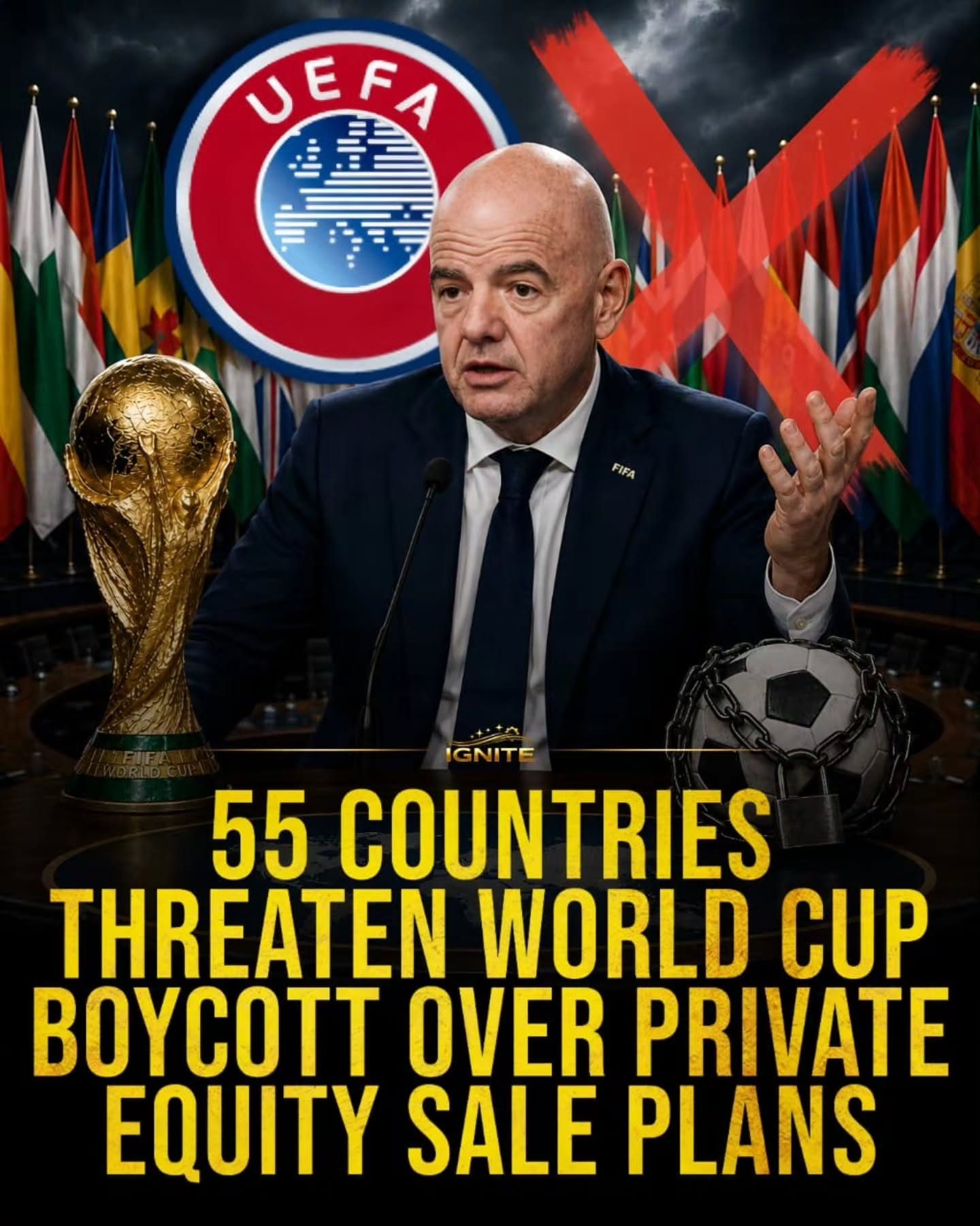
FIFA World Cup Under Siege: Private Equity Sale Plans Spark Potential Boycott
The FIFA World Cup, one of the most prestigious and eagerly anticipated events in global sports, is facing an unprecedented challenge. News has surfaced that 55 countries are reportedly considering a boycott of the tournament. This potential boycott is directly linked to FIFA's plans to sell a significant stake to private equity firms. The implications of this controversy are far-reaching, touching on the financial, political, and sporting landscapes.
Context: The Stakes of the FIFA World Cup
The FIFA World Cup is not just a sporting event; it's a global phenomenon that brings together billions of fans, athletes, and countries. The tournament is a massive economic driver, generating revenues through broadcasting rights, sponsorships, ticket sales, and tourism. The potential boycott by 55 countries could significantly impact these financial streams, not to mention the logistical and political ramifications.
The Private Equity Dilemma
Understanding the Sale Plans
FIFA's decision to sell a stake to private equity firms has ignited a firestorm of controversy. Private equity investors are known for their aggressive strategies, often aiming to maximize short-term profits. Critics argue that such an approach could compromise the integrity and values of the game. The sale involves complex financial structures and potential conflicts of interest, making it a highly contentious issue.
The Reactions
The response from the international community has been swift and decisive. Many countries view this move as a betrayal of the sport's ethos, which prioritizes fair play, inclusivity, and the spirit of competition. The boycott threat is more than just a political statement; it underscores deep-seated concerns about the impact of private equity on the world of sports.
The Implications for FIFA and Global Sports
Financial Fallout
The financial implications of a boycott are substantial. Broadcasting rights, which are a significant source of revenue for FIFA, could be affected if major nations withdraw. Sponsorship deals, which often hinge on the event's prestige and reach, might also be at risk. The financial fallout could extend to host countries, whose economies often thrive during the tournament due to increased tourism and spending.
Political Ramifications
The boycott also has significant political implications. The World Cup is a platform for diplomacy and international relations, and a boycott could strain relationships between countries. It could also set a precedent for future sporting events, where financial and political considerations might overshadow sporting values.
Impact on Athletes and Fans
For athletes, the World Cup is a pinnacle of their careers. A boycott could deny them this coveted stage, affecting their careers and the recognition they deserve. Fans, who eagerly await the tournament, would be left disappointed. The sense of global unity that the World Cup fosters could be fractured, replacing it with a sense of division and uncertainty.
Practical Tips for Navigating the Controversy
Staying Informed
Given the fast-evolving nature of this controversy, it's essential to stay informed. Follow reliable news sources and official statements from FIFA, UEFA, and participating nations to get the latest updates.
Voices to Listen To
Pay attention to the statements and views from prominent figures in the sport and those directly affected. Athletes, coaches, and sports analysts often provide valuable insights and perspectives.
Supporting Your Favorite Teams
If your favorite team is participating, stay supportive and engaged. Their participation and success in the tournament are crucial, especially in the shadow of this controversy.
Important Takeaways
The Power of Public Opinion
The controversy highlights the power of public opinion in shaping the outcomes of major sporting events. The potential boycott serves as a reminder that the sporting community and fans have a voice that can influence the direction of sports organizations.
Balancing Financial and Sporting Interests
It underscores the delicate balance between financial interests and the integrity of the sport. The decision to sell a stake to private equity firms has opened a larger debate about the role of corporate interests in global sports.
Conclusion
The potential boycott of the FIFA World Cup by 55 countries is a critical moment in the annals of global sports. It raises profound questions about the future of the game, the influence of private equity, and the power of public opinion. As the situation unfolds, it will be crucial to monitor the developments closely, understanding that the outcome will have far-reaching implications for FIFA, participating nations, athletes, and fans.
Watch the Reel
Questions readers ask
Which countries are considering a boycott of the FIFA World Cup?
As of the latest reports, 55 countries are contemplating a boycott of the FIFA World Cup. These nations have expressed concerns over FIFA's plans to sell a stake to private equity firms, which they believe could compromise the integrity of the sport.
Why are countries threatening to boycott the FIFA World Cup?
The potential boycott is a direct response to FIFA's intention to sell a significant portion of its shares to private equity firms. Many countries are worried about the potential influence that corporate entities could have over the sport and its governance.
What is the main concern regarding FIFA's private equity sale plans?
The primary concern is the potential for corporate influence to affect the integrity of the sport. The current stance by 55 nations is a strong indication of the seriousness with which these concerns are being entertained.
What are the potential implications of a FIFA World Cup boycott?
A boycott of the FIFA World Cup would have significant implications for the sport, including financial losses, political repercussions, and a potential shift in the global sporting landscape. The tournament is a major economic driver, and a boycott could disrupt these financial benefits.
What does this boycott mean for the FIFA World Cup in 2023?
The 2023 FIFA World Cup is under threat, with the potential for a boycott by 55 countries. If this boycott goes ahead, it could lead to a drastically different tournament. The boycott would affect the number of participating teams and fan involvement.
How might private equity involvement affect the FIFA World Cup?
Private equity involvement in FIFA could lead to increased corporate influence. This could result in decisions being made with a greater emphasis on profits over the sport's integrity and traditions. Additionally, there is a fear that business priorities may overshadow the interests of the sport itself.
Related deep dives
Similar reads based on topic and creator.




Recent articles
Fresh deep dives from the latest Reels we unpacked.




Comments
Be the first to comment.