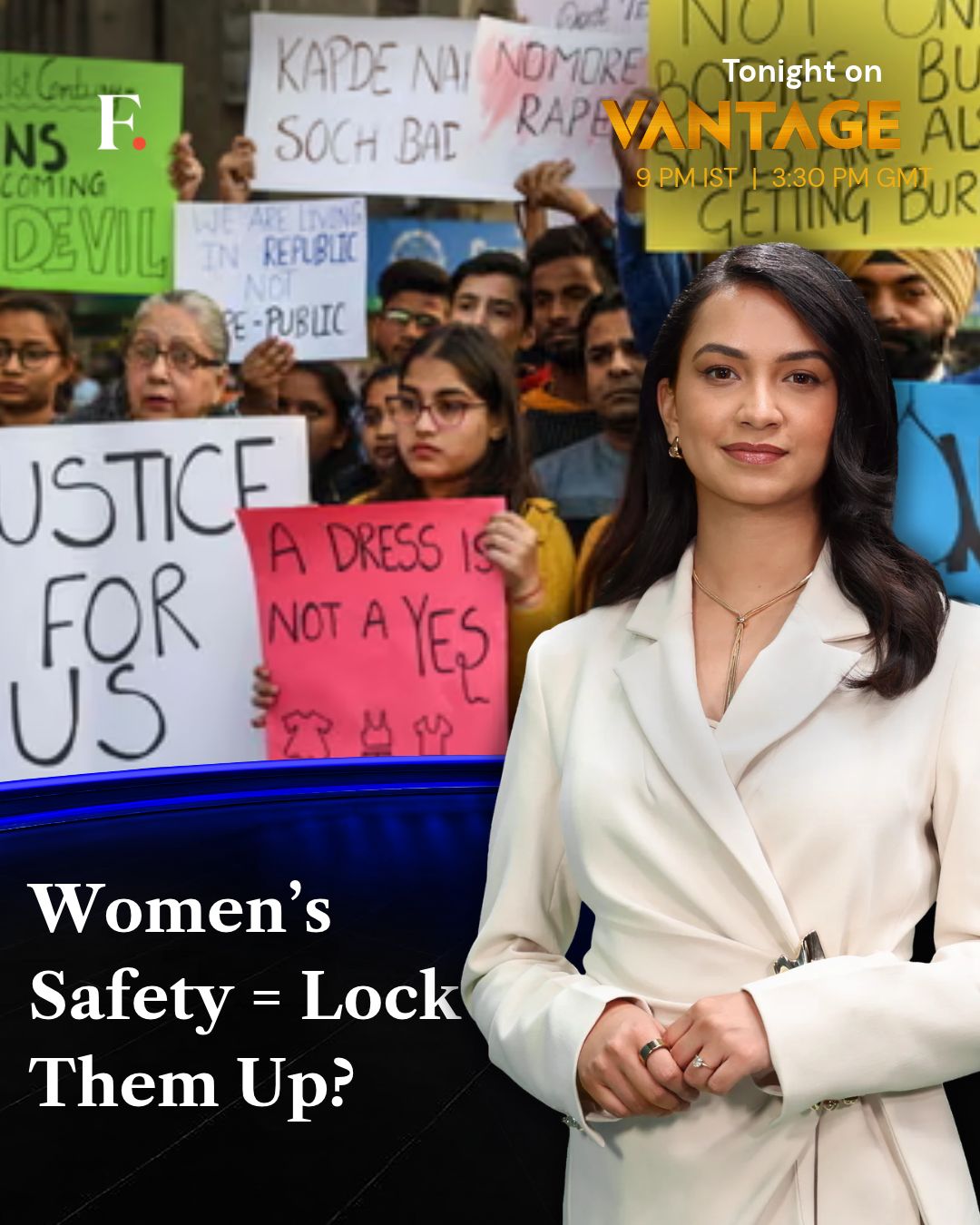
Every day, women navigate spaces designed without their safety in mind. In public parks, on buses, and on streets, women bear the consequences of unsafe environments and inadequate protections. This reality propels Firstpost's advocacy, shared with host @hemsaroya. By asking, "Who Are We Really Protecting?", they invite viewers to question perceptions of women's safety and how it can be truly enhanced. This question is the core of Firstpost and @hemsaroya's latest episode of Vantage.
What it is
The protest in question
Firstpost captures a protest through the lens of women’s personal safety. Women’s clothing is an integral part of the display. The most prominent sign reads, “A DRESS IS NOT A YES!” This protest speaks to the widely accepted notion that a woman's clothes are not a greenlight for disrespect. Words like “A DRESS IS NOT A YES,” clearly articulated, add weight to the show's exacting rhetoric to date. Here, a protestor stands in front of an amorphous crowd, holding the sign with an assemblage of leaflets, pennants and streamers for a heightened visual effect.
Protest placards
The protest plinths aren’t one-size-fits-all. "JUSTICE FOR US," held high and bold, calls for attention to systemic failings in addressing violence. "Women’s Safety = Lock Them Up?,” offers a different approach — a question posed to the regime to reconsider the protective measures that are sorely needed. Indeed, the visuals are a dialogue. Each placard is an entry to the overall story of women’s safety. The marketers of the show, through the medium of protest, reaffirm the heightened societal attention on women's safety. This is then cross-corrected with the suggestion that it is not only the closure of cases that helps women feel safer.
The broad societal frame
The safety of women and the cross-generational issues
The demonstration places women’s safety at the forefront of what should be as much a current cause as it was in the ’90s. Dialogues about women’s well-being are long overdue for the 21th century. At the societal level, safety remains an elusive prize for women. Women’s safety is a battle being fought at all levels — globally, regionally, and intrafamilially. Indeed, in the #MeToo and #TIMESUP era, this is “Women’s Safety = Lock Them Up?”
The trend of protests
Daily, new signs of protest spring into being. Videos of protest sessions are much of the content on any social media platform. Media coverage of protests unrelated to women’s well-being can showcase the anger of spectators, who feel that women are a marginalized lot. The protests are a way of conveying the frustration of society, women and men, at the rising spate of violence against women. The protests seek a level playing ground, one where a woman can wear any garment and be safe. The protests are a reflection of a groundswell. It’s the anger of society at being unable to understand the absence of women’s safety.
Deep dive
The poetry of the protest
The blazer-clad protestor
The protestor is in a blazer and stands in a protest-focused scene. Three elements are noticeable about her attire and position: she is a woman, she is a protestor, and her face is the central focus. Her attire, her stance, and her vigor are aimed at challenging societal norms around women and their safety. Her clothing is not sexualized; it is a symbol of the safety she is fighting for. The blazer, a simple but impactful piece of clothing, reflects the professionalism of the protest. The blazer-clad protestor conveys a message to the regime — it does not matter how a woman dresses. The attire should not affect the issue at hand. The blazer, a symbol of empowerment, indicates that women have the right to dress as they choose and not be harmed. In summary, the blazer signifies power, respect, and the need for society to recognize women and their independence.
The protest signs
All hail to the protest placards as they are a place for Vantage. The signs are a reflection of the anger of society and the need for women’s safety. The protest signs are a visible form of protest, a call to attention. The protest placards call for justice, recognition of power structures, and questioning assumptions. The placards are the reason for the protest. Society must recognize that a woman’s attire is not an invitation for harm. The placement of the placards in the scene indicates that women’s safety is the central issue, and it is women who should be in charge of their safety. The placards are moreover, a reminder of the protests happening against the violence being faced by women. The placards are simple and direct in their message, reflecting the urgency of the issue. The signs are a testament to the power of protest and its ability to bring about change. They lend the protest its voice. The placards are the connection between the protestor and the viewer. A DRESS IS NOT A YES!!!! The sign is a call for attention to the idea that a woman’s clothes are not a justification for harm. The clothing is an integral part of the protest. The sign is a testament to the idea that women’s clothing should not be a factor in deciding their safety. “A DRESS IS NOT A YES” should hold the same meaning in all contexts in all cultures. If she wears the right clothes, she is empowered, safe, and free to make her own choices. In other words, the protest placards are an instrument of communication directed at the regime with a suggestion to reconsider the requirement for women to wear the “right” clothing. The placards are a statement of the protestors’ outlook.
The story at the “Vantage” headquarters
The show Vantage is one that is dedicated to questioning the power structures of a society. It addresses the need for women’s safety and the urge to keep the conversation about women’s safety alive. Firstpost’s latest show has promised to answer who women are. The questions raised are pivotal to the current debate on women’s safety. The show is a voice of the washed-out voices demanding the justice they deserve. The key idea discussed is who we are protecting under the guise of women’s safety. It aims to reiterate the fact that women’s safety is not based solely on the closure of cases. The show is an attempt to question society — what we are doing to protect women. It is a call to society to raise societal awareness around women’s safety and understand the underlying issues. It’s the mantra of Vantage. Amen to the beginning of conversations about deep-rooted societal issues.
The timing of the current rights struggle
9 P.M. IST is the time of action for the show. But it is also a time to reflect on how far we have come and how far we still need to go in the struggle for women’s rights. It demonstrates how women are still marginalized in an unequal society. This time of the day and day of the week are diverse and caters to different societies. The evening is the time for the world to come together for a genuine discussion about women’s safety. It is a time to reflect on what women have been through and are still going through. It is a time to challenge the power structures of society and question the need for women’s freedom.
The power of the public
9 P.M. IST is also the time when the public has the power to question the assumptions about women’s safety. The audience is a key part of the protest. It is the public that needs to join the protest and raise awareness about women’s safety. It is the public that needs to question the assumptions about women’s safety and make sure the protest voices are heard. It is the public that needs to raise the issue and ensure justice and safety for all. It was 9 P.M. IST when the first protest took place. The evening is a time to honor the protesters who have fought for women’s safety and question the assumptions about women’s safety. The evening showcases the public’s participation in the protest and its role in women’s safety. The time of the show’s airing is a reflection of the societal response to women’s safety.
The real questions for society
What society needs to do
The show must raise awareness about women’s safety and address the need for women’s freedom. It must be a call to society to question the power structures and the structures of misogyny. It shouldn’t be forgotten that women’s rights are human rights. Väntag was created to listen to the voices of women across the spectrum and amplify their voices. It is the voice of the voiceless. The questions raised are thought-provoking. It is not the only solution to lock people up. Who are we protecting? Are we protecting the victim or the perpetrator? Who do society laws protect? It must stop the victimization of women and stop making excuses for the violence they experience. The questions are a reminder that women’s safety is not an individual issue but a societal one. It must raise societal awareness and question the assumptions about women’s safety.
Questions for the regime
“Who are we really protecting?” The question is direct and clear. It is a reminder that the regime needs to question its actions and the laws that are being made. It is a call to arms to reevaluate the power structures. The regime needs to recognize the importance of women’s freedom and their right to safety. What are the laws protecting women? Are they protecting the women, or are they making excuses for the violence against women? Are the laws designed to protect women, or are they a way to perpetuate the power structures that keep women marginalized. Are women’s clothes a decision-making factor in deciding their safety? Are women’s clothes a decision-making factor in determining their autonomy. Is society’s gaze on their bodies the most important aspect of evaluating their stance. What is society doing to keep women safe? Who are we really protecting? Is it truly women’s safety, or is it a facade designed to perpetuate the existing power structures? These questions are a reminder that the regime needs to reevaluate its actions and the power structures that keep women marginalized. These questions are a call to society to question the power structures and the assumptions about women’s safety.
Watch the Reel
Questions readers ask
What sparked the recent Women’s Safety Protest in India?
The recent protest was sparked by the ongoing issue of women's safety in public spaces. A prominent sign at the protest, reading “A DRESS IS NOT A YES,” highlighted the misconception that a woman's clothing choices are an invitation for disrespect, sparking dialogue and awareness across cities.
Who is behind the initiative?
The initiative is highlighted by Firstpost and host @hemsaroya, who brought attention to the issue through their advocacy and the episode of *Vantage*. They question societal perceptions of women's safety and how it can be improved.
What are some of the key messages conveyed through the protest placards?
The placards convey various messages, including 'A DRESS IS NOT A YES,' which challenges the idea that a woman's clothing choices are a form of consent. Other signs like 'JUSTICE FOR US' demand attention to systemic failures in addressing violence against women, while 'Women’s Safety = Lock Them Up?' questions the effectiveness of current protective measures.
What is the broader societal impact of women's safety protests?
Women's safety protests bring to light the ongoing issues women face in public spaces and the inadequate protections available to them. These protests highlight the societal frustration and demand for a safer environment where women can feel secure, regardless of their attire.
How do these protests relate to the broader movement for women's rights, such as #MeToo and #TIMESUP?
The protests align with movements like #MeToo and #TIMESUP by emphasizing the need for systemic change and justice for women. They reflect a broader societal anger and demand for a level playing field where women's safety is prioritized.
Related deep dives
Similar reads based on topic and creator.
Recent articles
Fresh deep dives from the latest Reels we unpacked.

Comments
Be the first to comment.