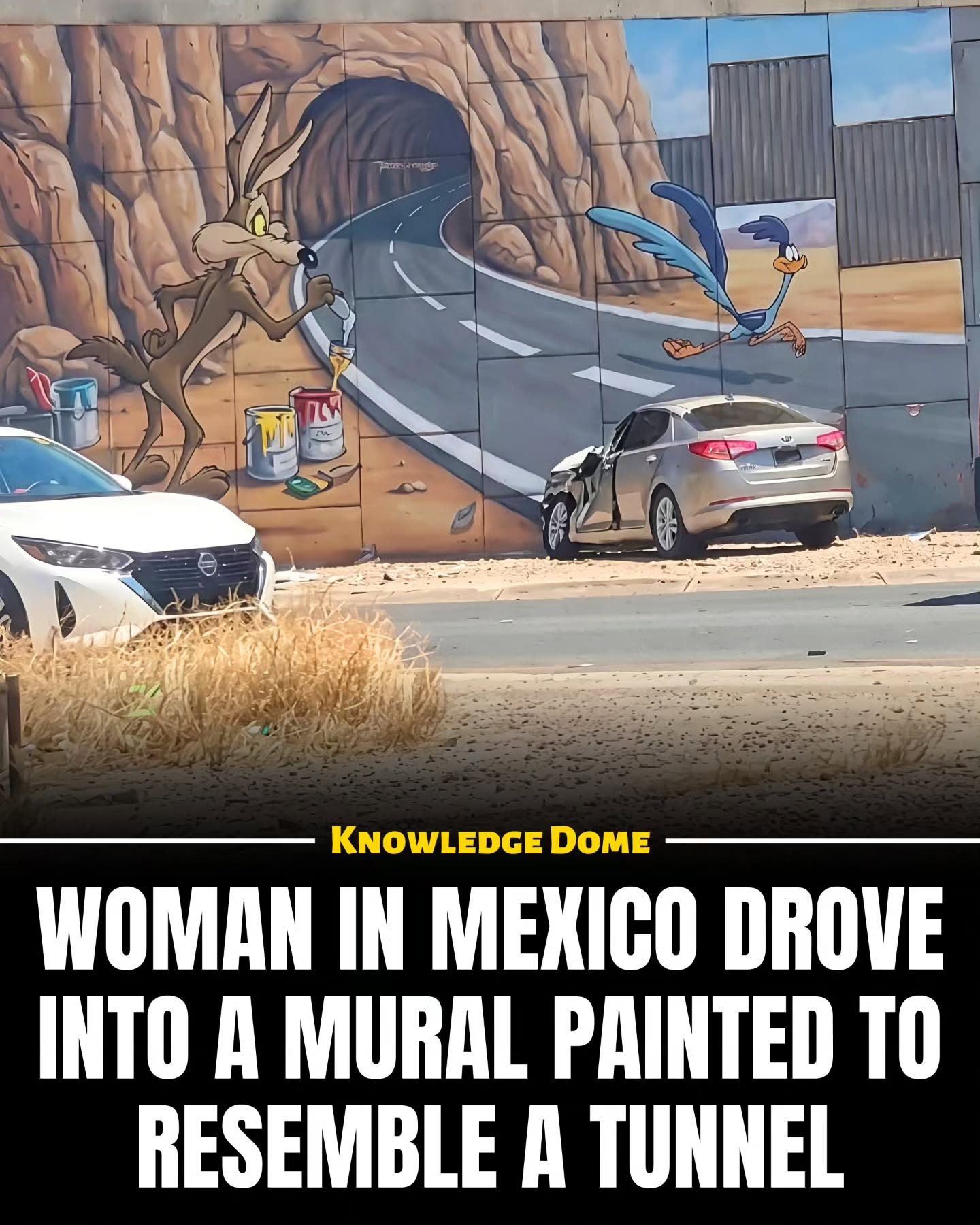
Street Art and Car Accident
In July 2026, a peculiar incident in Monterrey, Mexico, highlighted the incredible realism of street art and its potential to create deception. A woman driving her car collided with a wall after mistaking a 3D-style mural for an actual open road tunnel. The mural, complete with depth, shadows, and perspective, even featured Wile E. Coyote, making it look like a scene from a classic Looney Tunes cartoon. The illusion was so convincing that the driver did not realize she was about to hit a solid wall until it was too late.
Why This Matters
The incident in Monterrey underscores the power of street art to blur the lines between reality and illusion. This isn't the first time a street artist has created a hyper-realistic piece that fools passersby. In 2016, an artist in Argentina painted a lifelike mural on a wall that confused drivers into thinking they were approaching a real underpass. These kinds of artistic expressions often spark conversations about the boundaries of public art and the impact it can have on everyday life.
The Power of Street Art Illusions
Street art has evolved significantly over the years, moving beyond simple graffiti to include intricate, 3D murals that can fool the eye. These pieces often incorporate elements of trompe l'oeil, an art technique that uses realistic imagery to create the optical illusion that the depicted objects exist in three dimensions. This style has become particularly popular in public spaces, where artists aim to surprise and engage viewers with unexpected visuals.
The Impact on Public Perception
The incident in Monterrey also raises questions about how the public perceives and interacts with street art. While many see it as a vibrant and creative form of expression, others view it as a nuisance or even vandalism. The authorities in Monterrey treated the mural as vandalism and launched a search for the artist, highlighting the differing views on what constitutes appropriate public art. On the other hand, the viral nature of the incident shows how these pieces can capture public imagination, sparking conversations and drawing attention to the artist's work.
Main Discussion
The Artistic Technique
The mural in Monterrey is a prime example of the trompe l'oeil technique. This method involves meticulous planning and execution, using shadows, perspective, and depth to create a convincing illusion. The artist likely spent hours perfecting the details to ensure that the mural looked real from various angles, which is what made it so deceptive to the driver.
The Role of Public Art
Public art, when done well, can transform urban landscapes, making them more visually appealing and engaging. However, it also comes with its own set of challenges, especially when it involves deceptive illusions. While many people appreciate the creativity and skill involved, others see it as a potential hazard. This duality is a common theme in discussions about public art, where the line between art and vandalism can be blurred.
The Response to the Incident
The response to the incident in Monterrey varied widely. While many people found the story amusing, joking that it looked like a real cartoon moment, local authorities took a different view. Their decision to treat the mural as vandalism highlights the ongoing debate about the legality and appropriateness of street art in public spaces. This incident, along with others like it, underscores the need for clear guidelines on what constitutes acceptable public art.
Practical Tips
For Drivers
While the chances of encountering a hyper-realistic mural like this are rare, it’s always a good idea to stay alert and aware of your surroundings while driving. Be cautious of unusual visuals, especially in areas known for street art. Slowing down and being attentive can help avoid similar incidents.
For Artists
Artists creating public murals should consider the potential impact of their work. While the goal is often to surprise and engage, it’s crucial to ensure that the art does not pose a risk to public safety. Collaborating with local authorities and communities can help create works that are both impactful and safe.
Important Takeaways
This incident serves as a reminder of the power and potential risks of hyper-realistic street art. While such art can transform urban landscapes and engage viewers, it also requires careful consideration to avoid potential hazards. For both drivers and artists, awareness and collaboration are key to navigating these complex dynamics.
Conclusion
The incident in Monterrey, where a woman drove her car into a hyper-realistic mural, highlights the incredible power of street art to create convincing illusions. While such art can captivate and engage, it also raises important questions about public perception and the boundaries of acceptable public expression. By staying alert and considerate, both drivers and artists can navigate this complex landscape more safely and effectively.
Watch the Reel
Questions readers ask
What happened in the Monterrey tunnel mural incident?
In July 2026, a driver in Monterrey, Mexico, crashed her car into a wall after being deceived by a hyper-realistic 3D mural depicting an open road tunnel. The mural, which featured Wile E. Coyote, created such a convincing illusion that the driver mistook it for a real tunnel.
Why did the mural in Monterrey cause a car accident?
The mural's astonishing realism, complete with depth, shadows, and perspective, created a powerful illusion that tricked the driver into thinking the mural was an actual open road tunnel. This deception led the driver to attempt to enter the 'tunnel,' resulting in a collision with the solid wall.
What makes the Monterrey tunnel mural so remarkable?
The mural's striking realism and the unique incident it caused have drawn attention to the power of street art to blur reality and challenge perceptions. The mural's depiction of Wile E. Coyote from the Looney Tunes cartoons adds an unexpected and humorous twist to the illusion.
Has something similar to the Monterrey tunnel mural incident happened before?
Yes, this is not the first instance of a hyper-realistic street art piece causing deception. In 2016, a similar incident involving a realistic street mural occurred, demonstrating that street art can have a significant impact on how people perceive their surroundings.
Is the Monterrey tunnel mural still visible?
As of now, there is no information indicating that the mural has been altered or removed. The mural remains a notable example of street art's ability to create compelling illusions and challenge public perceptions.
What can drivers learn from the Monterrey tunnel mural incident?
The incident serves as a reminder for drivers to stay alert and attentive to their surroundings, even when faced with seemingly obvious visual cues. Street art can be incredibly realistic, and it is essential to remain cautious and aware of potential illusions, especially in urban environments.
What happened to the driver involved in the Monterrey tunnel mural crash?
The article does not provide specific details about the driver's condition or the aftermath of the incident. However, it is implied that the driver was deceived by the mural's realism, which led to the collision.
Recent articles
Fresh deep dives from the latest Reels we unpacked.




Comments
Be the first to comment.