Windrunner: The Gigantic Cargo Plane Redefining Air Transport
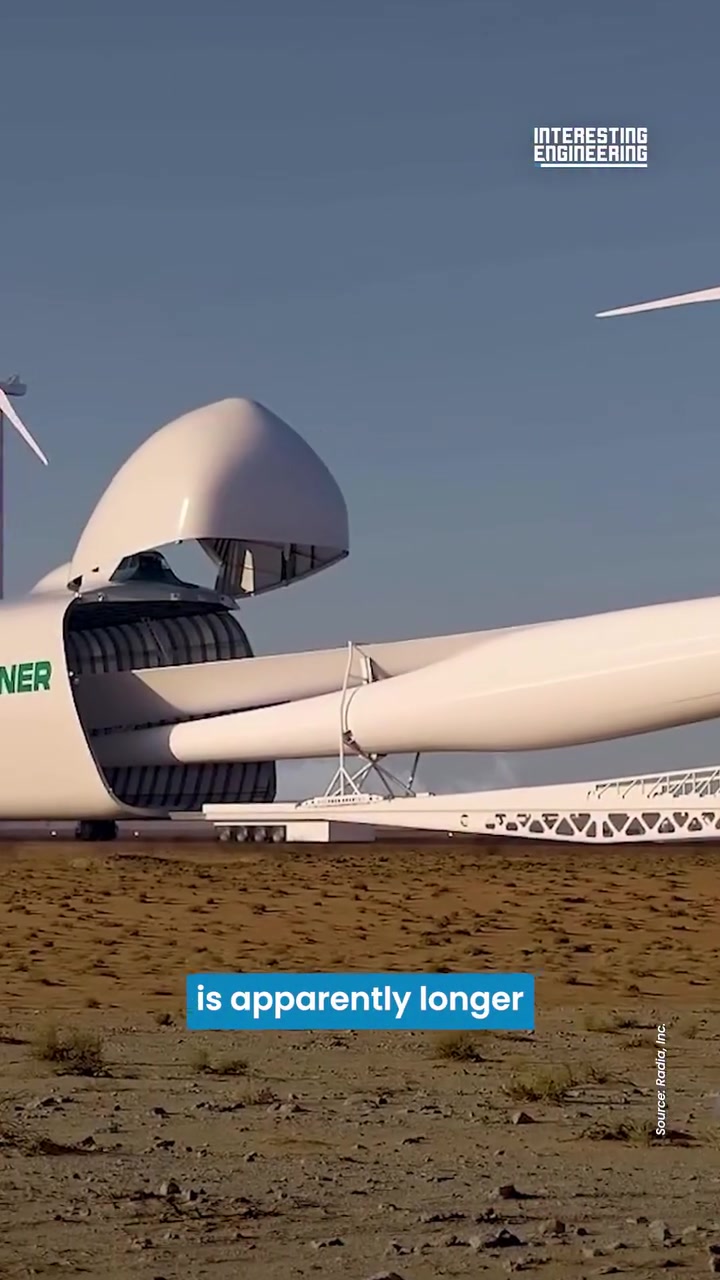
It takes only a single glance to see Windrunner is unlike any aircraft most people have seen. Radia's creation — "longer than a football field" — is designed to accomplish the size-specific task of transporting modern wind turbine blades. Engineered with a massive 109-meter length, this plane eclipses the Antonov An-225, which met its end in 2022.
A colossal aircraft for the wind industry
Windrunner, the brainchild of Colorado startup Radia, is a behemoth of engineering. Unlike conventional planes where weight largely dictates design, Windrunner is all about space. This gigantic plane is built to land on barely prepared strips of dirt, and its primary goal isn’t about how much it can carry but rather how immense the loads can be. Radia claims the plane will tackle onshore wind turbine blades that stretch up to 105 meters. These blades, which exceed 100 meters in length, are becoming increasingly difficult to transport through conventional means. Windrunner is poised to address this challenge head-on, landing on a short, semi-prepared strip of land and broad enough to handle the longest modern wind turbine blades. The maximum payload of Windrunner is 72.6 tonnes, with a range of 2,000 kilometers and a cruise speed of Mach 0.6. Although that is among moderate payload compared to other heavy-lift cargo aircraft, the mission of moving outsized equipment such as wind turbine blades justifies its design. Its specifications allow you to disregard standard roads, bridges, and tunnels, problems that engineers currently face, making Windrunner a sort of ditch and run for the most enormous turbine blades.
Skyward solutions for wind energy
Windrunner represents a critical turning point in the logistics of wind energy. Wind energy is growing swiftly, but as onshore turbine blades have surpassed 100 meters, transport has become a bottleneck. Roads, bridges, and tunnels are simply not sized to accommodate these massive blades. Radia is betting on Windrunner to solve this problem. The Windrunner is built around the size, not the weight. For large but lightweight objects, Windrunner's design offers an unparalleled advantage. In the same spirit of innovation, the Radia company pitches Windrunner for rockets, satellites, and military cargo.
The components of the Windrunner
Windrunner’s design is nothing new. Radia’s pitch for Windrunner is part common sense part simplifying technology. The plane is built with off-the-shelf turbo fans, an aluminium fuselage, and composite wings. There’s nothing new about the materials or configuration, except for the scale. "This thing is designed around size, not weight." Windrunner is a large aluminum fuselage marked by "four off-the-shelf turbo fans" and builds most of its wings using composite materials. The design of Windrunner, in essence, is a part of the common design and materials used in the industry; what distinguishes it is its scale. In addition to carrying wind blades, Windrunner is also positioned to transport military cargo, satellites, and rockets. By standardizing components, Radia can potentially bring down costs and speed up time to market.
The Windrunner's unique capabilities
Windrunner has been designed to carry a huge amount of cargo, its maximum payload is 72.6 tonnes, less than an Antonov An-124. Windrunner requires a relatively short landing strip, 1,800 meters, and is built to land on uneven surfaces. Additionally, it has a drag coefficient of Mach 0.6, which is considered slow by aircraft standards.
Certification success and possible challenges
Radia is targeting first certification flights around 2030. But certification of Windrunner will still face obstacles. The plane’s size and weight can pose significant challenges for runway operations, maintenance, and infrastructure. Windrunner must also demonstrate that it can carry out its tasks reliably and safely.
The Path to Major clients
If Windrunner proves viable, Radia is already pitching it to the military, aerospace, and energy sectors. The plane could revolutionize how we move heavy, massive objects over long distances, even without standard infrastructure. But first, it needs to prove itself in real-world conditions. So, while Windrunner is still a design, the potential is clear and it is certainly a project to look out for.
A potential powerhouse in transportation
The Windrunner traffic model is a testament to the innovative ways forward for the future of aviation.
Watch the Reel
Questions readers ask
What makes Windrunner different from other large cargo planes, like the Antonov An-225?
Windrunner stands out due to its immense length of 109 meters, which is longer than the Antonov An-225. Unlike other cargo planes, Windrunner is designed to prioritize the size of the cargo over its weight, making it ideal for transporting extremely long items like wind turbine blades. It's also engineered to land on minimally prepared strips of land, which sets it apart from conventional cargo aircraft.
How does Windrunner address the logistics challenges of transporting modern wind turbine blades?
Windrunner is specifically designed to carry the increasingly long wind turbine blades, which often exceed 100 meters. Traditional transportation methods, such as roads, bridges, and tunnels, struggle with these dimensions. Windrunner can land on short, semi-prepared strips of land, bypassing these infrastructure limitations and making it a game-changer for the wind energy industry.
What are the key specifications of the Windrunner?
The Windrunner has a maximum payload of 72.6 tonnes, a range of 2,000 kilometers, and a cruise speed of Mach 0.6. While its payload capacity is moderate compared to other heavy-lift cargo aircraft, its ability to transport outsized equipment, like wind turbine blades, justifies its design and makes it unique in the market.
Can Windrunner be used for purposes other than transporting wind turbine blades?
Yes, Radia envisions Windrunner as a versatile aircraft. In addition to wind turbine blades, it can carry military cargo, rockets, and satellites. Its design, which emphasizes size over weight, makes it suitable for a variety of large but lightweight objects, expanding its utility beyond the wind energy sector.
What materials are used in the construction of the Windrunner?
Windrunner is built using common, tried-and-true materials. Its fuselage is made of aluminum, and its wings are constructed from composite materials. The plane is powered by four off-the-shelf turbo fans. The innovation lies not in the materials themselves, but in the scale at which they are used to create this massive aircraft.
How does Windrunner's design help in overcoming current transportation challenges?
Windrunner's design allows it to land on short, semi-prepared strips of land, which means it doesn't require the extensive infrastructure typically needed for large cargo planes. This capability is crucial for transporting oversized items like wind turbine blades, as it circumvents the limitations of traditional roads, bridges, and tunnels.
Related deep dives
Similar reads based on topic and creator.


Recent articles
Fresh deep dives from the latest Reels we unpacked.


Comments
Be the first to comment.