Recycled Wind Turbine Blades: A Second Life for Old Materials
Wind turbines are a powerful source of renewable energy, but their blades present a unique waste problem. These massive structures, often measuring up to 80 meters in length, are designed to withstand harsh weather conditions and have a lifespan of about 20-25 years. As older turbines reach the end of their useful lives, the disposal of their blades has become an increasingly pressing issue. However, innovative solutions are emerging, offering a second life for these discarded materials. In Denmark, old wind turbine blades from the 1990s are being recycled and repurposed into useful building materials, reducing waste and promoting sustainability.
Why This Matters
The wind energy industry is rapidly growing, but with it comes the challenge of managing end-of-life turbine blades. These blades are composed of composite materials, primarily fiberglass and resin, which are difficult to recycle using conventional methods. As a result, many blades end up in landfills, where they can take centuries to decompose. By finding new uses for these materials, we can significantly reduce waste, conserve resources, and support a circular economy.
The Innovative Use of Recycled Wind Turbine Blades
Repurposing into Construction Materials
One of the most promising applications for recycled wind turbine blades is their use in construction. The composite materials used in turbine blades are strong and durable, making them ideal for a variety of building applications. In Denmark, old wind turbine blades are being repurposed into panels and other structural elements for modern buildings.
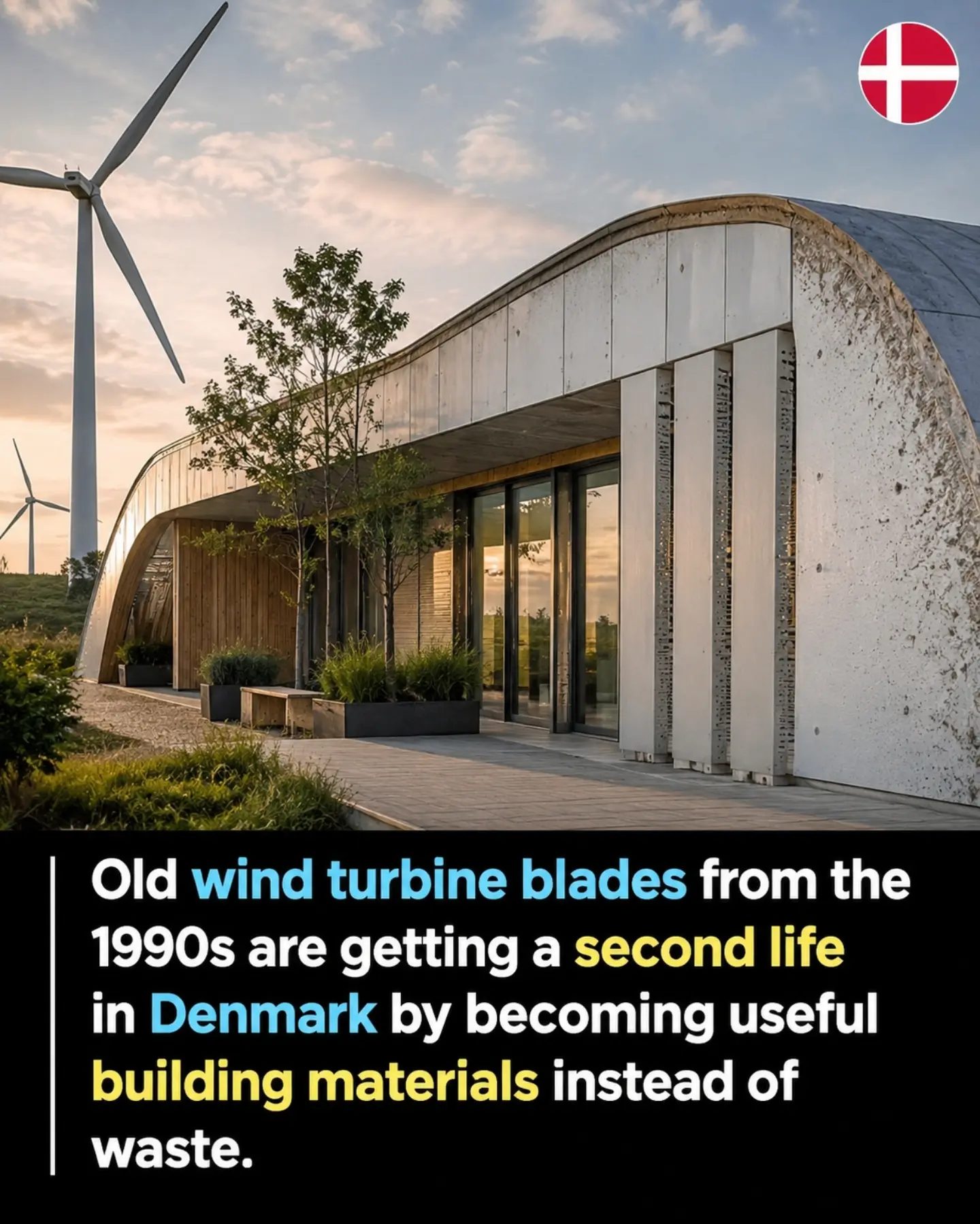
These recycled materials can be used to create curved, contemporary designs, as seen in the modern building showcased in the visual summary. The building's unique aesthetic and sustainable construction highlight the potential of repurposed wind turbine blades in contemporary architecture. By integrating these materials into new structures, architects and builders can create visually striking designs while promoting environmental sustainability.
Environmental Benefits
Reusing old wind turbine blades offers several environmental benefits. First, it reduces the amount of waste sent to landfills, conserving valuable land and reducing environmental degradation. Second, using recycled materials in construction decreases the demand for new raw materials, lowering the energy and resources required for manufacturing. This not only reduces carbon emissions but also helps preserve natural resources.
Moreover, the reuse of wind turbine blades supports the principles of a circular economy, where waste is minimized, and resources are kept in use for as long as possible. By repurposing old blades, we can extend their useful life, reducing the need for new production and promoting a more sustainable approach to waste management.
Challenges and Solutions
Despite the benefits, repurposing wind turbine blades into building materials is not without its challenges. The composite materials used in turbine blades are complex to decompose, and their large size can make handling and transportation difficult. However, innovative solutions are being developed to address these issues.
One approach is to shred the blades into smaller pieces, making them easier to handle and transport. These smaller pieces can then be used as aggregates in concrete or other construction materials, providing additional structural strength. Another method involves grinding the blades into a fine powder, which can be used as a filler in various applications.
Practical Tips for Using Recycled Wind Turbine Blades
If you are considering using recycled wind turbine blades in your construction projects, here are some practical tips to help you get started:
Assess the Material Quality
Before using recycled wind turbine blades, it is essential to assess their quality and suitability for your specific application. Work with a materials expert to evaluate the strength, durability, and other properties of the recycled materials to ensure they meet your project's requirements.
Collaborate with Specialists
Repurposing wind turbine blades requires specialized knowledge and equipment. Collaborate with experts in materials science, engineering, and sustainable construction to develop effective solutions for your project.
Explore Funding and Incentives
Governments and organizations around the world are increasingly recognizing the importance of sustainable waste management. Explore available funding, grants, and incentives to support your project and make it more feasible.
Promote Your Sustainable Practices
Highlight the use of recycled materials in your marketing and communications to promote your commitment to sustainability. This can enhance your brand image, attract environmentally conscious consumers, and set a positive example for others in your industry.
Important Takeaways
The repurposing of old wind turbine blades into building materials offers a sustainable solution to the waste management challenges posed by end-of-life blades. This innovative approach not only reduces waste but also conserves resources, lowers carbon emissions, and supports a circular economy. By embracing these recycled materials, we can create visually striking and environmentally friendly structures that promote a more sustainable future.
Conclusion
As the wind energy industry continues to grow, finding sustainable solutions for managing end-of-life turbine blades is crucial. The innovative use of recycled wind turbine blades in construction projects demonstrates the potential of repurposing these materials to create durable, visually appealing structures. By addressing the challenges and leveraging the benefits of recycled materials, we can promote a more sustainable approach to waste management and support a circular economy.
The examples from Denmark and similar initiatives around the world serve as inspiring models for how we can transform waste into valuable resources. By embracing these practices, we can contribute to a more sustainable future, where waste is minimized, resources are conserved, and innovative solutions drive progress. Take the step and consider incorporating these materials into future projects.
Watch the Reel
Questions readers ask
How are wind turbine blades typically disposed of after their lifespan?
Wind turbine blades, due to their size and composite material, have traditionally been a challenge to dispose of. Many end up in landfills, or are even incinerated, posing environmental concerns due to their non-biodegradable nature and the emissions from burning.
What makes wind turbine blades difficult to recycle?
Wind turbine blades are primarily made of composite materials, which are a mixture of fibers and resins. These materials are strong and durable, making them ideal for wind turbines, but also challenging to recycle due to their complexity and the lack of efficient recycling methods.
What innovative solutions are being explored for wind turbine blade waste?
In Denmark, one innovative solution involves recycling old wind turbine blades into building materials. This process transforms the composite structures into useful components for construction, reducing waste and promoting sustainability.
What are the benefits of using recycled wind turbine blades in construction?
Using recycled wind turbine blades in construction offers multiple benefits. It reduces the volume of waste sent to landfills, decreases the demand for new raw materials, and contributes to a more sustainable construction industry.
How does the recycling process for wind turbine blades contribute to waste reduction?
The recycling of wind turbine blades significantly contributes to waste reduction by repurposing large, non-biodegradable materials. Instead of ending up in landfills, these blades are transformed into valuable building materials, minimizing environmental impact.
What is the typical lifespan of a wind turbine blade?
Wind turbine blades are designed to last approximately 20-25 years. After this period, they are decommissioned and often face disposal challenges due to their material composition and size. Innovative recycling solutions are crucial as the number of decommissioned blades increases.
Why is Denmark a leader in recycling wind turbine blades?
Denmark has been at the forefront of wind energy for decades, which means the country has a significant number of aging turbines. This, combined with a strong commitment to sustainability and waste reduction, has driven the development of innovative recycling solutions for wind turbine blades.
Related deep dives
Similar reads based on topic and creator.



Recent articles
Fresh deep dives from the latest Reels we unpacked.




Comments
Be the first to comment.