Advisor-Client Dynamics
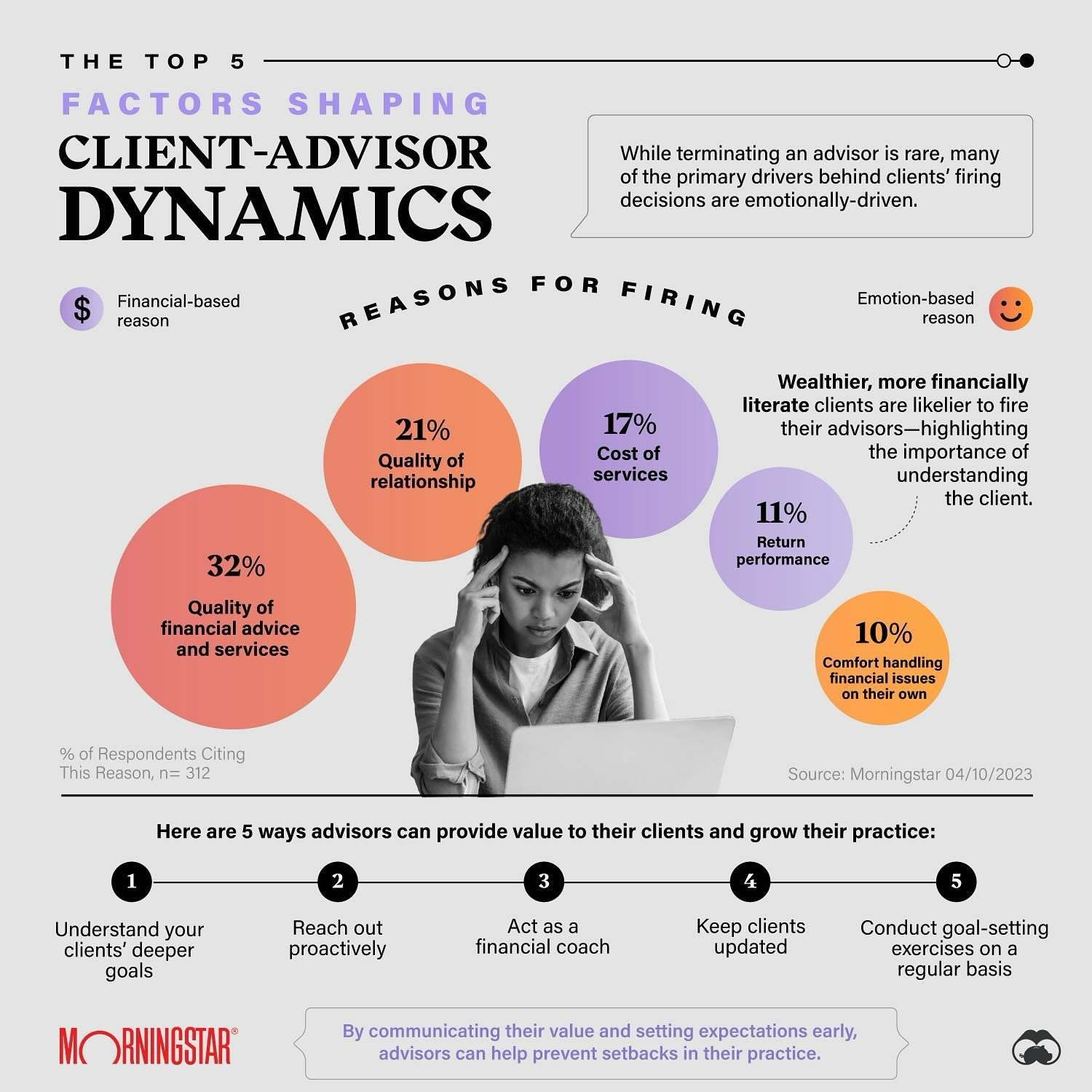
Clients terminating the services of their financial advisors is not a common occurrence. However, when it does happen, the reasons are often more emotionally driven than financially motivated. The dynamics between financial advisors and their clients are shaped by several key factors, which can heavily influence a client’s decision to part ways with their advisor.
Why This Matters
The quality of the client-advisor relationship is pivotal in shaping investor decisions. Financial advisors must understand that clients may terminate a relationship if the caliber of the financial advice received is perceived as inadequate. Likewise, service quality and the strength of the relationship between the client and advisor are critical elements that shape these decisions.
Factors Shaping Client-Advisor Dynamics
Quality of Relationship
According to a Morningstar survey, 21% of respondents cited the quality of the relationship as a primary reason for firing their advisor. The importance of a strong, trusting relationship cannot be overstated. Clients who feel understood and valued are more likely to remain loyal to their advisors.
Cost of Services
Cost is another factor, but it plays a relatively minor role. 17% of respondents indicated that the cost of services was a significant factor in their decision to fire their advisor. While cost is important, it is not the primary driver behind client dissatisfaction.
Quality of Financial Advice
The quality of financial advice and services was cited by 32% of respondents as a top reason for firing an advisor. This underscores the importance of offering high-quality advice and services that meet or exceed client expectations. Clients are willing to pay for expert advice, but they expect that advice to be valuable and actionable.
Return on Performance
Return on performance was mentioned by 11% of respondents as a reason for firing their advisor. While performance is important, clients often prioritize other factors, such as the quality of the advice and the strength of the relationship.
Comfort Handling Financial Issues Independently
10% of respondents mentioned their comfort level with handling financial issues independently as a reason for terminating an advisor’s services. This highlights the importance of understanding each client’s level of financial literacy and their willingness to take on financial responsibilities.
Practical Tips for Financial Advisors
Understand Clients' Goals
To enhance client value and grow their practice, financial advisors should take the time to understand their clients' deeper goals. This involves more than just discussing investment strategies; it requires gaining a comprehensive understanding of the client’s financial aspirations and life objectives.
Proactive Communication
Proactive outreach is essential for maintaining strong client-advisor relationships. Regular communication helps build trust and ensures that clients feel supported and valued. Advisors should make it a priority to reach out to their clients, whether through email, phone calls, or in-person meetings.
Act as a Financial Coach
Advisors can add significant value to their clients by acting as financial coaches. This involves providing personalized guidance and support, helping clients set and achieve their financial goals, and offering ongoing encouragement and motivation.
Keep Clients Updated
Regular updates on the status of their investments and financial plans are crucial for keeping clients informed and engaged. Advisors should provide timely updates and be transparent about any changes or developments that may impact their clients’ financial situations.
Conduct Goal-Setting Exercises
Regular goal-setting exercises help clients stay focused on their financial objectives and ensure that their investment strategies align with their long-term goals. Advisors should conduct these exercises regularly and adjust strategies as needed to keep clients on track to achieve their financial aspirations.
Important Takeaways
Wealthier and more financially literate clients are more likely to terminate their advisor relationships. Understanding the unique needs and preferences of these clients is crucial for advisors who want to retain their business.
Emotionally driven factors, such as the quality of the relationship and the quality of financial advice, are significant drivers behind clients’ decisions to fire their advisors. Advisors must focus on building strong, trusting relationships and delivering high-quality advice to retain their clients.
Conclusion
The dynamics between financial advisors and their clients are complex and multifaceted. By understanding the key factors that influence these relationships and taking proactive steps to address them, financial advisors can enhance client value, build stronger relationships, and grow their practice.
Watch the Reel
Questions readers ask
What are the most common reasons clients choose to part ways with their financial advisors?
Clients often fire their financial advisors due to a perceived lack of trust, poor quality of financial advice, or subpar service. Emotional factors, such as feeling undervalued or misunderstood, frequently play a significant role in these decisions, even more so than financial performance.
How does the quality of financial advice impact client retention?
The quality of financial advice is crucial in client retention. Clients expect personalized, strategic, and effective financial guidance. If they feel the advice they receive does not meet these standards, they may seek services elsewhere.
Why is the client-advisor relationship so important in financial services?
A strong client-advisor relationship builds trust and understanding, which are essential for long-term satisfaction. Clients who feel valued and heard are more likely to stay with their advisor, even during market fluctuations. This emotional connection can outweigh financial performance in a client’s decision to remain with an advisor.
What role does service quality play in client decisions to leave an advisor?
Service quality is a significant factor in client retention. Clients expect prompt, courteous, and professional service. If an advisor fails to meet these expectations, clients may feel disrespected or overlooked, leading them to seek better service elsewhere.
How can financial advisors improve client satisfaction and retention?
Financial advisors can enhance client satisfaction and retention by focusing on relationship-building, providing high-quality financial advice, and delivering excellent service. Regular communication, personalization, and a proactive approach to addressing client concerns can foster a stronger, more resilient relationship.
Why might a client stay with an advisor despite poor financial performance?
A client might stay with an advisor despite poor financial performance if they have a strong emotional connection and trust in the advisor. The quality of service and the personal relationship can often compensate for short-term financial setbacks, making clients more likely to remain loyal.
What strategies can financial advisors use to build a stronger bond with their clients?
Financial advisors can build a stronger bond with their clients by actively listening to their needs and concerns, offering personalized financial plans, and maintaining open lines of communication. Regular check-ins, personalized updates, and a proactive approach to addressing client issues can help foster a deeper connection.
Recent articles
Fresh deep dives from the latest Reels we unpacked.




Comments
Be the first to comment.