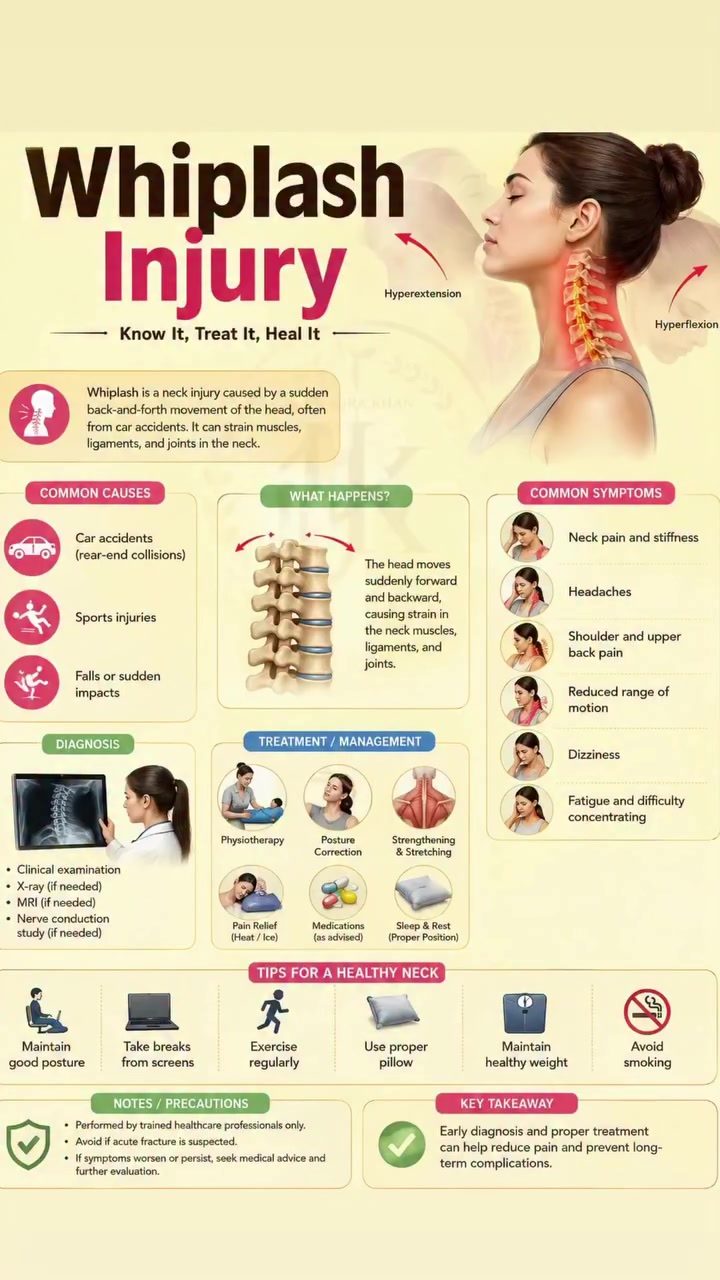
Understanding Whiplash Injuries
Whiplash is a common neck injury that occurs due to a sudden, rapid back-and-forth movement of the head, often caused by car accidents, sports injuries, or falls. It's more than just neck pain, as it involves strain to the muscles, ligaments, and joints in the neck, as well as other soft tissues. Understanding whiplash can help in its prevention, diagnosis, and effective management.
Why This Matters
Whiplash can lead to a range of symptoms that vary in severity, from mild discomfort to severe pain and disability. Recognizing the signs and knowing the appropriate steps for diagnosis and treatment are crucial for supporting recovery and preventing long-term complications. This is particularly relevant for those involved in high-risk activities or environments, such as driving, contact sports, or occupations with a high risk of falls.
Main Discussion
Causes of Whiplash
Whiplash can be caused by various events that result in sudden acceleration or deceleration, which makes the head and neck move rapidly back and forth. Some of the most common causes include:
- Car Accidents: Rear-end collisions are a leading cause of whiplash. The force of impact can cause the head to snap back and forth, resulting in strain to the neck.
- Sports Injuries: Contact sports, such as football, rugby, and soccer, can lead to whiplash due to sudden impacts or collisions with other players or the ground.
- Falls or Sudden Impacts: Falls from heights or sudden jolts, such as those experienced in extreme sports or accidents, can also cause whiplash.
What Happens During a Whiplash Injury
During a whiplash injury, the head moves suddenly forward and backward, causing strain in the neck muscles, ligaments, and joints. Here’s a detailed look at what happens:
- Muscle Strain: The abrupt movement can tear or strain neck muscles, leading to pain and stiffness.
- Ligament Damage: Ligaments that support the neck can become stretched or torn, causing instability and pain.
- Joint Damage: The sudden motion can also affect the joints in the neck, leading to inflammation and pain.
- Soft Tissue Injury: Other soft tissues, such as tendons and even nerves, can also be affected, resulting in a variety of symptoms.
Common Symptoms
Symptoms of whiplash can vary but often include:
- Neck Pain and Stiffness: This is the most common symptom, usually felt within 24 hours of the injury.
- Headaches: Often originating from the base of the skull and radiating to the forehead.
- Shoulder and Upper Back Pain: Due to muscle strain and tension.
- Reduced Range of Motion: Difficulty moving the neck in certain directions.
- Dizziness: Feelings of lightheadedness or vertigo.
- Fatigue and Difficulty Concentrating: Sometimes accompanied by memory issues.
Other symptoms can include tingling or numbness in the arms, ringing in the ears, blurred vision, and sleep disturbances. It’s essential to recognize these symptoms early for effective treatment and prevention of chronic issues.
Diagnosis
Early and accurate diagnosis is key to managing whiplash. This typically involves:
- Clinical Examination: A healthcare professional will assess the range of motion, muscle strength, and any signs of nerve damage.
- Imaging Tests: These may include:
- X-ray: To check for fractures or dislocations.
- MRI: To examine soft tissues and spinal structures in detail.
- Nerve Conduction Study: To assess nerve function, especially if numbness or tingling is present.
Treatment and Management
Effective treatment and management strategies for whiplash often focus on reducing pain and restoring function. Key approaches include:
- Physiotherapy: Involves exercises to improve flexibility, strength, and range of motion. Evidence-based physiotherapy can significantly support recovery.
- Posture Correction: Proper posture can help reduce strain on the neck and promote healing.
- Strengthening and Stretching: Specific exercises to strengthen the neck and upper back muscles and improve flexibility.
- Pain Relief: Heat or ice packs, as well as pain medications as advised by a healthcare professional, can help manage pain.
- Sleep and Rest: Ensuring proper sleep position and adequate rest can aid in recovery.
- Lifestyle Adjustments: Maintaining good posture, taking breaks from prolonged screen time, exercising regularly, and using a proper pillow can all help. Maintaining a healthy weight and avoiding smoking can also expedite recovery.
Practical Tips
Immediate Actions After a Whiplash Injury
- Seek Medical Attention: If you experience a whiplash injury, seek immediate medical attention, especially if symptoms include severe weakness, numbness, difficulty walking, or changes in bowel or bladder function.
- Rest and Ice: Apply ice to the neck for 15-20 minutes several times a day to reduce swelling and pain.
- Gentle Movement: Engage in gentle neck exercises as advised by a healthcare professional to prevent stiffness.
Long-Term Management
- Stay Active: Gradually return to normal activities, avoiding any motions that cause pain.
- Strengthening Exercises: Incorporate specific exercises to strengthen the neck and upper back muscles.
- Postural Awareness: Maintain good posture throughout the day, whether sitting, standing, or sleeping.
- Pain Management: Use prescribed pain relief methods, such as heat or ice, and medications as advised by a healthcare professional.
Important Takeaways
- Early Diagnosis: Early diagnosis and proper treatment can significantly reduce pain and prevent long-term complications.
- Professional Care: Ensure all treatments are performed by trained healthcare professionals.
- Avoid Acute Conditions: If an acute fracture is suspected, avoid certain treatments until cleared by a medical professional.
- Seek Further Evaluation: If symptoms worsen or persist, seek further medical advice and evaluation.
Conclusion
Whiplash is a common but often misunderstood injury that can significantly impact daily life. By understanding its causes, symptoms, and effective management strategies, individuals can support their recovery and prevent long-term complications. Whether you're dealing with whiplash yourself or know someone who is, being informed is the first step toward effective management and a quicker return to normal activities.
Watch the Reel
Questions readers ask
What are the most common causes of whiplash injuries?
Whiplash injuries are most commonly caused by car accidents, particularly rear-end collisions. Other frequent causes include sports injuries, falls, and any activity that results in a sudden, forceful back-and-forth movement of the head. Some examples are roller coasters, bungee jumping, and high-impact sports like football or boxing.
What are the early signs and symptoms of whiplash?
Early symptoms of whiplash may include neck pain and stiffness, loss of range of motion, headaches, and fatigue. Some people may also experience dizziness, blurred vision, and tingling or numbness in the arms. These signs can appear within hours or may be delayed for up to 24 hours after the injury.
How is whiplash typically diagnosed?
Diagnosing whiplash involves a thorough medical history and physical examination. Doctors will assess the range of motion, muscle strength, and reflexes in the neck. Imaging tests, such as X-rays, CT scans, or MRIs, may be used to rule out fractures or other serious injuries, although they may not always show whiplash-related soft tissue damage.
What are the benefits of physiotherapy for whiplash treatment?
Physiotherapy is often recommended for whiplash treatment as it helps to restore neck strength, flexibility, and range of motion. A physiotherapist can provide exercises and manual therapies tailored to the individual's needs, promoting healing and preventing chronic pain. Early intervention is key, so starting physiotherapy as soon as possible after the injury can greatly improve outcomes.
What steps can be taken to prevent whiplash injuries?
To prevent whiplash, always wear a seatbelt while driving or riding in a vehicle, and ensure that the headrest is properly positioned to support the head and neck. Engaging in safe practices during sports and recreational activities can also help. For example, using appropriate safety gear, following the rules, and maintaining good posture can reduce the risk of whiplash.
Why is immediate treatment important for whiplash?
Prompt whiplash treatment can prevent symptoms from worsening and reduce the likelihood of long-term complications. Early intervention, such as applying ice, gentle stretching, and pain management, can help manage inflammation, reduce pain, and speed up recovery. In severe cases, immediate medical attention may be required.
How does posture relate to whiplash injuries?
Maintaining good posture can help prevent whiplash injuries by keeping the neck and spine properly aligned. Poor posture, on the other hand, can strain the neck muscles and ligaments, making them more susceptible to injury during a sudden, forceful movement. Posture is particularly important during daily activities, exercise, and while driving or operating machinery.
Recent articles
Fresh deep dives from the latest Reels we unpacked.




Comments
Be the first to comment.