Interest Rate Forecast
The anticipation around when the Federal Reserve will begin cutting interest rates in 2024 and the extent of these cuts is a pivotal issue for both the U.S. and global economies. Following a series of rapid rate hikes in 2022, the Federal Reserve is now tasked with the delicate challenge of carefully easing monetary policy to achieve a smooth economic transition.
Why this matters
The timing and magnitude of interest rate cuts by the Federal Reserve are critical for several reasons. These cuts can influence economic growth, inflation, and financial markets. By controlling the cost of borrowing, the Federal Reserve can either stimulate or cool down economic activity. This balancing act is particularly important in 2024, as the economy navigates the aftereffects of 2022's rate hikes. Proper timing can help prevent a recession while avoiding overheating the economy.
Main Discussion
Historical Context of Interest Rate Cuts
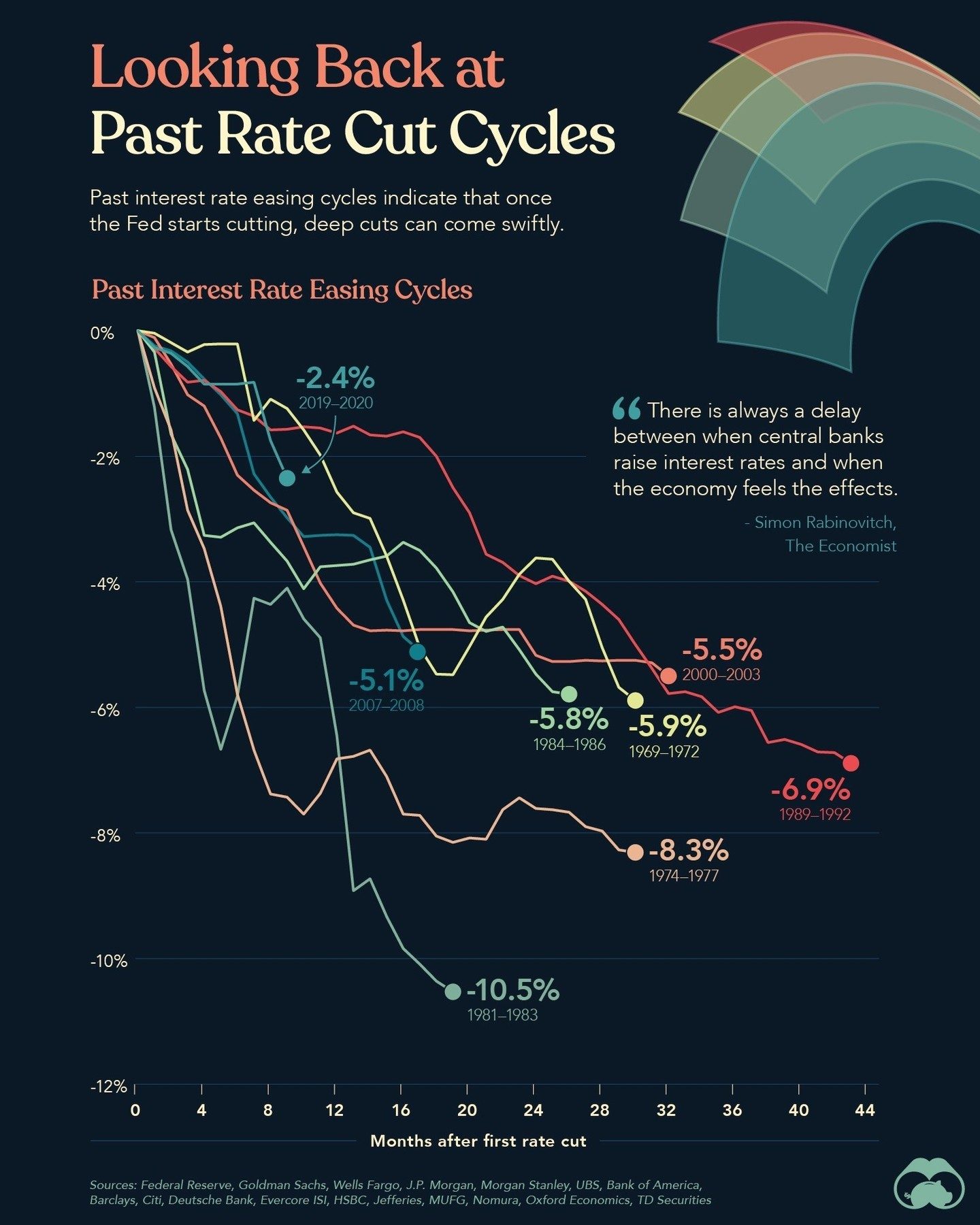
Understanding past interest rate cut cycles provides valuable insights into how the Federal Reserve might act in 2024. Historical data shows that these cycles vary widely in both duration and magnitude. For instance, some cycles have seen multiple cuts spread over several months, while others have involved fewer, more significant reductions. Analyzing these past cycles helps in predicting potential patterns and responses to current economic conditions.
Forecasts for 2024
Several top financial institutions, including Goldman Sachs, Wells Fargo, and J.P. Morgan, have shared their forecasts for when and by how much the Federal Reserve will cut interest rates in 2024. Most institutions anticipate the first rate cuts to begin in June 2024, with a total of 100 basis points of cuts expected by the end of the year. These forecasts are based on a variety of economic indicators, including inflation rates, employment data, and GDP growth.
Institutions' Expectations
Institutions have varying expectations for the number of basis points of cuts by the end of 2024. For example, Goldman Sachs predicts a series of incremental cuts, while Wells Fargo expects a more aggressive approach. These differences in forecasts highlight the complexity of predicting economic trends and the Federal Reserve's actions. Institutions like Morgan Stanley, UBS, and Bank of America also provide valuable insights, each with a slightly different perspective on the economic landscape.
The Role of the Federal Reserve
The Federal Reserve plays a central role in managing interest rates. Its decisions are based on a comprehensive analysis of economic data and are influenced by various factors, including inflation rates, unemployment levels, and global economic trends. The Federal Reserve aims to maintain a balance between promoting economic growth and controlling inflation, making its role crucial in shaping the 2024 economic outlook.
Market Impact
The timing of interest rate cuts can have a significant impact on financial markets. Lower interest rates typically encourage borrowing and spending, which can boost economic activity. However, if the cuts are too aggressive, they can lead to excessive debt and potential market instability. Conversely, delaying rate cuts might slow down economic recovery.
Risks and Uncertainties
There are always uncertainties and risks associated with interest rate forecasts. Institutions like UBS suggest that the most probable risks involve more rather than fewer interest rate cuts. This reflects the inherent unpredictability of economic conditions and the potential for unexpected events to influence the Federal Reserve's decisions.
Practical Tips
For individuals and businesses, staying informed about interest rate changes is crucial. Here are some practical tips to navigate the upcoming rate cuts:
Monitor Economic Indicators
Keep an eye on key economic indicators such as inflation rates, employment data, and GDP growth. These indicators can provide early signals of potential rate changes.
Adjust Financial Plans
If you are considering significant financial decisions, such as buying a house or investing, factor in potential interest rate changes. For example, if rates are expected to fall, it might be wise to wait before taking on new debt.
Diversify Investments
Diversifying your investment portfolio can help mitigate the risks associated with interest rate changes. Consider a mix of stocks, bonds, and other assets to balance your portfolio.
Consult Financial Advisors
Financial advisors can provide personalized advice based on your financial situation and the latest economic forecasts. They can help you make informed decisions about your investments and financial planning.
Important Takeaways
Key points to remember about the 2024 interest rate forecasts:
- Historical interest rate cut cycles vary in duration and magnitude, providing valuable context for future decisions.
- Most institutions expect rate cuts to begin in June 2024, with a total of 100 basis points of cuts by the end of the year.
- The Federal Reserve's decisions will be influenced by a range of economic indicators, including inflation and employment data.
- There are inherent risks and uncertainties in predicting interest rate changes, with some institutions suggesting more cuts are likely.
- Staying informed and diversifying investments can help individuals and businesses navigate the upcoming rate cuts effectively.
Conclusion
The timing and magnitude of interest rate cuts in 2024 are critical for the U.S. and global economies. By understanding historical trends, forecasts from top institutions, and the role of the Federal Reserve, individuals and businesses can better navigate the economic landscape. Staying informed, monitoring key indicators, and consulting financial advisors are essential steps to make informed decisions in the face of potential rate changes.
Watch the Reel
Questions readers ask
What are the key factors the Federal Reserve will consider when deciding to cut interest rates in 2024?
The Federal Reserve will likely consider several key factors, including inflation data, employment rates, and overall economic growth. They will also monitor global economic conditions and financial market stability to ensure a balanced approach to monetary policy.
How might the timing of the Fed's interest rate cuts in 2024 impact the U.S. economy?
The timing of the Federal Reserve's interest rate cuts in 2024 can significantly impact the U.S. economy. Earlier cuts could stimulate economic growth by lowering borrowing costs, while later cuts might help control inflation by maintaining higher rates for a longer period.
What do institutional forecasts, such as those from Goldman Sachs and Morgan Stanley, predict for Federal Reserve rate cuts in 2024?
Institutional forecasts for 2024 vary, but many analysts predict that the Federal Reserve will begin cutting rates in the latter half of the year. Goldman Sachs and Morgan Stanley, among others, have suggested that the rate cuts will be gradual to avoid disrupting economic stability.
How do past rate cut cycles inform our understanding of potential cuts in 2024?
Historical rate cut cycles provide valuable insights into the Federal Reserve's approach. For instance, past cycles have shown that the Fed typically begins cutting rates in response to signs of slowing economic growth or increased inflation. This historical context can help anticipate the Fed's actions in 2024.
What role does U.S. inflation play in the Federal Reserve's decision to cut interest rates in 2024?
Inflation is a crucial factor in the Federal Reserve's decision to cut interest rates. If inflation remains high, the Fed may delay rate cuts to maintain control over prices. Conversely, if inflation shows signs of easing, the Fed might cut rates to support economic growth.
How might the global economic outlook influence the Federal Reserve's rate-cutting decisions in 2024?
The global economic outlook can significantly influence the Federal Reserve's decisions. A strong global economy might prompt the Fed to be more cautious with rate cuts, while a weak global economy could push for earlier and more aggressive cuts to stimulate growth.
What can investors expect from the Federal Reserve's rate-cutting policy in 2024?
Investors can expect the Federal Reserve to carefully manage interest rate cuts in 2024. The goal will be to support economic growth without triggering inflation. The Fed’s decisions will likely be communicated clearly to help investors make well-informed decisions. This involves monitoring the Federal Reserve's official statements and economic updates.
Recent articles
Fresh deep dives from the latest Reels we unpacked.




Comments
Be the first to comment.