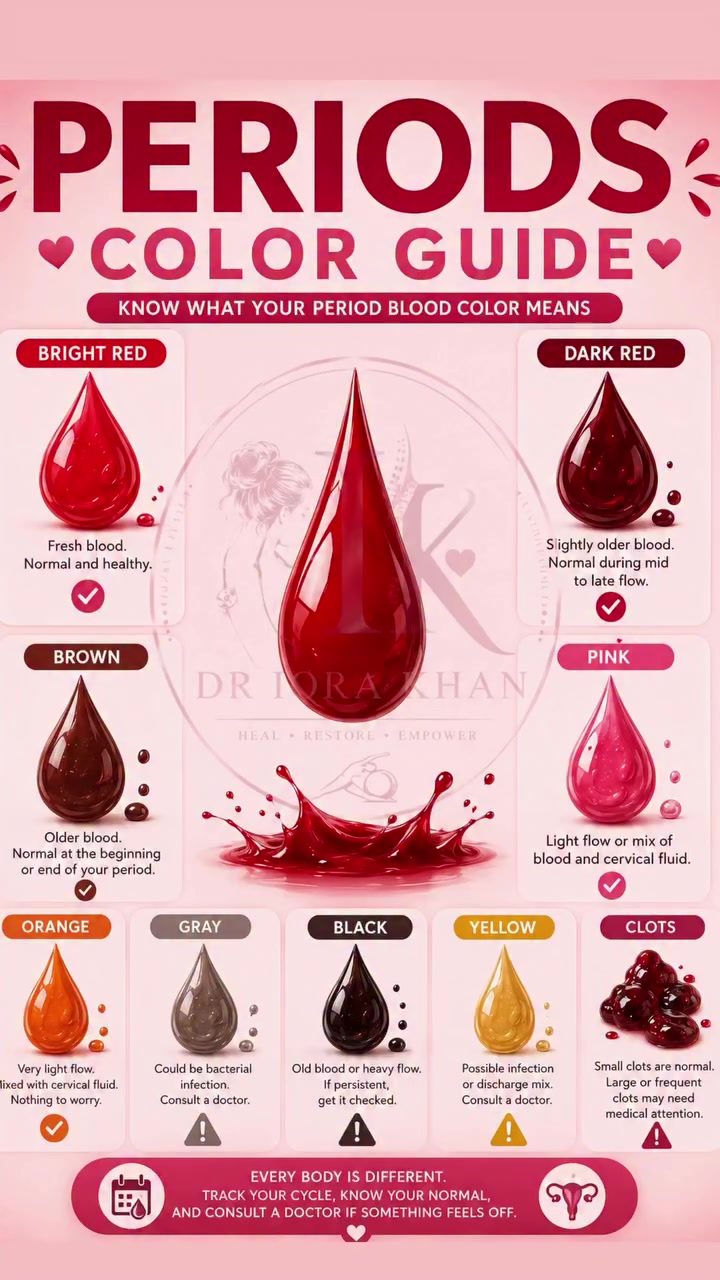
Period Blood Color Guide
Period blood color can vary widely from person to person and even from cycle to cycle. Understand what different colors and consistencies might indicate.
Why this matters
Tracking period blood color is an essential part of understanding menstrual health. By recognizing what's normal for you, you can better identify when something might be off. This guide will help you decode the story your period blood color tells.
Main discussion
Bright Red
Bright red blood is usually a sign of fresh blood flow. Bright red blood is typically normal and healthy, especially during the heaviest part of your period. It indicates that the blood is flowing actively and hasn't been in the body for long.
Dark Red
Dark red blood is slightly older and has been in the body longer. This color is commonly seen during mid to late flow. This is still considered normal, but if you notice a sudden change from bright red to dark red, it might indicate a shift in your menstrual flow.
Brown
Brown blood can be older blood or may appear at the beginning or end of your period. It often indicates that the blood has been in the body for a while and has oxidized, turning brown. While this can be normal, if you notice a lot of brown blood or it persists throughout your period, it might be worth checking with a healthcare professional.
Pink
Pink blood is usually a sign of light flow or a mix of blood and cervical fluid. This color can be normal and may appear at the start or end of your period. It often indicates that the flow is light and may not be coming from the uterus but from the cervix.
Orange
Orange blood is typically a very light flow mixed with cervical fluid. This can be normal and is often seen at the beginning or end of your period. The orange color comes from the mixing of blood with other bodily fluids, which can dilute its color.
Gray
Gray blood is a more concerning color and may indicate a bacterial infection. If you notice gray discharge or blood, it's important to consult a healthcare professional. Gray blood can also have a foul smell, which is another sign that something might be wrong.
Black
Black blood can indicate old blood or heavy flow. While it can be normal, especially if it's at the beginning or end of your period, it can also indicate that the blood has been in the body for a while and has oxidized, turning black. If you notice a lot of black blood or if it persists, it's a good idea to check with a healthcare professional.
Yellow
Yellow blood may indicate a possible infection or a mix of discharge. While a small amount of yellow discharge can be normal, especially if it's clear and odorless, yellow blood can be a sign of infection, especially if it's accompanied by a foul smell, pain, or other symptoms.
Clots
Small clots are a normal part of menstrual flow and can be an indication of heavy flow. However, large or frequent clots may require medical attention. Clots can form when the blood flows quickly and doesn't have time to break down, or when there are changes in your menstrual flow.
Practical tips
Track Your Cycle
Tracking your cycle can help you understand what's normal for you. Keep a log of your period blood color, flow, and any other symptoms you experience. This can help you identify patterns and recognize when something might be off.
Know Your "Normal"
Every body is different, and what's normal for one person might not be normal for another. Pay attention to your body and learn to recognize your "normal" period. This can help you better identify when something might be wrong.
Consult a Doctor
If you notice persistent gray discharge, a foul smell, severe pain, or very heavy bleeding, it's important to consult a healthcare professional. These can be signs of an infection, hormonal imbalance, or other health issues. Don't ignore these symptoms, as they can indicate a more serious problem.
Stay Informed
Staying informed about menstrual health can help you better understand your body and recognize when something might be wrong. Read up on the different aspects of menstrual health, from period blood color to cycle tracking, and empower yourself with knowledge.
Trust Your Instincts
If something feels off, trust your instincts and consult a healthcare professional. You know your body best, and if you feel like something isn't right, it's always better to err on the side of caution.
Important takeaways
- Period blood color can tell you a lot about what's going on in your body.
- Bright red and dark red blood are usually normal, while brown, pink, and orange blood can indicate lighter flow or a mix of blood and cervical fluid.
- Gray, black, and yellow blood, as well as large or frequent clots, can indicate a problem and should be checked by a healthcare professional.
- Track your cycle, know your normal, and trust your instincts. Staying informed and aware of your body can help you better understand your menstrual health. Keep an eye on your period blood color, as it can provide valuable insights into your body's overall health.
Conclusion
Understanding period blood color is an essential part of menstrual health. By recognizing what's normal for you and staying informed, you can better identify when something might be wrong. Trust your instincts, and don't hesitate to consult a healthcare professional if you notice any concerning symptoms.
Watch the Reel
Questions readers ask
Why does the color of period blood change throughout my cycle?
The color of period blood can change due to factors like the age of the blood and the flow rate. At the beginning of your period, blood is typically bright red, but as your period progresses, the flow slows, and the blood can turn darker or even brown as it takes longer to leave the body. In addition, the presence of cervical mucus or other discharges will affect the color of your period blood.
What if I see very dark brown or black blood during my period?
Very dark brown or black blood is typically older blood that has taken longer to exit the body. While it is often normal, especially towards the end of your period, it can also indicate slow flow. However, if you notice this color throughout your period or if it's accompanied by pain or other unusual symptoms, it's a good idea to consult with a healthcare provider.
Why might my period blood be pink?
Pink period blood is often due to a higher proportion of cervical fluid and less blood flow, which is common but not always the case. This color can also indicate light flow and is often seen at the beginning or end of a period, especially for people who have a lighter period flow. If you see pink blood with heavy flow, this could be a sign of lower estrogen levels, which can be caused by stress and/or low body weight. If you notice pink period blood consistently throughout your period, it is a good idea to speak to your healthcare provider.
What does it mean if I see orange or gray discharge mixed with my period blood?
Orange or gray discharge mixed with period blood can be a sign of an infection. If you notice a foul odor, itching, or burning along with this color, it's important to contact your healthcare provider. These symptoms can indicate a bacterial infection, such as bacterial vaginosis, and may require treatment.
Is it normal to have bright red blood with clots during my period?
Bright red blood with clots can be normal, especially if the clots are small and pass without pain. Clots form when blood flow slows, and can be a sign of heavier flow. However, if the clots are large (quarter-sized or larger), very painful, or accompanied by other symptoms like severe cramping or fever, consult your healthcare provider. It is always good to keep track of these symptoms and discuss with your healthcare provider.
How can I keep track of my period blood color to monitor my menstrual health?
To monitor your menstrual health, keep a record of your period blood color along with other symptoms and patterns. There are many period tracking apps and resources to help you document this information. By understanding what's normal for you, you can better identify any changes that might need attention. If you notice significant changes in color, flow, or other symptoms, consult your healthcare provider.
What if I notice a sudden change in my period blood color from one cycle to the next?
A sudden change in period blood color, especially if accompanied by other symptoms like severe pain, heavy flow, or unusual odor, can indicate an underlying issue. While minor variations are normal, significant changes should be evaluated by a healthcare provider. It is always a good idea to consult your healthcare provider to discuss any concerns you have about your menstrual health.
Recent articles
Fresh deep dives from the latest Reels we unpacked.




Comments
Be the first to comment.