Water Behavior in Space
Water behaves very differently in space than it does on Earth. In a microgravity environment, water doesn't fall in droplets; instead, it forms unique shapes due to surface tension. This behavior is both fascinating and important for various scientific and practical reasons.
Why this matters
Understanding how water behaves in space is crucial for several reasons. It helps in the design of water management systems on spacecraft, aids in scientific experiments, and provides insights into fundamental physics. Moreover, observing water in microgravity can lead to innovations in fluid dynamics that benefit industries on Earth.
Main discussion
Water in Microgravity
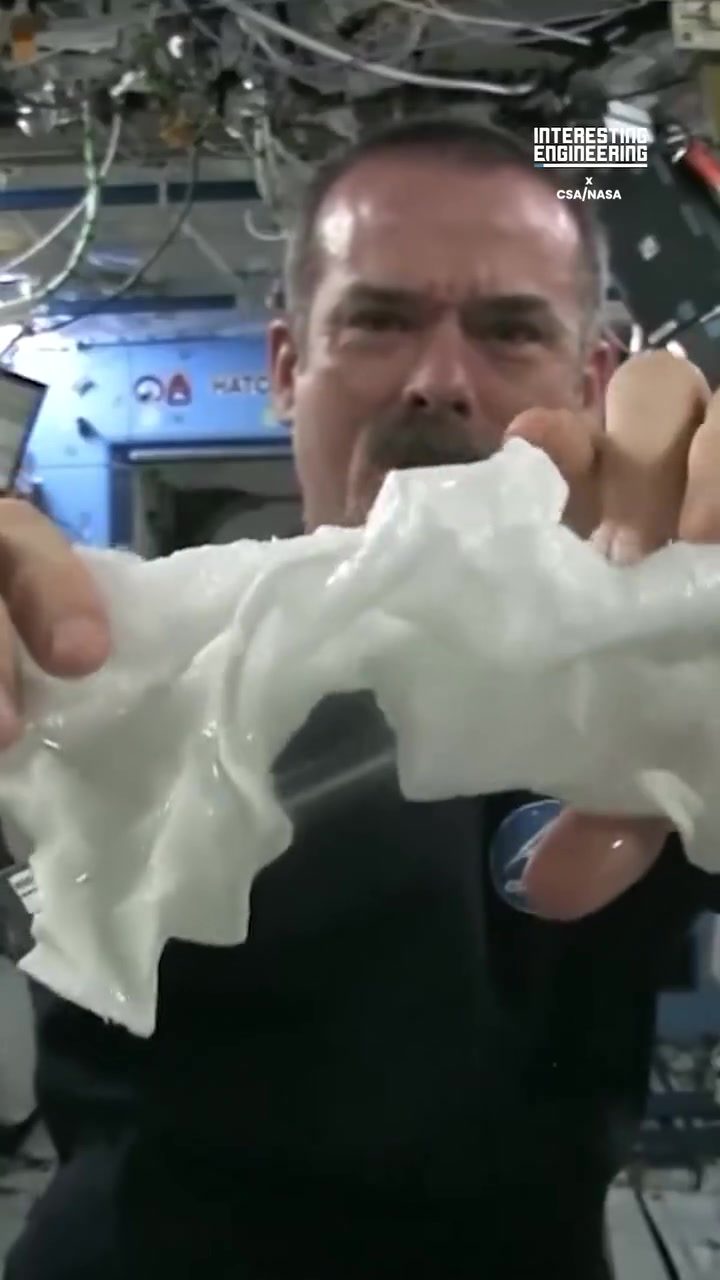
In the absence of gravity, water doesn't fall or pour as it does on Earth. Instead, it forms spherical shapes due to surface tension. This is because, in microgravity, there are no external forces pulling the water down or causing it to spread out. The molecules of water stick to each other, forming a cohesive ball. You may observe the astronaut squeezing and shaping the water, which highlights the unique properties of water in space.
Surface Tension and Cohesion
Surface tension is a critical factor in how water behaves in space. It is the property of the surface of a liquid that allows it to resist an external force. In microgravity, surface tension causes water to form spherical shapes. This is because the water molecules are attracted to each other more strongly than they are to the surrounding air, creating a tight, cohesive ball.
Cohesion, the attraction between like molecules, also plays a significant role. In space, water molecules are free to move in any direction, but they tend to stick together due to cohesion. This creates the spherical shape observed during the water wringing demonstration.
The Experiment
The demonstration involves an astronaut wringing out a soaking wet washcloth in microgravity. Initially, the washcloth is dripping with water, but as the astronaut begins to squeeze it, the water doesn't fall to the floor as it would on Earth. Instead, it forms a tube-like shape due to the combined effects of surface tension and cohesion. This experiment showcases the fascinating behavior of water in a zero-gravity environment.
The astronaut's actions highlight the unique properties of water in space. As they squeeze the washcloth, the water doesn't fall in droplets but forms a cohesive shape. This shape changes as the astronaut continues to manipulate the water, demonstrating the fluid dynamics in microgravity.
Practical tips
Conducting Water Experiments in Space
When conducting water experiments in space, it's essential to consider the unique properties of water in microgravity. Here are some practical tips:
-
Use Contained Environments: Ensure that experiments are conducted in a contained environment to prevent water from floating away and causing potential damage or safety issues.
-
Utilize Surface Tension: Take advantage of surface tension to manipulate water. For example, you can use capillary action to move water through small tubes or use surface tension to create stable water droplets.
-
Minimize Vibrations: Vibrations can disrupt the behavior of water in microgravity. Ensure that experiments are conducted in a stable environment to maintain the integrity of the water shapes.
Practical Applications
Understanding water behavior in space has various practical applications. For example, it can help in the design of water management systems on spacecraft. Knowing how water behaves in microgravity can aid in the development of efficient water purification and recycling systems, which are crucial for long-duration space missions.
Additionally, the unique properties of water in space can be utilized in scientific experiments. For instance, researchers can study the effects of microgravity on water properties, which can lead to new insights into fluid dynamics and material science.
Important takeaways
- Water in microgravity forms spherical shapes due to surface tension and cohesion.
- Surface tension is a critical factor in how water behaves in space.
- Understanding water behavior in space has practical applications, such as designing water management systems on spacecraft and conducting scientific experiments.
- Conducting water experiments in space requires careful consideration of the unique properties of water in microgravity.
Conclusion
Water behaves very differently in space than it does on Earth. In a microgravity environment, water forms spherical shapes due to surface tension and cohesion, highlighting the unique properties of water in space. This behavior is both fascinating and important for various scientific and practical reasons. By understanding how water behaves in space, we can design more efficient water management systems on spacecraft, conduct innovative scientific experiments, and gain valuable insights into fluid dynamics.
Watch the Reel
Questions readers ask
How does water form droplets in microgravity?
In microgravity, water forms spherical droplets due to surface tension. Without gravity pulling the water down, the molecules cohere to form a shape that minimizes surface area. These spherical shapes are crucial for conducting experiments and managing water in spacecraft.
How does NASA use water in space research?
NASA conducts various experiments with water on the International Space Station to study fluid dynamics and improve water management systems for long-duration space missions. This includes investigating how water behaves in microgravity and developing techniques to effectively handle liquids in space.
Why is understanding water behavior in microgravity important for spacecraft design?
Understanding how water behaves in microgravity is essential for designing efficient and reliable water management systems in spacecraft. This knowledge helps ensure that water is properly stored, transported, and used for life support and other critical functions during space missions.
What are some unique behaviors of water in space that differ from Earth?
In space, water does not pour or flow as it does on Earth. Instead, it forms unique spherical shapes, moves in slow, blobs, and can even stick to surfaces due to the lack of gravity. These behaviors are driven by surface tension and cohesion, which dominate in the absence of gravity.
How do astronauts manage water on the International Space Station?
Astronauts use specialized equipment to manage water on the International Space Station. This includes containers designed to hold water in microgravity, systems for recycling water, and techniques for moving water from one location to another without spilling it. These methods ensure that water is safely used and conserved in space.
What insights can be gained from studying water in microgravity?
Studying water in microgravity provides insights into fundamental physics and fluid dynamics. These insights can lead to innovations in various industries on Earth, such as improving water purification methods, enhancing material science, and developing better fluid handling techniques in many engineering applications.
Recent articles
Fresh deep dives from the latest Reels we unpacked.




Comments
Be the first to comment.