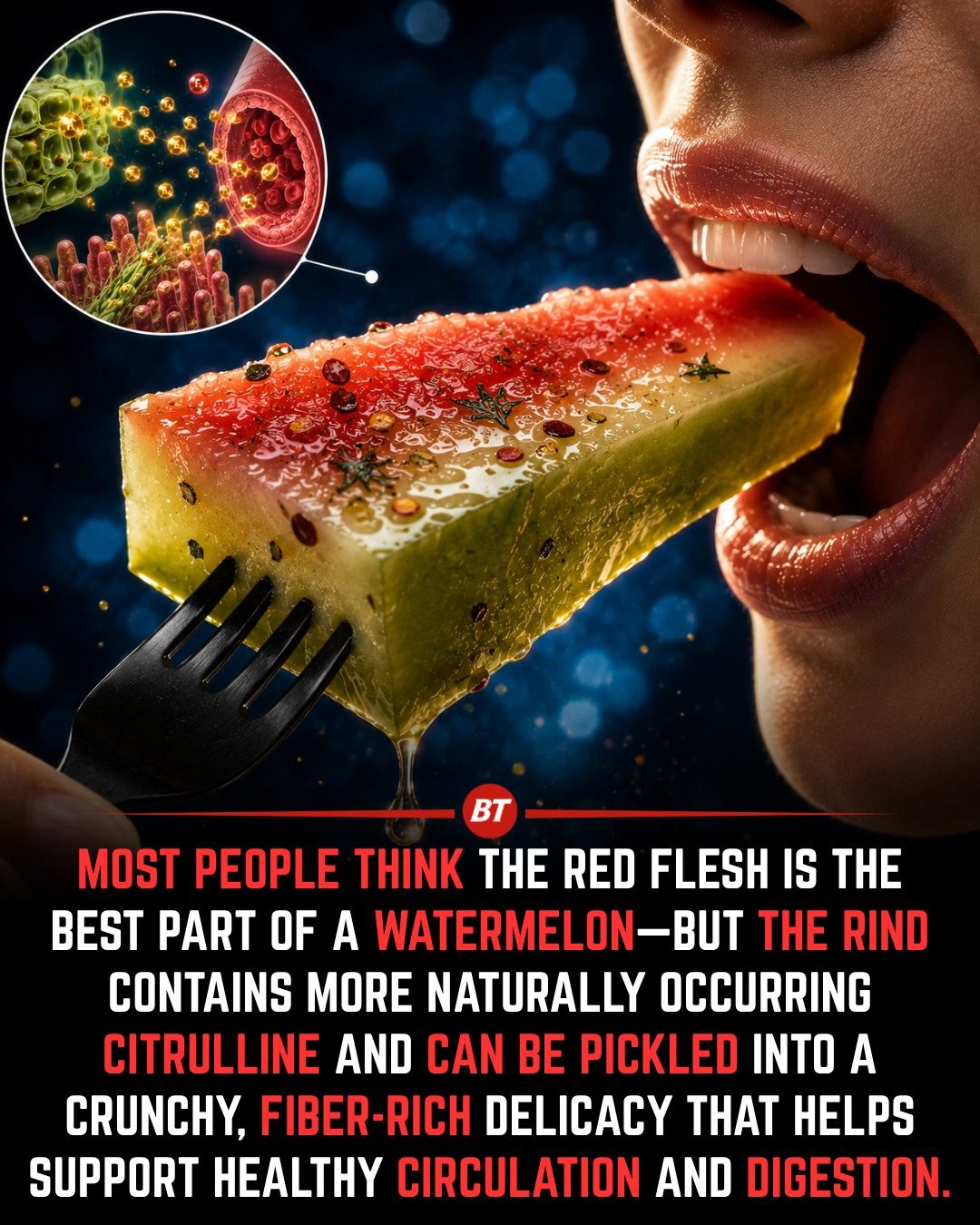
Watermelon Rind
While the juicy red flesh of a watermelon is typically the star of the show, the rind often gets overlooked and discarded. However, the pale green rind of a watermelon is not just a byproduct—it's a treasure trove of beneficial nutrients, particularly citrulline. This amino acid is naturally occurring and plays a vital role in supporting healthy circulation and digestion.
Why This Matters
The benefits of watermelon rind go beyond just reducing kitchen waste. By incorporating the rind into your diet, you can enhance your overall health in several ways. This overlooked part of the watermelon is rich in citrulline, which the body converts into arginine. Arginine, in turn, helps produce nitric oxide, a molecule that relaxes blood vessels and supports healthy circulation.
Main Discussion
Citrulline and Arginine
Citrulline is an amino acid found naturally in watermelon rind. When consumed, the body converts citrulline into arginine. Arginine is essential for producing nitric oxide, a molecule that helps relax blood vessels. This process supports healthy circulation, which is crucial for overall cardiovascular health.
Studies have shown that watermelon is one of the richest natural food sources of L-citrulline. This amino acid is known to support blood vessel function and exercise performance by increasing nitric oxide production. While the rind isn't a substitute for medical treatment, it's a great example of how often-overlooked parts of fruits can still offer valuable nutrients.
Dietary Fiber
In addition to citrulline, watermelon rind is also a good source of dietary fiber. This fiber helps promote healthy digestion by supporting beneficial gut bacteria and contributing to long-lasting fullness. Incorporating more fiber into your diet can help with weight management and overall digestive health.
Traditional Use
Many cultures have traditionally pickled watermelon rind, transforming what would normally become food waste into a crisp, tangy side dish. This practice not only reduces waste but also creates a delicious and nutritious delicacy. Pickled watermelon rind is a crunchy, fiber-rich food that supports healthy circulation and digestion.
Practical Tips
How to Pickle Watermelon Rind
Pickling watermelon rind is a simple process that can be done with a few basic ingredients. Here’s a step-by-step guide to get you started:
- Prepare the Rind: Peel off the tough outer green skin of the watermelon. The white inner layer is what you will use for pickling.
- Cut the Rind: Cut the rind into thin strips or chunks, depending on your preference.
- Prepare the Brine: Mix equal parts vinegar and water in a saucepan. Add your choice of spices, such as garlic, dill, or ginger. Bring the mixture to a boil, then let it cool.
- Pickle the Rind: Place the rind in a jar and pour the cooled brine over it. Make sure the rind is completely submerged in the liquid. Seal the jar and let it sit for at least 24 hours before consuming. The longer it sits, the more flavorful it will become.
Incorporating Watermelon Rind into Your Diet
If pickling isn't your thing, there are other ways to incorporate watermelon rind into your diet. You can add it to salads, stir-fries, or even use it as a topping for sandwiches. The versatility of watermelon rind makes it easy to include in a variety of dishes, allowing you to enjoy its nutritional benefits in different ways.
Important Takeaways
- Nutritional Value: Watermelon rind is rich in citrulline and dietary fiber, both of which support healthy circulation and digestion.
- Waste Reduction: By using the rind, you can reduce kitchen waste and make the most of the entire fruit.
- Versatility: Watermelon rind can be pickled, added to salads, or used in various other dishes, making it a versatile ingredient.
Conclusion
The next time you cut into a juicy watermelon, consider giving the rind a second look. This often-overlooked part of the fruit is packed with nutrients that can support your health in multiple ways. Pickling the rind is a great way to enjoy its benefits while reducing waste. So, the next time you’re at a watermelon, take a holistic approach, and you’ll find that the rind is far more valuable than you might have thought.
Watch the Reel
Questions readers ask
What are the primary benefits of consuming watermelon rind?
Watermelon rind is packed with citrulline, an amino acid that aids in healthy circulation and digestion. By including rind in your diet, you can support overall cardiovascular health and nutrient absorption.
How can I pick a ripe watermelon?
To pick a ripe watermelon, look for a dull, not shiny, rind. Tap the watermelon and listen for a hollow sound. Check the field spot, which is the area where the watermelon rested on the ground. It should be creamy yellow, not white or green.
What is citrulline, and why is it important in watermelon rind?
Citrulline is an amino acid found in watermelon rind that has significant health benefits. It is converted by the body into arginine, which helps produce nitric oxide. This molecule aids in relaxing blood vessels, promoting better circulation, and supporting healthy blood pressure levels.
Can I use the red part of the watermelon rind?
The red part of the watermelon rind is safe to consume but may have a bitter taste. It is best to stick to the paler green portion, which is more tender and has a milder flavor. A good rule of thumb is to remove the green skin and use only the pale green and white parts.
How can I incorporate watermelon rind into my meals?
You can incorporate watermelon rind into your diet by pickling, stir-frying, or adding it to soups and stews. Pickling is a popular method that enhances the rind's flavor and makes it a tasty snack or side dish. Simply chop the rind into bite-sized pieces, boil until tender, and pickle in a vinegar-based solution.
How much citrulline is typically found in watermelon rind?
Watermelon rind contains a notable amount of citrulline, with studies indicating that it can have around 0.5 to 1 gram of citrulline per pound of rind. This makes it a rich natural source of this beneficial amino acid, which is not commonly found in high concentrations in most foods.
What if I don't like the taste of watermelon rind?
If you don't enjoy the taste of watermelon rind, consider pickling it. Pickling can significantly enhance its flavor, making it more palatable. You can also blend it into smoothies or soups, where its taste will be less predominant, while still reaping its nutritional benefits.
Related deep dives
Similar reads based on topic and creator.




Recent articles
Fresh deep dives from the latest Reels we unpacked.




Comments
Be the first to comment.