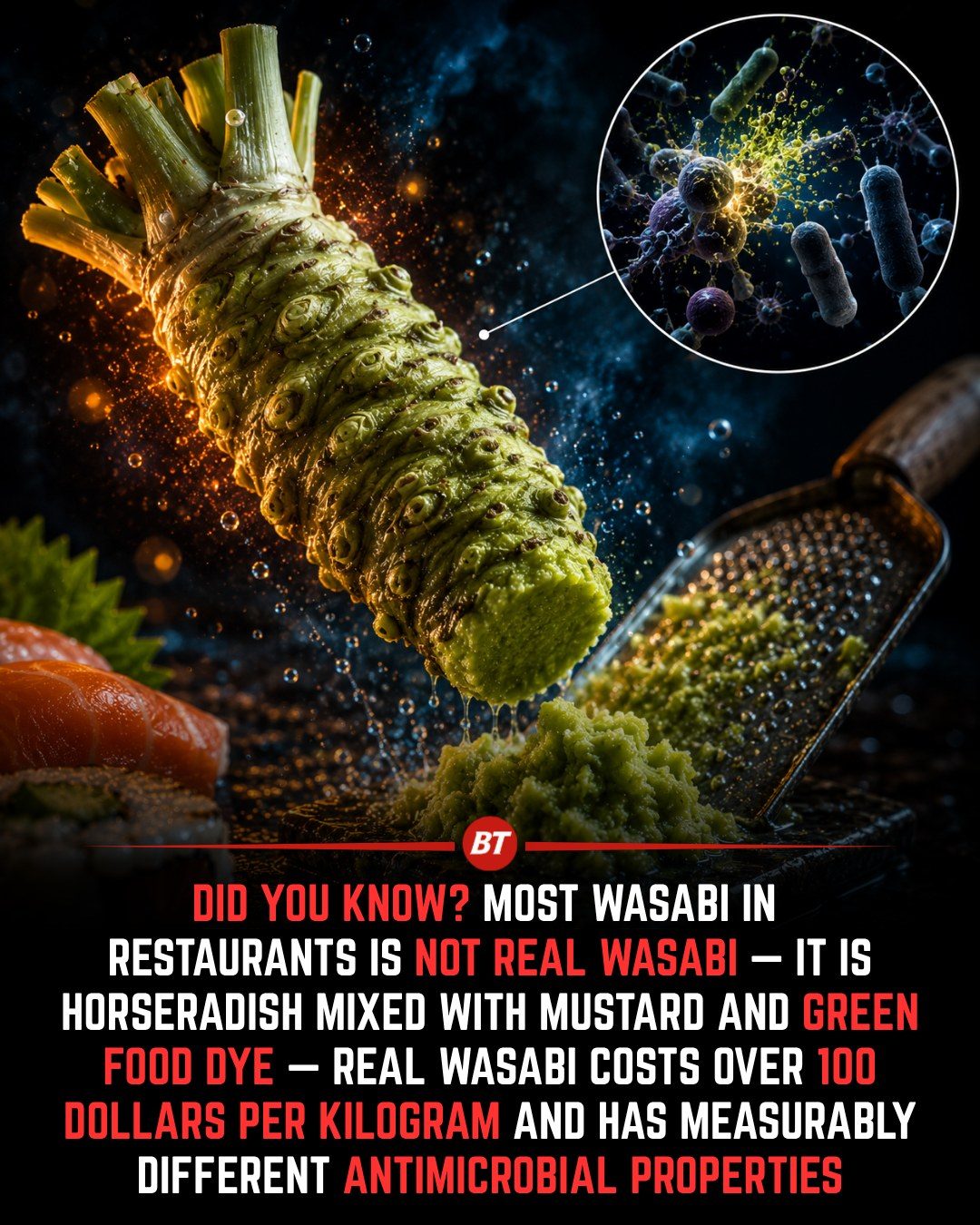
Wasabi: The Truth Behind the Green Paste
The vibrant green paste served with sushi in many restaurants is often not what it seems. Most of what is labeled as "wasabi" is actually a mixture of horseradish, mustard, and green food coloring. Authentic wasabi, derived from the Wasabia japonica plant, is one of the world's rarest and most expensive culinary ingredients. This discrepancy is a cause for curiosity but understanding the differences between real and fake wasabi can enhance the dining experience and appreciation for genuine ingredients.
Why This Matters
There is a significant difference between real wasabi and its substitutes. Authentic wasabi has a milder, fresher, and more aromatic flavor, with a heat that fades quickly. Understanding these distinctions and the factors that contribute to the high cost of real wasabi can help you appreciate the unique qualities of this ingredient.
Real vs. Fake Wasabi
The Difference in Ingredients
Real wasabi is cultivated from the Wasabia japonica plant, which requires specific growing conditions: cool, flowing water and carefully controlled environments. These conditions make it far more challenging and expensive to grow compared to horseradish. As a result, many restaurants outside Japan opt for a substitute made from horseradish, mustard, and green food dye to mimic wasabi's sharp flavor at a much lower cost.
The Unique Compounds
Both authentic wasabi and horseradish contain natural compounds called isothiocyanates, which are responsible for their pungent flavors. However, the types and proportions of these compounds differ significantly. Authentic wasabi contains a unique blend of isothiocyanates that have been studied for their antimicrobial, antioxidant, and anti-inflammatory properties. Laboratory studies have shown that certain wasabi isothiocyanates can inhibit the growth of foodborne bacteria such as E. coli, Staphylococcus aureus, and Helicobacter pylori.
The Role of Isothiocyanates
The bioactive compounds in wasabi have been highlighted for their potential roles in supporting oral health, reducing oxidative stress, and protecting cells from inflammation. While these findings are promising, most research is still in the laboratory or early clinical stages. Understanding these compounds can provide insight into the health benefits of authentic wasabi, although further research is needed.
The Cost and Value of Authentic Wasabi
High Cost Due to Growing Conditions
Real wasabi's rarity and high cost are primarily due to the challenging growing conditions required by the Wasabia japonica plant. These conditions include cool, flowing water and carefully controlled environments, making it far more expensive to cultivate than horseradish. This high cost is one of the reasons why many restaurants outside Japan opt for substitutes.
Economic Facts
The economic value of real wasabi can be daunting. It costs over 100 dollars per kilogram, making it an expensive addition to any dish. This high price point is a key factor in why most sushi restaurants choose to use the less expensive horseradish mixture instead.
Differences in Antimicrobial Properties
Real wasabi's unique antimicrobial properties set it apart from its substitutes. The different types and proportions of isothiocyanates in authentic wasabi contribute to its distinct flavor and potential health benefits. These properties have been studied for their ability to inhibit the growth of various foodborne bacteria, making real wasabi a valuable ingredient in both culinary and health contexts.
Practical Tips for Tasting Authentic Wasabi
How to Identify Real Wasabi
If you ever have the chance to try freshly grated real wasabi, notice how different it tastes from the bright green paste commonly served with sushi. Authentic wasabi has a milder, fresher, and more aromatic flavor, with a heat that fades quickly instead of lingering like horseradish. Paying attention to these subtle differences can help you identify and appreciate genuine wasabi.
Where to Find It
Finding authentic wasabi can be a challenge, especially outside of Japan. Specialty food stores and high-end sushi restaurants are more likely to carry real wasabi. If you're unsure, ask the server or check the menu for any indications of authenticity. Some restaurants may even offer wasabi as an add-on for a higher price, indicating its rarity and value.
Preparing and Storing Wasabi
When preparing wasabi, it's important to handle it delicately. Fresh wasabi is typically grated just before serving to preserve its unique flavor. Store wasabi in an airtight container in the refrigerator to maintain its freshness. If you notice that the flavor has faded, it's likely that the wasabi is no longer fresh and may need to be replaced. Proper storage and preparation can help you experience the true flavor of authentic wasabi.
Important Takeaways
Understanding the differences between real and fake wasabi is essential for appreciating the unique qualities of this culinary ingredient. Authentic wasabi's unique flavor, antimicrobial properties, and high cost set it apart from its substitutes. By knowing how to identify and appreciate real wasabi, you can enhance your dining experience and gain a deeper understanding of this valuable ingredient.
Conclusion
The next time you enjoy sushi, take a moment to consider the wasabi you're consuming. If you've only tasted the bright green paste served with most sushi, you may not have experienced the true flavor of genuine wasabi. Authentic wasabi is milder, fresher, and more aromatic, with a heat that fades quickly instead of lingering. Appreciating these differences can help you value the unique qualities of this rare and expensive culinary ingredient.
Watch the Reel
Questions readers ask
What is the main difference between real wasabi and the wasabi served in most restaurants?
The main difference lies in the ingredients. Authentic wasabi comes from the Wasabia japonica plant, while the wasabi served in most restaurants is a mixture of horseradish, mustard, and green food coloring. Additionally, real wasabi has a milder, more aromatic flavor with a fleeting heat, unlike the substitute, which can be harsher and more persistent.
Why is authentic wasabi so expensive?
Authentic wasabi is expensive because the Wasabia japonica plant is rare and challenging to cultivate. It requires very specific growing conditions, including cool temperatures and constant hydration, making it difficult and costly to produce on a large scale. This scarcity contributes to its high price.
Can I make real wasabi at home?
Making real wasabi at home is possible but difficult due to the plant's specific growing requirements. However, if you have access to fresh wasabi roots, you can grate them finely and mix with a small amount of water to create a paste. Be aware that the flavor will degrade quickly, so it's best consumed fresh.
What are the health benefits of authentic wasabi?
Real wasabi offers several health benefits, including antimicrobial properties that can help prevent foodborne illnesses. It also contains compounds that may have anti-inflammatory effects and support digestion. Additionally, wasabi has been studied for its potential to inhibit cancer cell growth, though more research is needed in this area.
Why do restaurants use fake wasabi instead of the real thing?
Restaurants often use fake wasabi because it is much more cost-effective than authentic wasabi. The substitute can be made from readily available and inexpensive ingredients like horseradish and mustard, allowing restaurants to keep costs down and maintain consistent availability. Furthermore, the heat from the horseradish-mustard mixture is more intense and longer-lasting, which some customers prefer.
How can I identify if the wasabi I'm eating is real or fake?
One way to identify real wasabi is by its taste. Authentic wasabi has a milder, more complex flavor with a quick dissipating heat, while fake wasabi often has a stronger, more persistent heat. Additionally, real wasabi is typically more expensive and may be labeled as such on the menu, especially in high-end sushi restaurants.
Related deep dives
Similar reads based on topic and creator.




Recent articles
Fresh deep dives from the latest Reels we unpacked.




Comments
Be the first to comment.