Space Exploration: Voyager 1's Journey into Interstellar Space
NASA's Voyager 1, launched in 1977, has been on an extraordinary journey that has redefined our understanding of the solar system and interstellar space. This spacecraft, initially sent to photograph the outer planets, has made groundbreaking discoveries and continues to push the boundaries of human achievement in space exploration.
Why Voyager 1 Matters
Voyager 1's mission has been pivotal in advancing our knowledge of the cosmos. The spacecraft has provided unprecedented insights into the outer planets and their moons. It has also become the first human-made object to venture into interstellar space, marking a significant milestone in space exploration.
The Pale Blue Dot
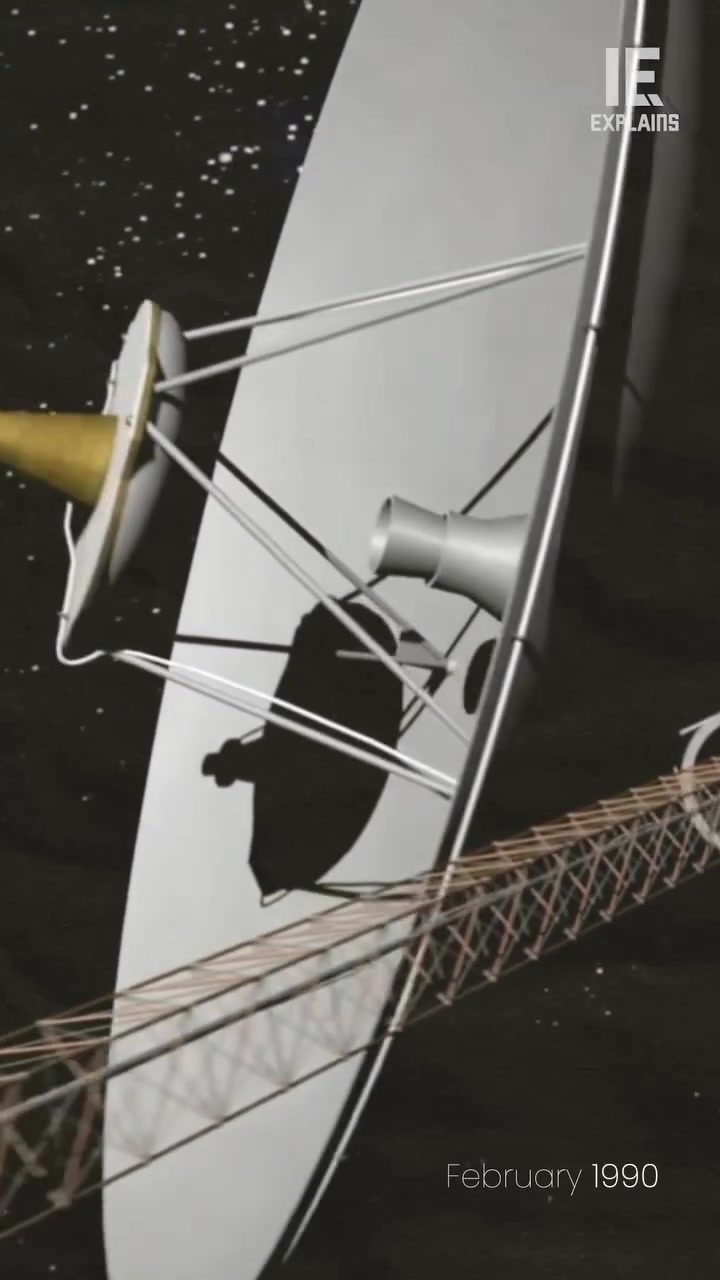
In February 1990, Carl Sagan requested that NASA command Voyager 1 to take a photograph of Earth from a distance of 6 billion kilometers. The resulting image, known as the "Pale Blue Dot," has become one of the most iconic and thought-provoking images in history. It shows Earth as a tiny, fragile speck suspended in the vastness of space, highlighting our planet's insignificance in the grand scale of the universe.
Crossing the Heliosphere
In 2012, 35 years after its launch, Voyager 1 crossed the heliopause—the boundary where the sun's influence ends and interstellar space begins. This event marked the first time a human-made object had left the solar system. Today, Voyager 1 is moving at approximately 17 kilometers per second, or about 61,000 kilometers per hour.
Ongoing Discoveries
Despite its age and distance from Earth, Voyager 1 continues to make scientific discoveries. The spacecraft was launched with 11 scientific instruments, although only a handful remain active. Powered by a nuclear battery that loses about 4 watts of output every year, NASA has had to systematically shut down heaters and systems to keep Voyager 1 operational. The spacecraft is expected to continue sending back data until the early 2030s, when its remaining instruments will go silent.
The One-Day Light Threshold
In November 2026, Voyager 1 will reach a distance of one light-day from Earth. This means that a signal traveling at the speed of light will take a full 24 hours to reach the spacecraft. The round-trip travel time for a signal from the Jet Propulsion Laboratory (JPL) will stretch to 48 hours, marking a significant milestone in the spacecraft's journey. This moment will be a poignant reminder of just how far human-made objects have traveled and the challenges of communicating with them across such vast distances.
Main Discussion
The Heliosphere and Interstellar Space
The heliosphere is a vast, teardrop-shaped region of space dominated by the solar wind, a stream of charged particles continuously ejected by the sun. The boundary of the heliosphere, known as the heliopause, marks the point where the solar wind's influence wanes and interstellar space begins. Voyager 1's crossing of the heliopause in 2012 provided scientists with valuable data about the dynamics of the solar wind and the composition of interstellar space.
The Golden Record
Voyager 1 carries a Golden Record—a phonograph record containing sounds and images portraying the diversity of life and culture on Earth, along with basic information about humanity and its place in the universe. The Golden Record is intended as a message to any extraterrestrial intelligence that might encounter the spacecraft, providing a snapshot of human civilization at the time of launch.
Scientific Instruments and Data Collection
Voyager 1 was equipped with 11 scientific instruments designed to study the outer planets, their moons, and the interstellar environment. These instruments include:
- Imaging Science Subsystem: A pair of cameras for taking photographs of the planets and their moons.
- Ultraviolet Spectrometer: A device for measuring the ultraviolet light emitted by the planets and their atmospheres.
- Infrared Interferometer Radiometer: A tool for studying the thermal properties of the planets and their moons.
- Plasma Science Instrument: A device for measuring the properties of the solar wind and interstellar plasma.
- Cosmic Ray Subsystem: A tool for studying the composition and energy of cosmic rays.
- Low-Energy Charged Particle Instrument: A device for measuring the properties of low-energy charged particles in the solar wind and interstellar space.
- Magnetometer: A tool for measuring the magnetic field of the planets and the interstellar medium.
Power and Communication
The spacecraft is powered by a trio of radioisotope thermoelectric generators (RTGs), which convert the heat generated by the decay of plutonium-238 into electrical energy. As the plutonium-238 decays, the power output of the RTGs decreases, requiring NASA to systematically shut down non-essential systems to conserve power.
Communication with Voyager 1 is maintained through the Deep Space Network (DSN), a global network of antennas used to communicate with spacecraft beyond the Moon. The DSN receives and transmits signals between Earth and Voyager 1, allowing scientists to receive data and send commands to the spacecraft.
Practical Tips
Understanding Light-Years and Light-Days
A light-year is the distance light travels in a vacuum in one year, approximately 9.46 trillion kilometers. A light-day is the distance light travels in one day, about 26 trillion kilometers. Understanding these units of measurement is crucial for grasping the vast distances involved in space exploration and the challenges of communicating with spacecraft like Voyager 1.
Staying Updated on Voyager 1's Journey
Those interested in following Voyager 1's journey can stay updated through various resources, including NASA's official website and social media channels. These platforms provide the latest news, images, and data from the spacecraft, as well as insights into the ongoing scientific discoveries made possible by its mission.
Supporting Space Exploration
Supporting organizations like NASA and other space agencies can help ensure the continued success of missions like Voyager 1. This can be done through donations, advocacy, and public engagement, helping to inspire future generations of scientists, engineers, and space explorers.
Important Takeaways
Voyager 1's journey has been a remarkable testament to human ingenuity and curiosity. The spacecraft has provided invaluable data about the outer planets, their moons, and the interstellar environment, pushing the boundaries of our understanding of the cosmos. As Voyager 1 continues its voyage into the unknown, it serves as a beacon of human achievement and a reminder of the limitless possibilities of space exploration.
Conclusion
Voyager 1's journey into interstellar space is a monumental achievement in space exploration. The spacecraft's ongoing mission provides a unique opportunity to study the outer reaches of the solar system and the interstellar environment, pushing the boundaries of human knowledge and technology. As Voyager 1 continues its voyage, it serves as a testament to the indomitable spirit of human exploration and the relentless pursuit of understanding the universe.
Watch the Reel
Questions readers ask
When was Voyager 1 launched and what was its initial mission?
Voyager 1 was launched by NASA on September 5, 1977. Its initial mission was to conduct close-up studies of Jupiter and Saturn, as well as to photograph the outer planets.
What is the significance of Voyager 1's journey into interstellar space?
Voyager 1's entry into interstellar space is a monumental achievement in space exploration history. It is the first human-made object to leave the heliosphere, the region of space dominated by the Sun, and enter the interstellar medium.
What is the 'Pale Blue Dot' and how is it related to Voyager 1?
The 'Pale Blue Dot' is an iconic photograph of Earth taken by Voyager 1 in 1990 from a distance of about 4 billion miles. The image, famously suggested by astronomer Carl Sagan, provides a unique perspective on our planet's place in the universe.
What kind of data is Voyager 1 still sending back to Earth?
Even though it is over 14 billion miles away from Earth, Voyager 1 continues to send back valuable data about interstellar space. This includes information about cosmic rays, magnetic fields, and charged particles, which helps scientists understand the environment beyond our solar system.
How does Voyager 1 remain in contact with Earth over such vast distances?
Voyager 1 communicates with Earth using the Deep Space Network (DSN), a system of antennas that allows for two-way communication. Signals from Voyager 1 take over 20 hours to reach Earth, traveling at the speed of light.
What are some of the key discoveries Voyager 1 made during its exploration of the outer planets?
Voyager 1 discovered active volcanoes on Jupiter's moon Io, complex structures in Saturn's rings, and intriguing moons like Titan and Enceladus. It also provided detailed images and data on the composition, atmosphere, and magnetic fields of the outer planets.
Recent articles
Fresh deep dives from the latest Reels we unpacked.




Comments
Be the first to comment.