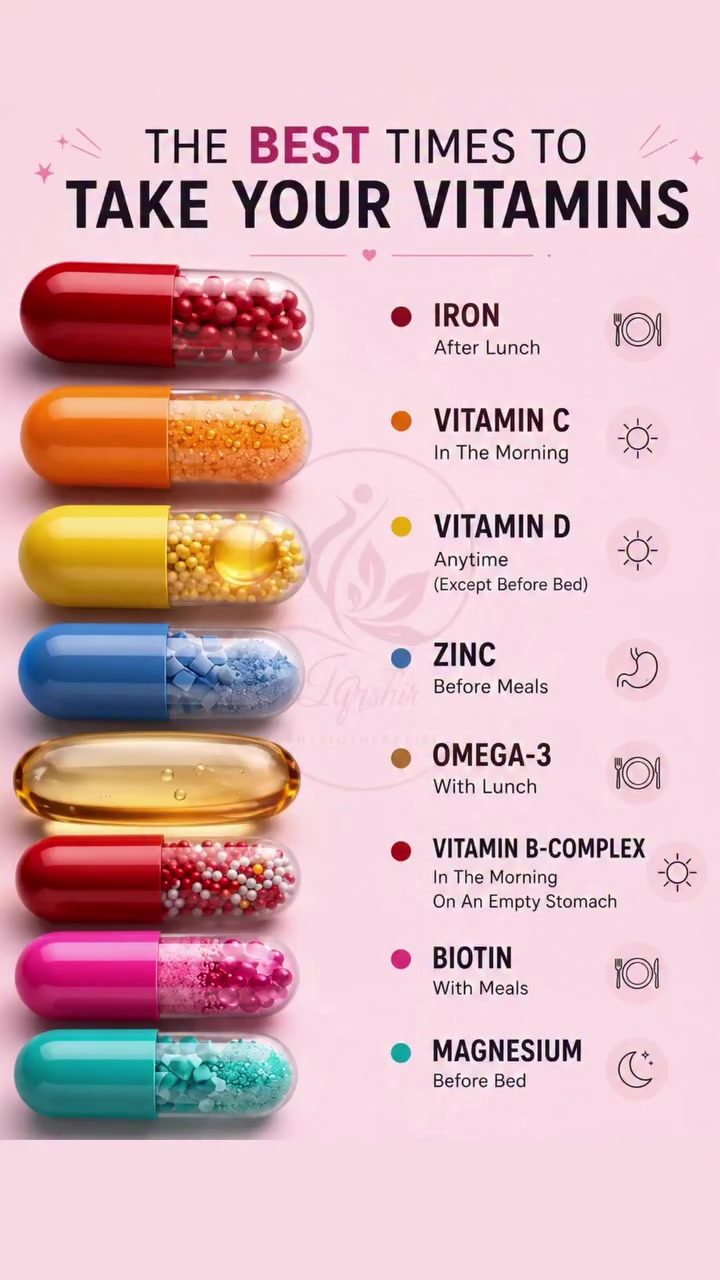
Vitamins and Timing
Vitamins are essential for maintaining good health, and taking them at the right times can enhance their benefits. Timing matters for improving absorption and reducing potential discomfort. Here’s a comprehensive guide on when to take specific vitamins, supported by evidence-based recommendations.
Why This Matters
Taking vitamins at the right time can significantly improve their effectiveness. Optimal timing can enhance absorption, reduce gastrointestinal issues, and ensure that you get the most out of your supplements. It’s also important to consider your individual needs, any medications you’re taking, and your overall health conditions. While this guide offers general advice, always follow your healthcare provider’s recommendations if they differ.
Main Discussion
Vitamin Timing and Absorption
Iron
Iron is crucial for blood health and energy levels. It is often best absorbed on an empty stomach. However, if you experience stomach upset, taking it after a meal can be beneficial. Pairing iron with Vitamin C can enhance absorption, while avoiding tea, coffee, and calcium around the same time can prevent interference.
Vitamin C
Vitamin C is versatile and can be taken at any time of the day, with or without food. Its water-soluble nature means it doesn’t require specific timing for absorption. It can be taken at any convenient time, making it easy to incorporate into your routine.
Vitamin D
Vitamin D is best absorbed when taken with a meal containing healthy fats. This is because Vitamin D is fat-soluble, and the presence of fats aids in its absorption. It’s also important to note that Vitamin D should not be taken right before bed, as it may interfere with sleep.
Zinc
Zinc is often taken with food to reduce stomach discomfort. It’s best to avoid taking it with high-dose calcium or iron at the same time, as these can interfere with its absorption. Zinc is essential for immune function, and proper timing can ensure its effectiveness.
Omega-3
Omega-3 fatty acids are best taken with a meal, especially one containing fat. This helps with absorption and can reduce the likelihood of gastrointestinal discomfort. Omega-3s are known for their heart health benefits and can be a valuable addition to your supplement regimen.
Vitamin B-Complex
Many people prefer taking Vitamin B-Complex in the morning, as it can have an energizing effect. Taking it on an empty stomach can also enhance absorption. Vitamin B-Complex is essential for various bodily functions, including energy production and nervous system health.
Biotin
Biotin can be taken with or without food, making it flexible for various routines. It is known for supporting hair, skin, and nail health, and its versatility in timing makes it easy to include in your daily regimen.
Magnesium
Magnesium is often taken in the evening or before bed, as it can promote relaxation and better sleep. Taking it before bed can also help alleviate muscle tension and cramps, making it a beneficial addition to your evening routine.
Practical Tips
-
Plan Ahead: Schedule your vitamin intake to align with your meals and daily activities. For example, if you take Iron after lunch, make sure to include Vitamin C in your meal to enhance absorption.
-
Track Your Intake: Keep a log of when you take each vitamin to ensure consistency. This can help you identify any patterns in how your body responds to different timings.
-
Listen to Your Body: Pay attention to how your body reacts to different timing schedules. If you experience discomfort, adjust your routine accordingly.
-
Consult a Healthcare Provider: Always follow your healthcare provider’s advice, especially if you have specific health conditions or are taking other medications.
-
Stay Informed: Continuously update your knowledge on vitamin timing and absorption. New research may provide additional insights that can benefit your health.
-
Consider Combination Supplements: Some supplements combine multiple vitamins and minerals in a single dose. Ensure the timing aligns with the best practices for each component.
Important Takeaways
- Timing Enhances Absorption: Taking vitamins at the right time can improve their absorption and effectiveness.
- Individual Needs Matter: Consider your personal health conditions, medications, and any specific dietary needs.
- Consistency is Key: Maintain a consistent schedule for taking your vitamins to ensure their effectiveness.
- Healthcare Provider’s Advice: Always follow your healthcare provider’s recommendations, as they are tailored to your specific health situation.
Conclusion
Optimizing your vitamin intake involves more than just choosing the right supplements; it also requires understanding the best times to take them. By following this guide, you can enhance the benefits of your vitamins, reduce stomach discomfort, and ensure that you get the most out of your health regimen. Always remember that while timing is important, your individual health needs and advice from your healthcare provider should guide your supplement routine.
Watch the Reel
Questions readers ask
What is the best time to take iron supplements?
Iron is best absorbed on an empty stomach, so taking it first thing in the morning or between meals can be effective. However, if you experience stomach discomfort, taking it with a small amount of food can help. Avoid taking iron with calcium, as calcium can inhibit absorption.
Should I take my daily zinc supplement with food?
Zinc can be taken with or without food, but taking it with a meal can help reduce any potential stomach upset. It’s also beneficial to take zinc at least 2 hours apart from iron, as they can interfere with each other’s absorption.
When is the optimal time to take magnesium?
Magnesium is often recommended before bed as it can promote relaxation and better sleep. Taking it on an empty stomach can enhance absorption, so consider taking it about an hour before bedtime without food.
Should I take my vitamins with lunch or dinner?
The best time to take vitamins often depends on the specific vitamin. Some, like fat-soluble vitamins (A, D, E, K), are better absorbed when taken with a meal containing healthy fats. Others, like B vitamins, can be taken at any time. If you experience stomach discomfort, taking them with a meal can help.
What is the best time for biotin intake?
Biotin can be taken at any time of the day, as it doesn’t have significant effects on stomach comfort or absorption. It’s helpful to take it consistently at the same time each day to maintain steady levels in your body. If you take it with a meal, this is perfectly fine.
Can taking vitamins at the wrong time cause stomach issues?
Yes, taking vitamins at the wrong time can potentially cause stomach discomfort. For instance, taking iron or magnesium on an empty stomach might lead to stomach upset in some people. Similarly, certain vitamins taken with large meals or at the wrong time can reduce their effectiveness.
How can I optimize my daily vitamin routine?
To optimize your vitamin routine, consider the specific needs of each vitamin and your personal tolerance. For instance, pairing fat-soluble vitamins with meals, taking iron first thing in the morning, and magnesium before bed. Always consult with a healthcare provider to tailor a routine that best suits your health needs and any medications you are taking.
Recent articles
Fresh deep dives from the latest Reels we unpacked.




Comments
Be the first to comment.