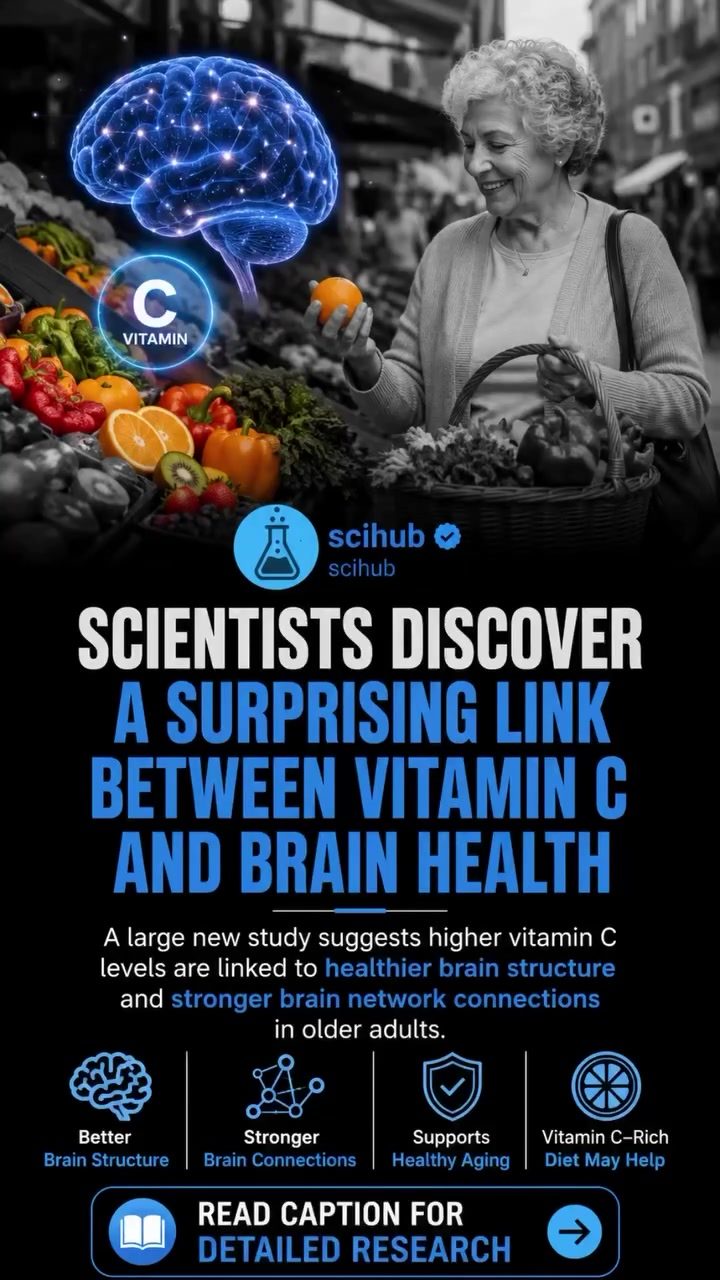
Vitamin C and Brain Health
Brain health is a critical aspect of overall well-being, especially as we age. Recent research has shed new light on the potential benefits of vitamin C for maintaining brain health. A groundbreaking study involving 2,044 older adults in Japan revealed that individuals with higher vitamin C levels in their blood exhibited better-preserved gray matter, stronger brain network connections, and overall healthier brain aging. This discovery suggests that incorporating vitamin C-rich foods into your daily diet could support brain health and potentially enhance cognitive function.
Context / Why this matters
As we age, maintaining cognitive health becomes increasingly important. Conditions like Alzheimer’s and dementia are significant concerns for older adults, and finding ways to support brain health is crucial. While genetics and lifestyle play significant roles, diet is an area where individuals can make proactive choices to support their well-being. The new findings from Japan highlight the potential of vitamin C in promoting brain health, adding to the growing body of evidence that a nutritious diet can have far-reaching benefits.
Main discussion
The Study’s Findings
The study conducted by researchers at Hirosaki University in Japan focused on the relationship between vitamin C levels and brain health in older adults. By examining MRI brain scans and blood samples, the researchers uncovered several key findings. Firstly, higher vitamin C levels were associated with better-preserved gray matter, which is essential for cognitive functions such as memory, attention, and overall cognitive performance.
Moreover, the study revealed that individuals with higher vitamin C levels had stronger brain network connections, particularly in the Default Mode Network (DMN). The DMN is crucial for memory, attention, and cognitive function, making its strength and connectivity vital for overall brain health. Lower vitamin C levels were linked to reduced gray matter volume and weaker connectivity in the DMN, indicating that vitamin C may play a role in maintaining the integrity of these critical brain networks.
Understanding the Default Mode Network (DMN)
The Default Mode Network (DMN) is a network of brain regions that are active when the brain is at wakeful rest and not focused on the external environment. It is involved in various cognitive processes, including memory retrieval, self-referential thought, and future planning. The DMN is particularly important for tasks that require internal reflection and introspection.
Given its role in cognitive function, any disruption in the DMN can have significant implications for memory, attention, and overall cognitive performance. The study’s findings that higher vitamin C levels are associated with stronger DMN connectivity suggest that vitamin C may help maintain the integrity of this critical brain network, potentially supporting better cognitive function in older adults.
The Role of Vitamin C
Vitamin C, also known as ascorbic acid, is a water-soluble vitamin that plays a crucial role in various bodily functions. It is essential for the production of collagen, a protein that supports the structure of skin, bones, and other connective tissues. Additionally, vitamin C acts as a potent antioxidant, helping to protect cells from damage caused by harmful molecules called free radicals.
The new study adds to the growing evidence that vitamin C may also play a role in brain health. While the exact mechanisms behind this relationship are not yet fully understood, it is believed that vitamin C’s antioxidant properties may help protect brain cells from oxidative stress, a process that can contribute to age-related cognitive decline. Furthermore, vitamin C is involved in the synthesis of neurotransmitters, such as serotonin and dopamine, which are essential for mood regulation and cognitive function.
Practical tips
Given the potential benefits of vitamin C for brain health, incorporating vitamin C-rich foods into your daily diet is a practical step towards supporting cognitive well-being. Here are some top food sources of vitamin C:
- Oranges: A classic source of vitamin C, oranges can be enjoyed fresh, juiced, or added to salads and smoothies.
- Guava: This tropical fruit is exceptionally high in vitamin C, making it an excellent choice for boosting your intake.
- Kiwi: Small but mighty, kiwis are packed with vitamin C and other essential nutrients.
- Amla (Indian gooseberry): A traditional Ayurvedic remedy, amla is known for its high vitamin C content and potential health benefits.
- Bell peppers: These vibrant vegetables are not only high in vitamin C but also rich in other antioxidants and vitamins.
- Strawberries: Delicious and nutritious, strawberries are a great source of vitamin C and can be enjoyed in various desserts and snacks.
- Broccoli: This cruciferous vegetable is not only high in vitamin C but also provides other essential nutrients like fiber, vitamin K, and folate.
Incorporating these foods into your daily meals can help ensure you are getting an adequate intake of vitamin C. While supplements are available, focusing on a diet rich in vitamin C-containing foods is generally recommended, as they provide a broader range of nutrients and fiber.
Important takeaways
- Higher vitamin C levels are associated with better-preserved gray matter and stronger brain network connections in older adults.
- Vitamin C may support brain health by protecting brain cells from oxidative stress and aiding in the synthesis of neurotransmitters.
- The Default Mode Network (DMN) is crucial for cognitive function, and stronger connectivity in this network is linked to higher vitamin C levels.
- Incorporating vitamin C-rich foods into your daily diet can be a practical step towards supporting brain health.
The Observational Study Limitation
It is important to note that the study conducted was observational, meaning it identified associations rather than causal relationships. While the findings suggest a link between vitamin C levels and brain health, they do not prove that vitamin C directly prevents conditions like Alzheimer’s or dementia. Further research, including randomized controlled trials, is needed to establish a causal relationship and fully understand the mechanisms behind these associations.
Conclusion
The discovery of a link between vitamin C and brain health offers a promising avenue for supporting cognitive well-being, especially as we age. By incorporating vitamin C-rich foods into your daily diet, you can potentially enhance your brain health and maintain cognitive function. While more research is needed to fully understand the mechanisms and potential causal relationships, the current evidence suggests that a nutrient-rich diet, including adequate vitamin C, may play a significant role in supporting healthy brain aging.
Watch the Reel
Questions readers ask
How does vitamin C contribute to brain health in older adults?
Vitamin C contributes to brain health in older adults by preserving gray matter, improving brain network connections, and supporting overall brain functionality. Higher levels of vitamin C have been linked to better cognitive performance and healthier brain aging.
What are some vitamin C-rich foods that can support brain health?
To support brain health, incorporate vitamin C-rich foods such as citrus fruits, strawberries, bell peppers, and broccoli into your daily diet. These foods can help maintain adequate vitamin C levels, which are crucial for cognitive function and brain health.
Can vitamin C supplements help improve cognitive function?
While vitamin C supplements can help ensure adequate intake, it's generally recommended to obtain vitamin C from a balanced diet. Some studies suggest that supplements may support cognitive function, but more research is needed to confirm these benefits.
How much vitamin C should I consume daily to support brain health?
The recommended daily intake of vitamin C for adults is 65–90 mg per day, depending on age and gender. To support brain health, consider consuming more vitamin C-rich foods, but be aware that excessive intake can lead to adverse effects. Consult with a healthcare provider for personalized advice.
Is there a specific age when vitamin C becomes more important for brain health?
Vitamin C is important for brain health at all ages, but its role becomes particularly significant as we age. Older adults should pay special attention to maintaining adequate vitamin C intake to support cognitive function and brain health.
What is the connection between vitamin C and brain network connections?
Vitamin C plays a role in maintaining and improving brain network connections. Research has shown that higher levels of vitamin C in the blood are associated with stronger and more efficient brain networks, which can positively impact cognitive function and overall brain health.
What are the potential benefits of vitamin C for preventing age-related cognitive decline?
Vitamin C's ability to preserve gray matter and support brain network connections makes it a promising factor in preventing age-related cognitive decline. By incorporating vitamin C-rich foods into the diet, individuals may help reduce the risk of conditions like Alzheimer’s and dementia, although more research is needed to confirm these benefits.
Related deep dives
Similar reads based on topic and creator.


Recent articles
Fresh deep dives from the latest Reels we unpacked.




Comments
Be the first to comment.