Metal Mining Production
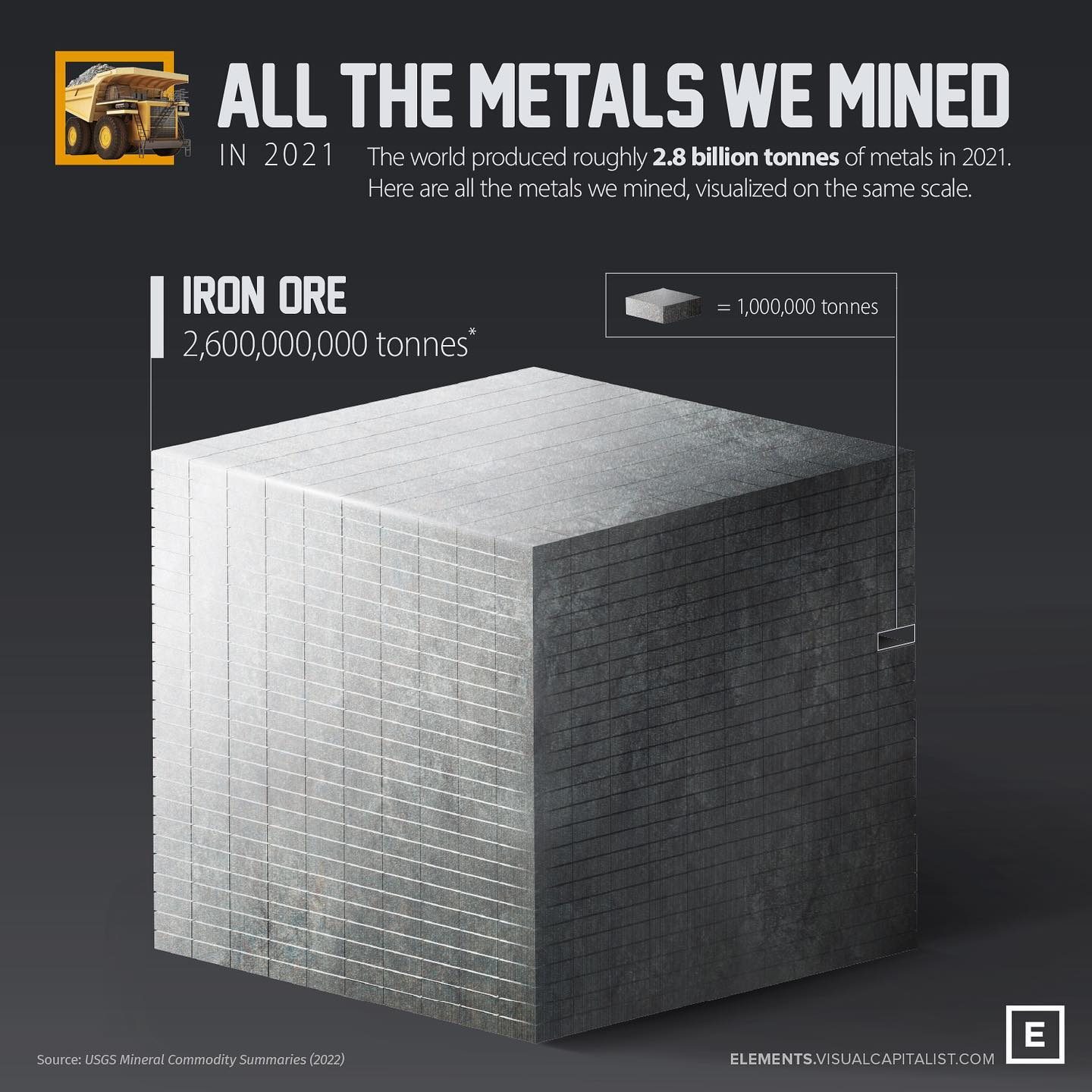
Metals are ubiquitous in modern life, found in everything from buildings to electronic devices. In 2021, the world produced a staggering 2.8 billion tonnes of metals, each serving diverse purposes across various industries. Understanding the scale and distribution of metal mining provides valuable insights into global resource utilization and industrial trends.
Context: The Significance of Metal Mining
The mining industry plays a pivotal role in the global economy, supplying the raw materials essential for construction, technology, and numerous other sectors. Metals are not only fundamental to infrastructure but also to the advancement of technology. The infographic highlights the sheer volume of metals extracted in 2021, underscoring the industry's massive scale and its critical role in sustaining modern life.
Main Discussion
The Scale of Metal Production
The infographic breaks down metal production into three primary categories: Iron Ore, Industrial Metals, and Technology and Precious Metals. This segmentation helps in understanding the distribution and utilization of different types of metals.
Iron Ore: The Backbone of Industry
Iron ore leads the pack with an astonishing 2.6 billion tonnes mined in 2021. This metal is primarily used in steelmaking, a process that forms the backbone of construction, manufacturing, and various other industries. Additional end-uses include chemicals, energy storage, and magnets. The versatility of iron ore makes it indispensable in modern manufacturing, driving economic growth and development.
Industrial Metals: The Building Blocks
Industrial metals, which include aluminum, copper, zinc, and others, account for 181,579,892 tonnes. These metals are crucial in various applications, from construction materials to electronic components. For instance:
- Aluminum is widely used in construction, transportation, and packaging due to its lightweight and corrosion-resistant properties.
- Copper is essential for electrical wiring, plumbing, and various alloys.
- Zinc is used in galvanization processes to prevent corrosion and in alloys like brass.
Other industrial metals such as nickel, titanium, and chromium have specialized uses in manufacturing, aerospace, and chemical industries. These metals support a wide range of applications, from structural components to high-performance alloys.
Technology and Precious Metals: The Future of Innovation
Technology and precious metals, totaling 1,474,889 tonnes, include lithium, tungsten, and gold. These metals are pivotal in advancing technology and innovation. For example:
- Lithium is a key component in rechargeable batteries, powering everything from smartphones to electric vehicles.
- Tungsten is used in cutting tools, lighting, and military applications due to its high density and resistance to heat.
- Gold and platinum group metals are prized for their conductivity and resistance to corrosion, making them essential in electronics and jewelry.
Precious metals like silver and platinum are also critical in industrial applications, from catalysis in chemical reactions to electrical contacts in various devices. The demand for these metals continues to rise as technology evolves, driving innovation and sustainability.
End-Use Categories
The infographic also highlights the largest end-use categories for each type of metal. This information is crucial for understanding where these metals are most utilized and how they contribute to different sectors. For instance:
- Steelmaking is the primary end-use for iron ore, highlighting its importance in industrial infrastructure.
- Electronics and energy storage are significant end-uses for industrial metals, reflecting their role in modern technology.
- Energy/Batteries and Electronics are key end-uses for technology and precious metals, underscoring their role in powering the digital age.
Practical Tips for Navigating the Metal Mining Industry
Understanding the metal mining industry can provide valuable insights for investors, policymakers, and consumers. Here are some practical tips:
For Investors
- Diversify Your Portfolio: Consider investing in a mix of iron ore, industrial metals, and technology and precious metals to capitalize on various market trends.
- Stay Informed: Monitor industry reports and market trends to make informed investment decisions.
- Sustainability: Look for companies that prioritize sustainable mining practices, as this can mitigate long-term risks and enhance long-term value.
For Consumers
- Recycle Metals: Recycling metals reduces the demand for newly mined materials, helping to conserve resources and minimize environmental impact.
- Understand Product Composition: Be aware of the metals used in the products you purchase, and opt for eco-friendly alternatives when possible.
- Support Sustainable Brands: Choose products from companies that prioritize sustainable practices, including responsible sourcing of metals.
For Policymakers
- Promote Sustainability: Encourage sustainable mining practices through regulations and incentives.
- Invest in Research and Development: Support research into new technologies that can enhance metal extraction and recycling processes.
- Regulate Industrial Emissions: Implement strict regulations to reduce the environmental impact of metal mining and processing.
Important Takeaways
- Scale and Scope: The global metal mining industry is vast, with 2.8 billion tonnes of metals produced in 2021.
- Diverse Applications: Metals are used in a wide range of industries, from construction and manufacturing to technology and energy.
- Importance of Iron Ore: Iron ore is the most mined metal, primarily used in steelmaking.
- Industrial Metals: These metals are crucial for various applications, from construction to electronics.
- Technology and Precious Metals: These metals are essential for advancing technology and innovation.
- Sustainable Practices: Sustainable mining and recycling practices are crucial for conserving resources and minimizing environmental impact.
Conclusion
Metals are integral to modern life, from the buildings we inhabit to the devices we use daily. The infographic provides a comprehensive overview of the metal mining industry, highlighting the scale, scope, and diverse applications of different metals. Understanding these aspects can help investors, consumers, and policymakers make informed decisions and contribute to a more sustainable future.
Watch the Reel
Questions readers ask
What were the most mined metals in 2021?
In 2021, iron ore was by far the most mined metal, accounting for approximately 2.6 billion tonnes out of the total 2.8 billion tonnes. Other significant metals mined included aluminum, copper, and gold, each contributing to various industrial and technological applications.
Why is metal mining so crucial for the global economy?
Metal mining is vital for the global economy as it supplies raw materials for a wide range of industries, including construction, technology, and manufacturing. Metals are indispensable for infrastructure development and technological advancements, making mining a cornerstone of modern industrial activity.
How does the metal mining industry impact daily life?
The metal mining industry impacts daily life profoundly. Metals are ubiquitous in modern life, found in buildings, electronic devices, automobiles, and countless other everyday items. The mining and production of these metals support the infrastructure and technology that people rely on daily.
Which organization provides detailed metal production statistics for 2021?
The USGS (United States Geological Survey) is a primary source for detailed metal production statistics. They publish comprehensive reports on mineral commodities, including metals mined in 2021, providing insights into global metal mining trends and production volumes.
What does the visual guide to metal mining reveal about global trends?
The visual guide to metal mining in 2021 reveals the massive scale of metal extraction, with 2.8 billion tonnes of metals mined globally. It highlights the dominant role of iron ore and the diverse applications of various metals, offering a clear picture of global resource utilization and industrial trends.
How does the mining of iron ore compare to other metals in 2021?
Iron ore mining far outpaces the production of other metals. In 2021, iron ore accounted for the vast majority of metals mined, with 2.6 billion tonnes extracted. This highlights the critical role of iron ore in industries such as construction and steel production, where it is a fundamental raw material.
What are the primary uses of the metals mined in 2021?
The metals mined in 2021 are used across a broad spectrum of industries. Iron ore is primarily used in steel production for construction and infrastructure. Aluminum is used in transportation and packaging, copper in electrical wiring, and gold in electronics and jewelry. This diverse range of applications underscores the importance of metal mining in sustaining various sectors.
Recent articles
Fresh deep dives from the latest Reels we unpacked.




Comments
Be the first to comment.