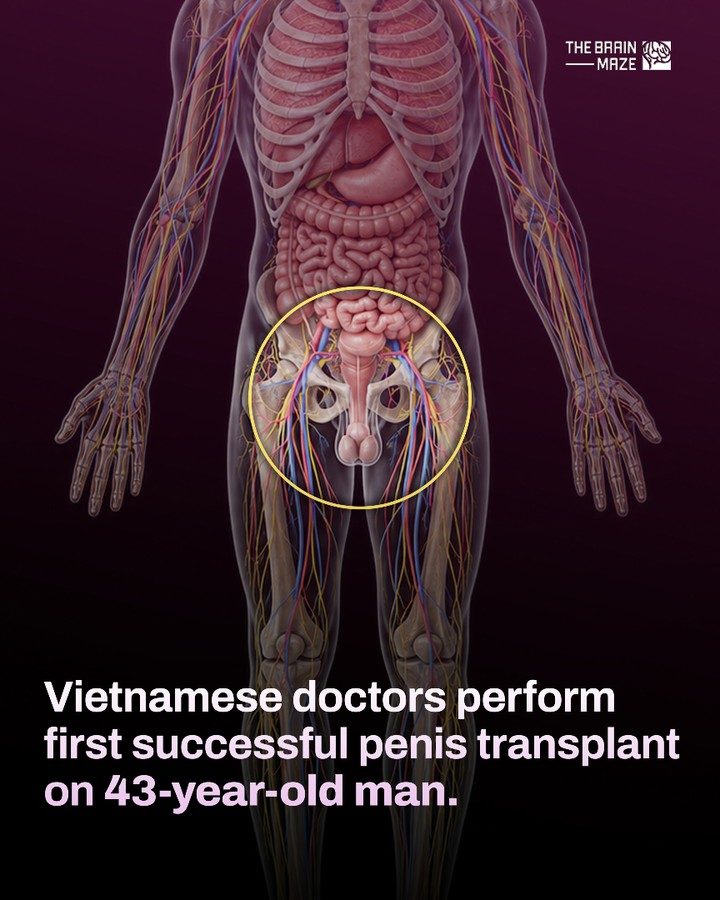
PENIS TRANSPLANTS: an Innovative Procedure
The first successful penis transplant in Vietnam marks a significant advancement in reconstructive urology. A 43-year-old man received a penis from a brain-dead donor in a complex microsurgery procedure that reconstructed blood vessels, nerves, and other essential structures. This operation is part of a growing trend of successful penile transplants worldwide, offering new hope to patients with penile injuries or congenital conditions.
WHY THIS MATTERS
The successful penis transplant in Vietnam reflects the increasing sophistication of microsurgery techniques, particularly in reconstructive urology. This procedure highlights the potential for improved quality of life for individuals who have experienced trauma or congenital abnormalities affecting the penis. As medical technology and surgical expertise advance, more patients may benefit from such innovative treatments.
DEEPER INTO THE PROCEDURE
The Complexity of Penile Transplants
A successful penile transplant requires meticulous surgical skill, a deep understanding of vascular and neurological anatomy, and precise microsurgical techniques. The procedure involves connecting the donor organ's blood vessels, nerves, and other crucial structures to those of the recipient.
The Role of Donor Organs
Donor selection is crucial for the success of penile transplants. In this case, a brain-dead donor provided the penis. The use of organs from brain-dead donors ensures that the tissue is viable and functional, increasing the likelihood of a successful transplant.
Recovery and Monitoring
The patient is recovering well, with no early complications reported. However, long-term function and sensation require ongoing monitoring. This ongoing care is essential for assessing the success of the transplant and addressing any potential issues that may arise.
Global Context
This procedure is among the few successful penile transplants reported worldwide. Previous successful cases have been documented in South Africa, the United States, and China. Each of these cases has contributed valuable insights into the techniques and challenges associated with penile transplantation.
PRACTICAL TIPS
For Patients Considering Penile Transplant
For individuals considering penile transplant surgery, it is essential to have thorough consultations with medical professionals experienced in this field. Understanding the risks, potential complications, and long-term outlook is crucial for making an informed decision. Patients should also be prepared for the extensive recovery and rehabilitation process.
For Medical Professionals
Medical professionals involved in reconstructive urology should stay updated with the latest research and advancements in penile transplant surgery. Collaboration with other specialists, such as vascular surgeons and neurologists, is essential for achieving optimal outcomes. Continuous training and participation in medical conferences and workshops can enhance surgical skills and knowledge.
IMPORTANT TAKEAWAYS
- Penile transplants are complex procedures that require advanced microsurgical techniques.
- Successful outcomes depend on careful donor selection and meticulous surgical execution.
- Long-term monitoring is crucial for assessing function and sensation post-transplant.
- This procedure offers new hope for patients with penile injuries or congenital conditions.
- Collaboration and continuous learning are essential for medical professionals in this field.
CONCLUSION
The first successful penis transplant in Vietnam is a testament to the advancements in reconstructive urology. As medical technology and surgical expertise continue to evolve, more patients may benefit from this innovative procedure. The insights gained from this case contribute to the growing body of knowledge in penile transplantation, paving the way for future advancements and improved patient outcomes.
Watch the Reel
Questions readers ask
What makes the first penis transplant in Vietnam a significant milestone in medical history?
This procedure represents a major advancement in reconstructive urology, showcasing the increasing sophistication of microsurgery techniques. It offers new hope to patients with penile injuries or congenital conditions, demonstrating the potential for improved patient outcomes and quality of life.
How is a penis transplant performed?
A penis transplant involves a complex microsurgery procedure, where surgeons reconnect blood vessels, nerves, and other essential structures from a donor penis to the recipient. This intricate process requires advanced surgical skills and precision.
Where do the donor organs come from for a penis transplant?
In the case of Vietnam's first penis transplant, the organ was obtained from a brain-dead donor. The use of organs from deceased donors is crucial for these types of transplants, as it provides viable tissue for reconstruction.
What are the potential benefits for patients who undergo a penis transplant?
Patients who undergo penis transplants can experience significant improvements in their quality of life. The procedure can help restore urinary and sexual functions, as well as provide psychological benefits by addressing body image concerns.
What does the success of this procedure in Vietnam indicate about the future of reconstructive urology?
The successful penis transplant in Vietnam is part of a growing trend of advancements in reconstructive urology worldwide. It suggests that more patients with penile injuries or congenital conditions may have access to this life-changing procedure in the future.
What are the key challenges associated with penis transplant surgeries?
Penis transplant surgeries present several challenges, including the complexity of the microsurgery involved, the need for immunosuppressant drugs to prevent organ rejection, and the psychological aspects of the procedure for both the recipient and the donor's family.
How does a penis transplant differ from other types of organ transplants?
Unlike other organ transplants, such as kidney or liver transplants, a penis transplant involves the reconstruction of both the organ and its connection to the body. This requires meticulous microsurgery to reconnect delicate structures, making it a highly specialized procedure.
Related deep dives
Similar reads based on topic and creator.


Recent articles
Fresh deep dives from the latest Reels we unpacked.




Comments
Be the first to comment.