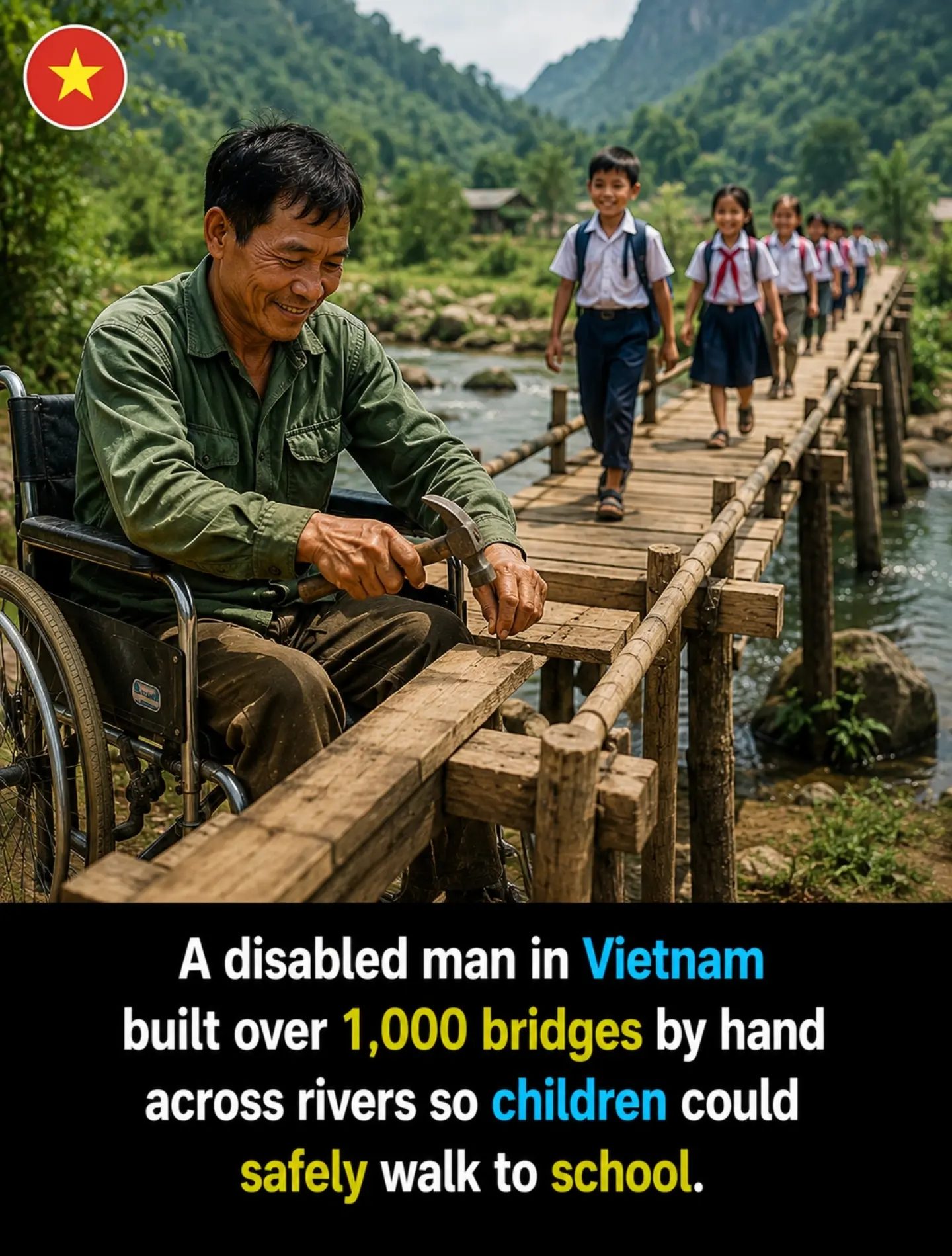
Humanitarian Effort: A Disabled Man in Vietnam Builds Over 1,000 Bridges to Help Children Safely Reach School
In remote regions of Vietnam, a remarkable act of community service is transforming the lives of many children. A disabled man, using a wheelchair and a hammer, has hand-built over 1,000 bridges across rivers. These bridges provide safe passage for children to walk to school, overcoming a significant barrier to education.
Context / Why This Matters
This extraordinary initiative addresses a critical issue in many rural and remote areas: the lack of safe infrastructure for children to access education. Rivers and other natural obstacles can pose significant hazards, especially for young children. By constructing these bridges, the man has not only improved safety but also ensured that children can attend school consistently, which is vital for their education and overall development.
The Inspiration and Impact
The man in the wheelchair, with a simple hammer and determination, has become a local hero. His mission highlights the power of community work and how even the most challenging obstacles can be overcome with dedication and perseverance. The bridges, built from bamboo and other readily available materials, are sturdy enough to support the weight of children and provide a reliable route to school.
A Man on a Mission
The man's journey began with a simple yet profound realization: the children in his community needed a safe way to cross the rivers. By hand, he constructed the first bridge, and as word spread, more requests came in. His work has grown from a single bridge to over 1,000, all built with the same level of care and dedication.
The Role of the Community
The community's support has been crucial to the success of this initiative. Families and neighbors often help gather materials and assist in the construction process. The bridges are not just physical structures but symbols of community unity and shared responsibility. This collective effort ensures that every child in the area can access education, regardless of the challenges they face.
Overcoming Challenges
Constructing bridges by hand is a labor-intensive process, especially for someone with a disability. The man's use of a wheelchair does not limit his ambition but rather emphasizes his resilience. Each bridge requires meticulous planning and execution, ensuring it can withstand the elements and provide safe passage for the children.
Practical Tips for Community Bridge Building
Building bridges, even on a smaller scale, can be a rewarding community project. Here are some tips for those interested in undertaking a similar initiative:
Assess the Need
First, assess the community's needs. Identify areas where children face significant obstacles in reaching school and prioritize those locations for bridge construction. Engage with local schools, teachers, and parents to gather insights and support.
Gather Materials
Use locally available materials to keep costs low and support the local economy. Bamboo, for example, is a sturdy and sustainable material commonly used in Vietnam. Ensure that the materials are strong enough to withstand the elements and the weight of children crossing the bridge.
Engage the Community
Involve the community in the construction process. This not only reduces the workload but also fosters a sense of ownership and collective responsibility. Community members can help gather materials, provide labor, and ensure the bridge's ongoing maintenance.
Prioritize Safety
Safety is paramount. Ensure that the bridge is sturdy and can withstand the weight of multiple children. Regular inspections and maintenance are essential to keep the bridge in good condition. Educate the community on proper usage and safety measures to prevent accidents.
Seek Funding and Support
While community effort is crucial, seeking external funding and support can enhance the project's sustainability. Reach out to local businesses, non-profit organizations, and government agencies for resources and assistance. This support can help cover material costs, provide expert guidance, and expand the project's reach.
Important Takeaways
- Community Involvement: The success of this initiative demonstrates the power of community involvement and collective effort.
- Sustainable Materials: Using locally available materials like bamboo ensures the project is sustainable and cost-effective.
- Safety First: Ensuring the safety of the bridges is crucial for their effectiveness and long-term use.
- Scalability: This initiative can be replicated in other communities facing similar challenges, highlighting the potential for widespread impact.
Conclusion
The remarkable story of a disabled man in Vietnam building over 1,000 bridges by hand underscores the transformative power of community work and dedication. These bridges are more than just structures; they are lifelines connecting children to education and a brighter future. By addressing a critical need in their community, this man has inspired countless others and demonstrated the profound impact that a single individual can have on the lives of many.
Watch the Reel
Questions readers ask
Who is the individual behind the construction of over 1,000 bridges in Vietnam?
The individual is a disabled man who uses a wheelchair and a hammer to build these bridges by hand. His identity is not specified in the article, but his efforts have significantly impacted the lives of schoolchildren in remote regions.
What materials are used to construct these bridges?
The article does not specify the exact materials used, but many rural bridges in Vietnam are typically constructed from bamboo, a practical and sustainable choice for these structures.
How do these bridges benefit the local community?
These bridges provide a safe means for schoolchildren to cross rivers and reach their classrooms. By eliminating the hazard of crossing rivers, these bridges ensure consistent school attendance, which is crucial for the children's development and overall well-being.
What challenges do these bridges address in rural areas?
These bridges tackle significant barriers to education in rural areas, such as rivers and other natural obstacles that can be dangerous, especially for young children. By addressing these challenges, the bridges enhance safety and accessibility, ensuring children can reach school without risk.
What is the significance of the disabled man's effort in the broader context of rural infrastructure?
The man's effort highlights the critical need for safe infrastructure in rural areas. His initiative has not only improved safety for schoolchildren but also underscored the importance of community-driven solutions in overcoming infrastructure challenges.
How many bridges has this individual constructed?
The man has constructed over 1,000 bridges by hand, demonstrating an incredible commitment to improving the lives of children in remote regions of Vietnam.
What inspired this man to build the bridges?
The article does not detail the specific inspiration behind the man's initiative. However, his actions clearly stem from a deep commitment to his community and a desire to ensure that schoolchildren have safe access to their classrooms.
Related deep dives
Similar reads based on topic and creator.



Recent articles
Fresh deep dives from the latest Reels we unpacked.




Comments
Be the first to comment.