Accelerating Seismic Aftermath
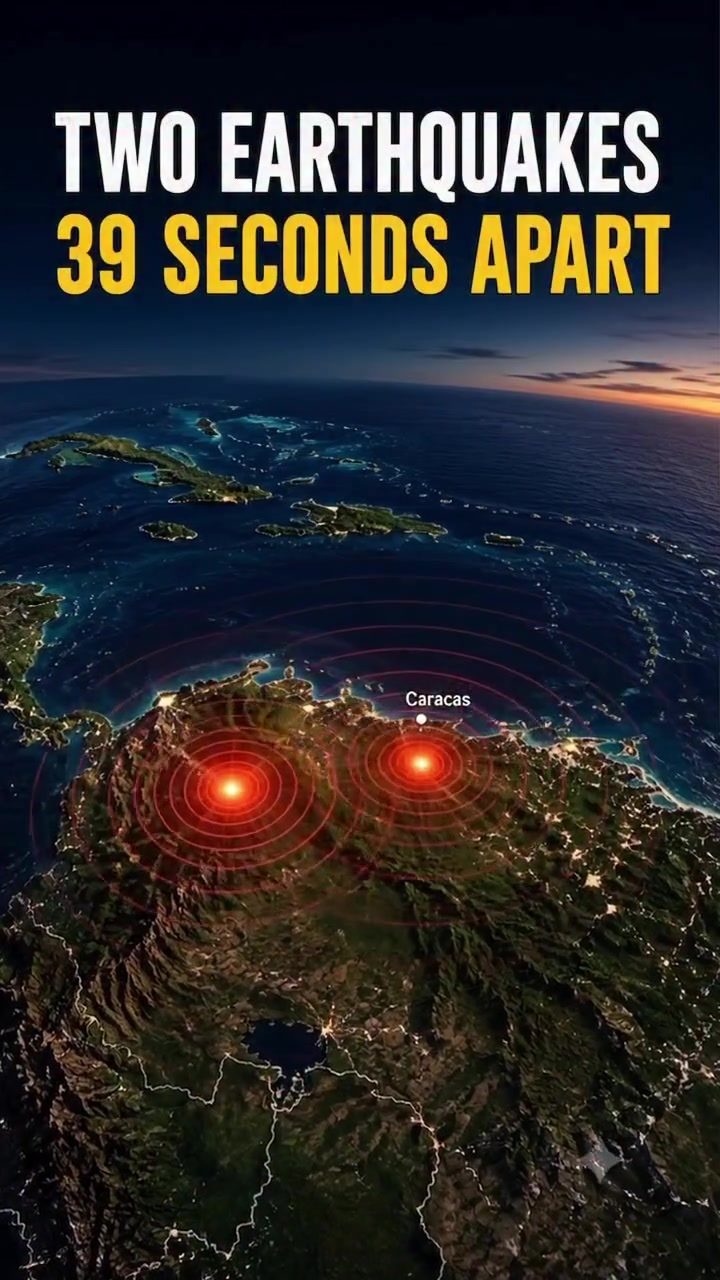
Geologists in Caracas did not need to win the lottery to accurately predict a 0.4-second delay. The two earthquakes that struck Venezuela occurred 39 seconds apart. The first quake, a magnitude 7.1, was a precursor to the more powerful magnitude 7.5 shaking. Here, the power isn't about the magnitude, but the delay. The cities seized by shock were alerted by tsunami prompting a mere 39 seconds. What is more likely to occur — a low chance of two intense earthquakes or a high chance of smaller tremors?"
How the Continent Shocks
A vivid animation of seismic waves rippling across Venezuela, depicts the world behind earthquakes that happen ceaselessly throughout the year. The tsunami alerts echoed across the Caribbean island. But the intrigue of earthquakes remains in their unpredictability. Predicting earthquakes with precise accuracy remains elusive, even with vast improvements in scientific tools and techniques. Nonetheless, the seismic waves reveal a dynamic interplay of forces beneath the surface, which are difficult to detect or predict. This "seismic silence— the absence of even small earthquakes— can sometimes precede a large quake. Detecting these silences can provide a window into the deep processes at play. The animation of seismic waves emphasizes the relentless movement of tectonic plates. The plates moving towards, past or away from each other is the reason why earthquakes occur. Although the exact timing of an earthquake remains out of reach, understanding the underlying geological processes offers valuable insights into seismic activity and the regions prone to earthquakes. The seismic waves, jolting from epicenters, are indicators of the geological changes and disturbances occurring at the surface.
Earthquake Predictability
Despite the progress in geophysics, predicting the precise time of an earthquake remains out of reach. Seismic waves hold the clues to earthquakes. They indicate the geological changes occurring. Geologists and engineers devise ways to assess seismic hazards and design infrastructure that can withstand the forces unleashed by these events. Earthquake early warning system alerts can issue a notification to the pacific islands 50 seconds before an earthquake. However, the time between the precise occurrence of an earthquake remains a scientific odyssey. The prediction of earthquakes requires a deeper understanding of the geological processes at work. The unexpected occurrence of earthquakes has led to significant developments in monitoring and predicting seismic events. Puerto Rico is a place in the Caribbean that experiences earthquakes. Understanding the mechanisms behind earthquakes involves a deeper understanding of the Earth's crust. The Caribbean and Puerto Rico are near the planetary equator in a narrow area. Also known as the Ring of Fire. The tectonic plates shifting around Puerto Rico howling in a densely populated region near the equator. The fault lines are active in the Caribbean. The seismic activity is unrelenting. However, understanding these forces can lead to improved preparedness and response.
Watch the Reel
Related deep dives
Similar reads based on topic and creator.
Recent articles
Fresh deep dives from the latest Reels we unpacked.

Comments
Be the first to comment.