Earthquake in Venezuela
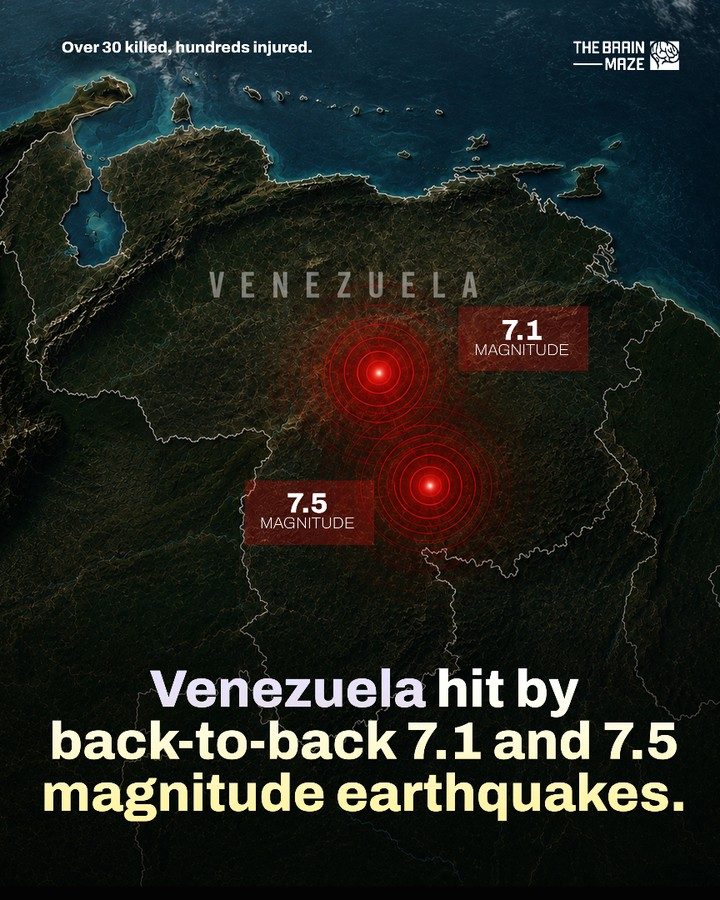
Venezuela has recently experienced two devastating earthquakes, both of which were of significant magnitude. The quakes, occurring approximately 40 seconds apart, had magnitudes of 7.1 and 7.5, marking the country's strongest seismic events in over a century. The impact has been severe, with over 30 people killed, hundreds injured, and widespread damage across Caracas and the northern coast.
Context / Why this matters
These consecutive earthquakes have been a stark reminder of Venezuela's vulnerability to natural disasters. The seismic activity has resulted in catastrophic damage, particularly in densely populated areas. Buildings have collapsed, trapping survivors and causing significant loss of life. Rescue efforts are ongoing, with emergency response teams working tirelessly to save lives and provide aid. The international community has also stepped in to support the emergency response, sending much-needed resources.
The Impact Across the Region
Destruction in Caracas and Coastal Areas
The capital city, Caracas, has been particularly hard hit. The 7.1 and 7.5 magnitude earthquakes have caused extensive damage, with buildings across the city crumbling under the force of the tremors. The northern coastal region has also suffered significant destruction, with reports of collapsed structures and severe injuries. The sudden and intense nature of the seismic activity has left many residents displaced and in urgent need of assistance.
Loss of Life and Injuries
The loss of life has been substantial, with over 30 people confirmed dead and hundreds injured. Rescue teams are working tirelessly to locate survivors trapped under the rubble. The immediate response has been critical in providing medical care to the injured and transporting them to hospitals. The sheer number of casualties underscores the severity of the situation and the urgency of the relief efforts.
The Response Efforts
Local Response Teams
Local emergency response teams have been at the forefront of the disaster management. They have been instrumental in coordinating rescue operations and providing immediate medical attention to those affected. Their efforts have been crucial in saving lives and aiding the survivors. The swift and coordinated action of these teams has made a significant difference in the aftermath of the earthquakes.
International Aid and Support
International aid has also been critical in supporting the relief efforts. Countries and organizations around the world have offered their support by sending medical supplies, rescue teams, and other essential resources. This global response has helped to alleviate the strain on local resources and provided much-needed assistance in the recovery process.
Practical Tips for Earthquake Preparedness
Earthquakes can strike without warning, making preparedness essential to minimizing damage and loss of life. Here are some practical tips to help you and your community be better prepared:
-
Know Your Risks: Understand the seismic activity risks in your area. Venezuela, being a region prone to earthquakes, requires residents to be particularly vigilant.
-
Prepare an Emergency Kit: Assemble an emergency kit that includes essential supplies such as water, non-perishable food, first aid supplies, flashlights, batteries, and important documents.
-
Secure Your Home: Identify potential hazards in your home and take steps to mitigate them. Secure heavy furniture to walls, install earthquake-resistant brackets on shelves, and keep flammable materials away from heat sources.
-
Develop an Emergency Plan: Create a family emergency plan that includes evacuation routes, meeting points, and communication strategies. Ensure that everyone in your household knows what to do in case of an earthquake.
-
Stay Informed: Keep updated on the latest information and guidelines from local authorities and emergency services. Follow their instructions during and after an earthquake to ensure your safety.
-
Participate in Drills: Regularly participate in earthquake drills to familiarize yourself and your family with the necessary actions to take during a quake. Practice "Drop, Cover, and Hold On" drills to stay safe.
Important Takeaways
- Seismic Activity: Venezuela has experienced its strongest seismic events in over a century, highlighting the potential for seismic activity in the region.
- Crisis Management: The swift response from local and international aid teams has been crucial in managing the crisis and providing relief.
- Preparedness: Preparedness is key to minimizing the impact of earthquakes. Knowing your risks, having an emergency plan, and staying informed can save lives.
Conclusion
The recent earthquakes in Venezuela have underscored the devastating impact that natural disasters can have on a community. While the immediate response has been critical, ongoing efforts are needed to support those affected and rebuild the damaged areas. By learning from this experience and enhancing preparedness measures, we can better protect ourselves and our communities in the face of future seismic events.
Watch the Reel
Questions readers ask
What caused the recent earthquakes in Venezuela?
The recent earthquakes in Venezuela were natural seismic events. The quakes measured 7.1 and 7.5 on the magnitude scale and occurred approximately 40 seconds apart. These events are the strongest recorded in Venezuela in over a century, and are a result of the tectonic activity in the region.
How many people were affected by the earthquakes in Venezuela?
Over 30 people were killed and hundreds more were injured in the consecutive earthquakes in Venezuela. The impact was particularly severe in densely populated areas along the northern coast and in Caracas, where buildings collapsed and many residents were displaced.
What is being done to help those affected by the Venezuela earthquakes?
Rescue efforts are underway to help those affected by the earthquakes in Venezuela. The immediate priority is to search for survivors trapped in the rubble, as well as to provide medical assistance to the injured. Emergency response teams are working tirelessly to offer relief and support to those displaced by the disaster.
Why were the recent earthquakes so damaging in Venezuela?
The recent earthquakes in Venezuela were particularly damaging due to their high magnitude and the densely populated areas they struck. The 7.1 and 7.5 magnitude quakes caused significant structural damage, leading to building collapses and loss of life. The close proximity of the two earthquakes also exacerbated the destruction.
What should I do if I experience an earthquake?
If you experience an earthquake, it's crucial to stay calm and take immediate action to ensure your safety. Drop to the ground, take cover under a sturdy piece of furniture, and hold on until the shaking stops. Stay away from windows, outside walls, and anything that could fall. If you're outdoors, move to an open area away from buildings and trees.
How can I support earthquake relief efforts in Venezuela?
You can support earthquake relief efforts in Venezuela by donating to reputable organizations involved in the response. These organizations provide essential aid such as food, water, medical supplies, and temporary shelter to those affected by the disasters. Your contributions can help alleviate the suffering of those impacted by these devastating events.
What is the earthquake magnitude scale?
The earthquake magnitude scale is used to measure the size or strength of an earthquake. The most commonly used scale is the Moment Magnitude Scale (MMS), which replaced the Richter scale. The scale is logarithmic, meaning that each whole number increase represents a tenfold increase in the measured amplitude and roughly 31.6 times more energy release.
Recent articles
Fresh deep dives from the latest Reels we unpacked.




Comments
Be the first to comment.