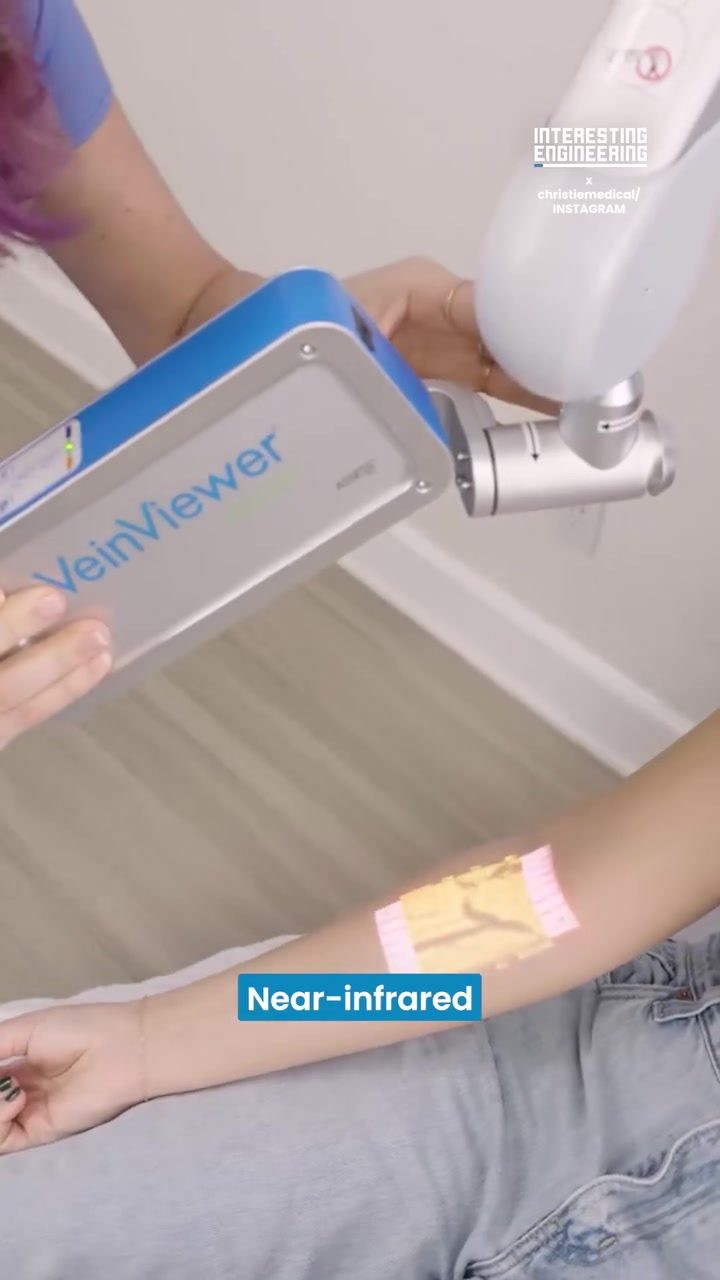
Vein Viewer Technology
VeinViewer technology represents a significant advancement in medical imaging, specifically designed to assist healthcare professionals in locating veins for procedures such as IV insertions and blood draws. This technology uses near-infrared light to project a real-time image of veins directly onto the patient's skin, providing clinicians with a clearer view of the vascular structure beneath the surface. This capability is crucial for improving the accuracy and efficiency of medical procedures.
Why This Matters
The ability to accurately locate veins is a critical skill for healthcare professionals. Traditional methods of vein location, such as visual inspection and palpation, can be unreliable, especially in patients with difficult-to-find veins. This can lead to multiple attempts at needle insertion, increased patient discomfort, and a higher risk of complications. VeinViewer technology addresses these challenges by providing a non-invasive, real-time visualization of the vascular system, which can enhance the success rate of first-attempt needle insertions and reduce procedural time.
Main Discussion
Near-Infrared Technology
At the heart of VeinViewer technology is near-infrared (NIR) light. This type of light is invisible to the human eye but can penetrate the skin to a depth of about 3 millimeters. Veins contain hemoglobin, which absorbs NIR light, making them visible when illuminated. The VeinViewer device projects this light onto the patient's skin and uses a camera to capture the reflected image. The device then processes this image to highlight the veins, creating a clear, real-time map that is projected directly onto the skin.
How VeinViewer Works
The VeinViewer device is a non-contact system, meaning it does not require direct contact with the patient's skin. This is particularly beneficial for maintaining hygiene and reducing the risk of cross-contamination. The device is simple to use: a clinician positions it above the area where vein access is needed, and the device projects a live map of the superficial veins. This map helps clinicians identify the most suitable vessels for IV placement or blood draws. The real-time visualization allows for dynamic adjustments during the procedure, ensuring that the needle is inserted accurately on the first attempt.
Benefits for Clinicians and Patients
For healthcare professionals, VeinViewer technology offers several key benefits. It enhances the accuracy of vein location, reducing the need for multiple needle sticks. This not only improves the efficiency of medical procedures but also minimizes patient discomfort and the risk of complications such as hematomas and nerve damage. Additionally, the technology can be particularly useful in challenging cases, such as patients with obscured veins due to obesity, dehydration, or dark skin tones. For patients, the reduced need for multiple attempts and the increased accuracy of needle placement mean a more comfortable and efficient medical experience.
Applications in Different Medical Settings
VeinViewer technology has a wide range of applications across various medical settings. In emergency departments, where quick and accurate vein access is critical, VeinViewer can help clinicians rapidly locate and access veins in critically ill patients. In pediatric settings, the technology can be particularly useful, as children often have smaller, less visible veins and may be more sensitive to multiple needle sticks. In outpatient clinics and nursing homes, VeinViewer can enhance the efficiency of routine procedures, such as blood draws and IV placements, improving patient satisfaction and operational efficiency.
Practical Tips
When using VeinViewer technology, there are several practical tips to keep in mind to ensure optimal performance and patient comfort. First, ensure the device is properly calibrated and the area of interest is well-lit. This will help the device accurately capture and project the vein map. Position the device at a suitable height and angle to achieve the best visualization. Remember that the device provides a real-time image, so dynamic adjustments can be made during the procedure to ensure accurate needle placement. Finally, always follow standard infection control practices to maintain the hygiene of the device and minimize the risk of cross-contamination.
Important Takeaways
VeinViewer technology is a game-changer in the field of medical imaging and vein access. By using near-infrared light to project a real-time image of veins directly onto the skin, it provides clinicians with a clear, accurate visualization of the vascular structure. This technology not only enhances the success rate of first-attempt needle insertions but also reduces patient discomfort and procedural time. Its applications span various medical settings, from emergency departments to outpatient clinics, making it a versatile tool for healthcare professionals.
Conclusion
The VeinViewer technology represents a significant leap forward in medical technology, offering a reliable and efficient solution for vein location and access. Its non-invasive, real-time visualization of veins enhances the accuracy of medical procedures, reduces patient discomfort, and improves operational efficiency. As medical technology continues to evolve, tools like the VeinViewer will play an increasingly important role in improving patient care and outcomes.
Watch the Reel
Questions readers ask
How does VeinViewer technology work to assist in vein location?
VeinViewer technology employs near-infrared light to illuminate and map the veins beneath a patient's skin. It projects these veins in real-time onto the skin's surface, allowing healthcare professionals to see the vascular structure clearly and accurately. This helps in minimizing the number of needle insertion attempts and enhances the overall efficiency of medical procedures.
What are the benefits of using VeinViewer technology for medical procedures?
VeinViewer technology reduces the need for multiple needle insertions, thus minimizing patient discomfort and the risk of complications. It provides a clear and accurate visualization of veins, which is particularly beneficial for patients with challenging venous access, such as those with obesity, dark skin, or fragile veins.
Can VeinViewer technology be used for all types of medical procedures?
VeinViewer technology is primarily used for procedures that require precise vein location, such as IV insertions, blood draws, and catheter placements. It can be applied wherever accurate vascular visualization is needed, making it a versatile tool for a variety of clinical scenarios.
Is VeinViewer technology safe for patients?
Yes, VeinViewer technology is non-invasive and safe for patients. It uses near-infrared light, which is harmless and does not cause any discomfort or adverse effects. The technology is designed to be gentle and effective, ensuring a positive experience for the patient.
How does VeinViewer technology compare to traditional vein location methods?
Unlike traditional methods such as visual inspection and palpation, VeinViewer technology provides a precise and real-time image of veins, reducing the uncertainty and potential errors associated with manual techniques. This leads to quicker and more successful vein access, improving patient outcomes and healthcare efficiency.
Recent articles
Fresh deep dives from the latest Reels we unpacked.




Comments
Be the first to comment.