Valentine's Day Spending Trends
Valentine's Day is a time for expressing love and affection, often through the exchange of gifts. Understanding the spending trends surrounding this holiday provides valuable insights into consumer behavior and economic patterns. Over the years, the average household spending on Valentine's Day has seen significant fluctuations and steady increases.
Context / Why This Matters
Valentine's Day spending trends offer a window into how consumers allocate their budgets for special occasions. These trends can reflect broader economic conditions, shifts in consumer preferences, and the impact of major events. For businesses, tracking these trends can help in planning marketing strategies and inventory management. For individuals, understanding spending patterns can aid in budgeting and making informed purchasing decisions.
Main Discussion
Historical Spending Trends
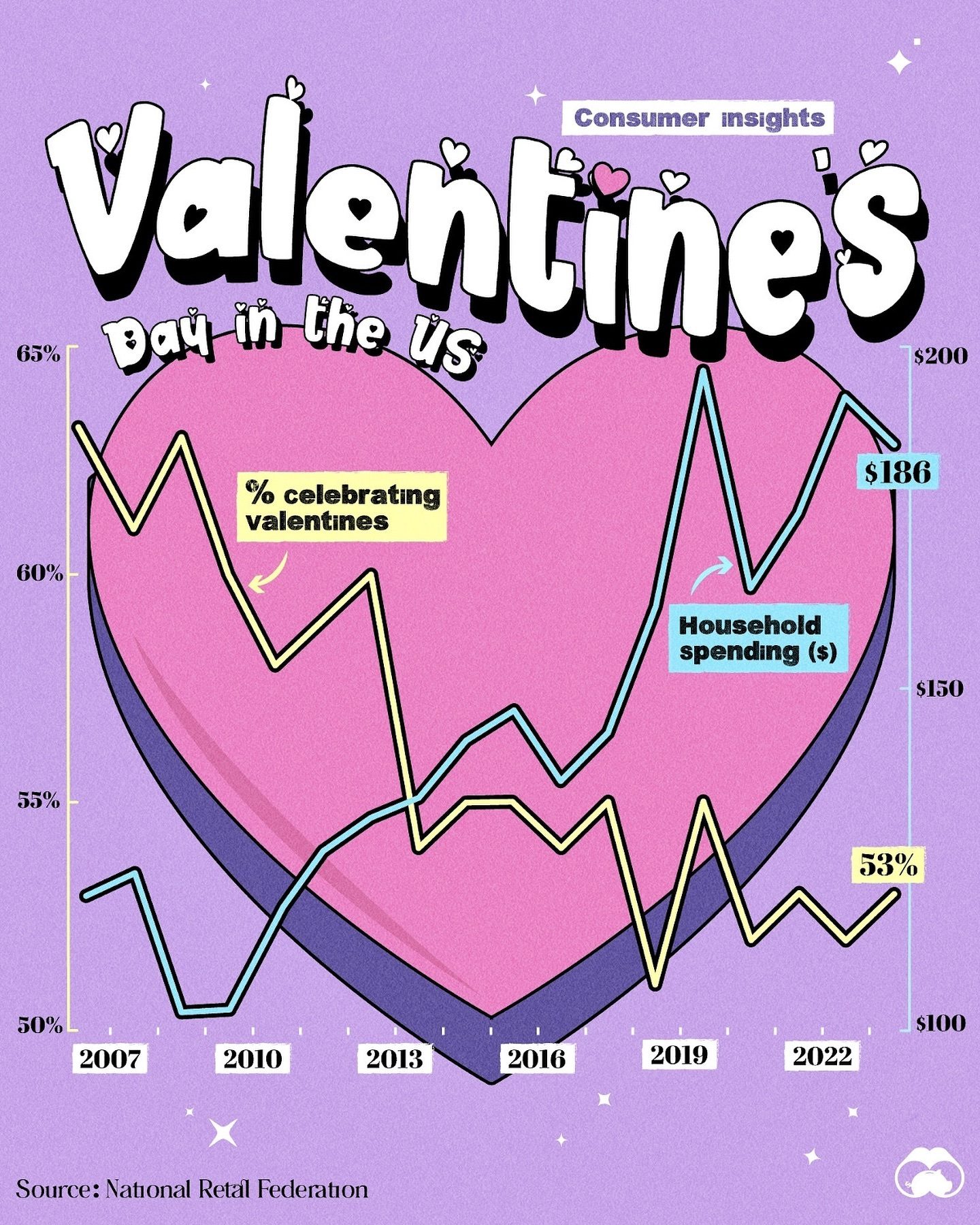
Since 2007, the average household spending on Valentine's Day has steadily increased, with a notable spike during the COVID-19 pandemic in 2020. In 2024, the average household is expected to spend around $185.81 on gifts. This trend highlights the enduring significance of Valentine's Day as a commercial holiday, even in the face of economic uncertainties.
The Impact of the COVID-19 Pandemic
The year 2020 saw a considerable spike in Valentine's Day spending, with the average household expenditure reaching almost $200. This surge can be attributed to various factors, including the need for virtual expressions of love and the desire to support local businesses during a challenging time. The pandemic also led to a shift in spending habits, with more people opting for digital gifts and virtual experiences.
Changes in Participation
Despite the increase in spending, fewer Americans are celebrating Valentine's Day. Since a steep drop in participation in 2014, the percentage of households celebrating this holiday has hovered in the low 50% range. This decline could be due to a variety of reasons, including changing social norms, economic pressures, and evolving attitudes towards consumerism.
Spending Patterns Over the Years
From 2007 to 2022, household spending on Valentine's Day has fluctuated but generally trended upwards. In 2007, the average spending was around $100, which increased to approximately $186 by 2022. This consistent rise reflects the growing commercialization of the holiday and the increasing willingness of consumers to invest in special occasions.
Practical Tips
Budgeting for Valentine's Day
Given the average spending trends, it's essential to plan your budget accordingly. Set a specific amount you are comfortable spending and stick to it. Consider prioritizing meaningful gifts over expensive ones, as the value of a gift often lies in the thought and effort behind it.
Supporting Local Businesses
Valentine's Day is an excellent opportunity to support local businesses. Many small enterprises offer unique and personalized gifts that can make the holiday more special. By choosing local, you not only get a unique item but also contribute to your community's economic health.
Digital and Virtual Gifts
With the rise of digital and virtual experiences, consider gifting something intangible. Online subscriptions, virtual classes, or personalized video messages can be just as meaningful and often more convenient than traditional gifts. This approach also aligns with the trend of digital gifting observed during the pandemic.
Important Takeaways
Understanding Valentine's Day spending trends provides valuable insights into consumer behavior and economic conditions. The consistent increase in spending, despite fluctuations, indicates the holiday's enduring significance. The changes in participation and the impact of major events like the COVID-19 pandemic underscore the need for businesses and consumers to adapt to evolving circumstances.
Conclusion
Valentine's Day spending trends reflect a dynamic landscape of consumer behavior and economic conditions. From the steady rise in spending to the shifts in participation and the impact of the pandemic, these trends offer valuable insights for both businesses and individuals. By staying informed about these trends, you can make more thoughtful purchasing decisions and contribute to a more meaningful and sustainable celebration of love.
Watch the Reel
Questions readers ask
What was the impact of COVID-19 on Valentine's Day spending trends?
During the COVID-19 pandemic, there was a notable surge in Valentine's Day spending. This increase can be attributed to changes in consumer behavior, such as a shift towards online shopping and a focus on sentimental rather than traditional gifts.
How has average household spending on Valentine's Day changed from 2007 to 2024?
From 2007 to 2024, the average household spending on Valentine's Day has shown a consistent upward trend. This increase reflects the enduring significance of the holiday and shifts in how consumers celebrate and express their affection.
What are the key factors influencing Valentine's Day spending trends?
Several factors influence Valentine's Day spending trends, including economic conditions, changes in consumer preferences, and the impact of major events like the COVID-19 pandemic. Additionally, the commercial importance of the holiday drives businesses to innovate and adapt their offerings.
What insights can businesses gain from tracking Valentine's Day spending trends?
Businesses can use Valentine's Day spending trends to inform their marketing strategies and inventory management. By understanding consumer behavior and preferences, businesses can tailor their products and promotions to meet the demands of the holiday season effectively.
Why is it important for individuals to understand Valentine's Day spending trends?
Understanding Valentine's Day spending trends can help individuals make informed decisions about their own spending. By recognizing broader economic patterns and consumer behaviors, individuals can better plan their budgets and choose meaningful ways to celebrate the holiday.
What gift categories saw the most significant changes in spending during Valentine's Day?
Gift categories that have seen significant changes in spending include digital experiences and sentimental items. In response to the pandemic, there has been a surge in spending on digital gifts, such as online subscriptions and virtual experiences, alongside traditional gifts like flowers, chocolates, and jewelry.
Related deep dives
Similar reads based on topic and creator.


Recent articles
Fresh deep dives from the latest Reels we unpacked.




Comments
Be the first to comment.