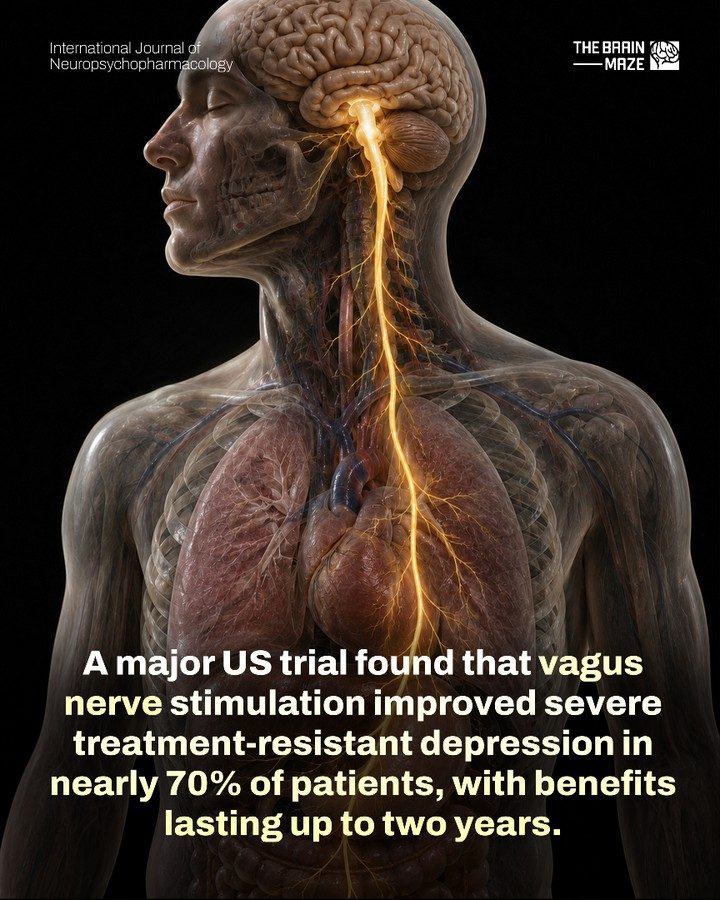
Vagus Nerve Stimulation: A New Hope for Severe Depression
Vagus nerve stimulation (VNS) is a non-invasive treatment that has shown promising results in managing severe treatment-resistant depression. A significant US trial, published in the International Journal of Neuropsychopharmacology, revealed that VNS improved symptoms in nearly 70% of participants. Many patients maintained these benefits for up to two years, highlighting the potential of VNS as a long-term solution for those who have not responded to traditional therapies.
Why This Matters
Depression is a complex and debilitating condition that affects millions of people worldwide. For those with treatment-resistant depression, finding effective relief can be an uphill battle. Traditional treatments, such as antidepressants and psychotherapy, do not always provide the necessary relief. VNS offers a new avenue for those struggling with severe depression, providing hope where other methods have failed.
Understanding Vagus Nerve Stimulation
What is the Vagus Nerve?
The vagus nerve is the longest nerve in the body, connecting the brain to various organs, including the heart, lungs, and digestive system. It plays a crucial role in the parasympathetic nervous system, which regulates the body's rest and digest functions. By stimulating the vagus nerve, it is possible to influence mood, anxiety, and other mental health conditions.
How Does VNS Work?
VNS involves the use of a small device that sends mild electrical pulses to the vagus nerve. These pulses are designed to modulate the nerve's activity, thereby influencing the brain's neurotransmitter levels and neural pathways. The goal is to restore balance and reduce symptoms of depression.
The Science Behind VNS
The US trial mentioned earlier provides compelling evidence for the efficacy of VNS. The study involved a large group of patients with severe treatment-resistant depression, all of whom had not responded to conventional treatments. The results were remarkable: nearly 70% of participants experienced significant improvements in their symptoms. Furthermore, many of these benefits were maintained for up to two years, suggesting that VNS can have lasting effects.
Practical Tips for Consideration
Consulting a Healthcare Professional
If you or someone you know is struggling with severe treatment-resistant depression, it is crucial to consult a healthcare professional. A qualified practitioner can provide guidance and determine if VNS is a suitable option. It is essential to understand the potential benefits and risks before proceeding with any new treatment.
Exploring Treatment Options
VNS is just one of many treatment options available for severe depression. Exploring different avenues, such as medication, therapy, and lifestyle changes, can provide a comprehensive approach to managing the condition. Combining VNS with other treatments may offer even better results.
Prepare for the Recovery Process
Recovering from depression is a journey, and it is essential to be patient and persistent. VNS may not provide immediate relief, and it could take time to see the full benefits. Staying engaged with your healthcare provider and following their recommendations can help ensure the best possible outcomes.
Important Takeaways
- Effectiveness: VNS has shown significant improvements in nearly 70% of patients with severe treatment-resistant depression.
- Long-Term Benefits: Many patients maintained their benefits for up to two years, indicating lasting effects.
- Individualized Care: VNS should be part of a comprehensive treatment plan, tailored to the individual's needs and in consultation with a healthcare professional.
Conclusion
Vagus nerve stimulation offers a promising new approach for managing severe treatment-resistant depression. The data from the US trial published in the International Journal of Neuropsychopharmacology provides compelling evidence of its effectiveness. For those struggling with this debilitating condition, VNS represents a beacon of hope, offering a path to improved mental health and a better quality of life.
Watch the Reel
Questions readers ask
What is Vagus Nerve Stimulation (VNS) and how does it work for depression?
Vagus Nerve Stimulation (VNS) is a non-invasive treatment that involves sending mild electrical pulses to the vagus nerve. This stimulation can help regulate mood and has been shown to improve symptoms in individuals with severe, treatment-resistant depression, offering a new avenue for those who have not benefited from traditional therapies.
How effective is VNS therapy for treating severe depression?
VNS therapy has shown promising results, with a significant US trial indicating that nearly 70% of participants experienced improved symptoms. These benefits were maintained for up to two years, suggesting that VNS could be an effective long-term solution for those struggling with severe depression.
Who is a good candidate for Vagus Nerve Stimulation therapy?
VNS therapy is typically considered for individuals with severe, treatment-resistant depression, meaning those who have not found relief through traditional treatments such as antidepressants and psychotherapy. It is important for patients to consult with a healthcare provider to determine if VNS is a suitable option for their specific situation.
What are the benefits of choosing VNS over traditional depression treatments?
VNS offers a non-invasive approach, making it a viable option for those who may not tolerate or respond well to traditional treatments like medications. It provides a potential long-term solution with sustained benefits, as evidenced by trials where participants maintained symptom improvement for extended periods.
Are there any side effects or risks associated with VNS therapy?
VNS is generally well-tolerated, but like any medical procedure, it can have side effects. Common side effects include hoarseness, throat pain, and coughing. More serious complications are rare, but it's crucial for individuals to discuss potential risks with their healthcare provider before starting treatment.
How long does it take to see results from VNS therapy?
The timeline for seeing results from VNS therapy can vary. Some individuals may experience symptom improvement within a few weeks, while others might take several months. It's important to maintain consistent treatment and communicate regularly with healthcare providers to monitor progress and make any necessary adjustments.
Related deep dives
Similar reads based on topic and creator.

Recent articles
Fresh deep dives from the latest Reels we unpacked.




Comments
Be the first to comment.