Generational Wealth Transfer
Why this matters
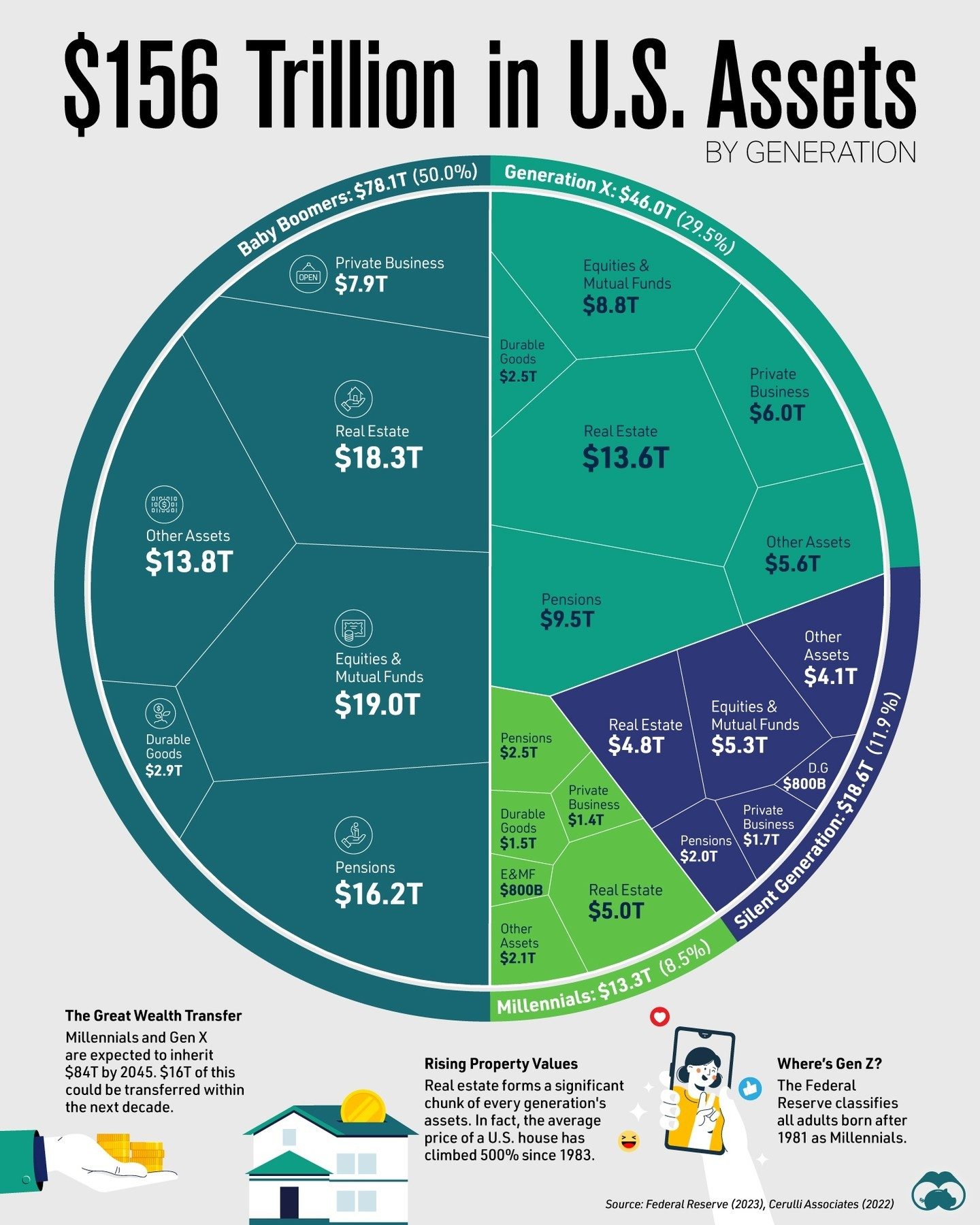
Understanding the distribution of wealth across generations is crucial for grasping the economic landscape of the United States. Currently, the U.S. holds approximately $156 trillion in assets. This substantial amount influences economic policies, social dynamics, and future planning. One specific demographic, the Baby Boomers, holds a disproportionate share of these assets, highlighting the unique economic power this generation wields. Today, we will delve into how wealth is distributed among the different generations and explore the upcoming generational wealth transfers in the United States.
The distribution of wealth
The total $156 trillion in U.S. assets is distributed across several generations, each holding varied portions of the total wealth. Here’s a breakdown:
-
Baby Boomers (born between 1946 and 1964): Baby Boomers hold the largest share of the assets, totaling $78.1 trillion, or 50% of the total. This generation makes up 21% of the U.S. population, underscoring their significant economic influence.
-
Generation X (born between 1965 and 1980): Following the Baby Boomers, Generation X holds $46.0 trillion, or 29.5% of the total assets. This generation, currently in their mid-30s to mid-50s, is often characterized by its substantial investment in real estate and equities.
-
Silent Generation (born between 1928 and 1945): The Silent Generation holds $18.3 trillion, which amounts to 8.5% of the total assets. Though smaller in number, their wealth is still a notable part of the national economy, especially in areas like private businesses.
Asset types
The assets held by these generations are categorized into various types, reflecting their investment strategies and economic activities.
-
Real Estate: Real estate is a significant component of generational wealth. Baby Boomers hold $18.3 trillion in real estate, while Generation X holds $13.6 trillion. The Silent Generation's real estate assets amount to $5.0 trillion. The value of real estate has seen a remarkable increase, with the average price of a U.S. house climbing 500% since 1983, making it a cornerstone of wealth accumulation.
-
Equities & Mutual Funds: Baby Boomers and Generation X have substantial investments in equities and mutual funds. Equities and mutual funds constitute $8.8 trillion for Baby Boomers and $19.0 trillion for Generation X. The Silent Generation has $2.5 trillion in this category.
-
Pensions: Pensions are another key component, particularly for the Silent Generation, with $9.5 trillion held in this category. Baby Boomers have $1.4 trillion, and Generation X has $800 billion.
-
Private Business: Baby Boomers have $6.0 trillion invested in private businesses, while Generation X holds $1.4 trillion. This category is crucial for understanding the entrepreneurial spirit of these generations.
-
Durable Goods: Durable goods, which include items like vehicles and home appliances, are also a part of generational wealth. Baby Boomers have $2.5 trillion in this category, while Generation X has $16.2 trillion.
The distribution of these assets plays a crucial role in the upcoming wealth transfer. The sheer scale of the assets held by each generation, combined with rising property values, indicates a significant economic shift in the coming years. This wealth transfer will have profound implications for future economic policies, investment strategies, and social dynamics.
The Great Wealth Transfer
The upcoming transfer of wealth from older generations to younger ones, often referred to as the "Great Wealth Transfer," is a pivotal economic event. This transfer involves the distribution of assets from Baby Boomers to Generation X, Millennials, and Generation Z. Key factors driving this transfer include:
-
Demographic Shifts: Baby Boomers are aging, and as they approach retirement, they will begin to pass down their wealth to the next generations. This demographic shift will significantly impact the economic landscape, with Generation X and Millennials becoming the primary beneficiaries.
-
Rising Property Values: The rising value of real estate is a critical aspect of the wealth transfer. As properties increase in value, the assets held by older generations will continue to grow, ensuring a substantial transfer of wealth to the next generations.
Where does Generation Z fit in?
Generation Z, born between 1997 and 2012, is just beginning to enter the work force and start accumulating wealth. While they currently hold a minimal portion of the total assets, their future economic influence will be shaped by the wealth transfer from older generations. Understanding their role in this transfer is crucial for planning future economic strategies and policies.
Practical tips
If you're part of a generation set to receive a portion of the wealth, here are some practical steps to prepare for the upcoming transfer:
-
Financial Planning: Understand your future inheritance and plan accordingly. Work with a financial advisor to create a strategy that aligns with your financial goals and risk tolerance.
-
Investment Strategies: Develop a diversified investment portfolio that includes real estate, equities, mutual funds, and other assets. Diversification can help mitigate risk and maximize returns.
-
Estate Planning: Ensure that your estate plan is in place to manage the transferred wealth. This includes wills, trusts, and other legal documents that protect your assets and provide for your beneficiaries.
-
Educational Preparation: If you are part of a generation set to receive a significant wealth transfer, consider investing in your education and skills. This will help you manage and grow your inherited wealth effectively.
Important takeaways
The distribution and transfer of generational wealth in the United States are dynamic and complex processes. Key points to remember include:
- Baby Boomers hold the largest share of assets, making them a significant economic power.
- Real estate, equities, mutual funds, pensions, and private businesses are the primary asset categories.
- The upcoming wealth transfer will have profound implications for future economic policies and social dynamics.
- Generation Z, while currently holding minimal assets, will play a crucial role in the future economic landscape.
Conclusion
Understanding the distribution and transfer of generational wealth is essential for navigating the economic landscape. By analyzing the assets held by each generation and the upcoming wealth transfer, we can better prepare for the future. Whether you are a beneficiary of the transfer or a policy maker, being informed about these dynamics will help shape a more secure and prosperous future.
Watch the Reel
Questions readers ask
Which generation currently holds the most wealth in the United States?
Baby Boomers, born between 1946 and 1964, hold the largest share of the approximately $156 trillion in U.S. assets. This generation's significant wealth accumulation has given them considerable economic influence.
What is the significance of understanding generational wealth distribution?
Understanding how wealth is distributed across generations helps grasp the economic landscape, influencing policies, social dynamics, and future economic trends. It also aids in anticipating the potential impacts of upcoming wealth transfers to younger generations.
How much wealth is at the stake in the upcoming generational wealth transfers?
The upcoming generational wealth transfers involve a significant amount of wealth, with Baby Boomers currently holding a large portion of the approximately $156 trillion in U.S. assets. This wealth transfer will reshape the economic landscape as younger generations inherit and manage these assets.
Why do Baby Boomers have such a large share of the wealth distribution?
Baby Boomers have had more time to accumulate wealth due to their age and the economic conditions they've experienced. They have benefited from decades of earning, investing, and inheriting assets, leading to their disproportionate share of the $156 trillion in U.S. assets.
What are the implications of the upcoming generational wealth transfers on economic trends?
The upcoming wealth transfers will likely reshape future economic trends, as younger generations, such as Millennials and Gen Z, will inherit and manage the assets. This shift in wealth could lead to changes in spending habits, investment portfolios, and economic priorities.
What is the estimated timescale for the generational wealth transfers?
The generational wealth transfers are already underway and will continue over the next few decades. As Baby Boomers age, they will gradually pass on their wealth to younger generations through inheritance, gifting, and other means.
Related deep dives
Similar reads based on topic and creator.


Recent articles
Fresh deep dives from the latest Reels we unpacked.




Comments
Be the first to comment.