U.S. Trade Shifts in Early 2026
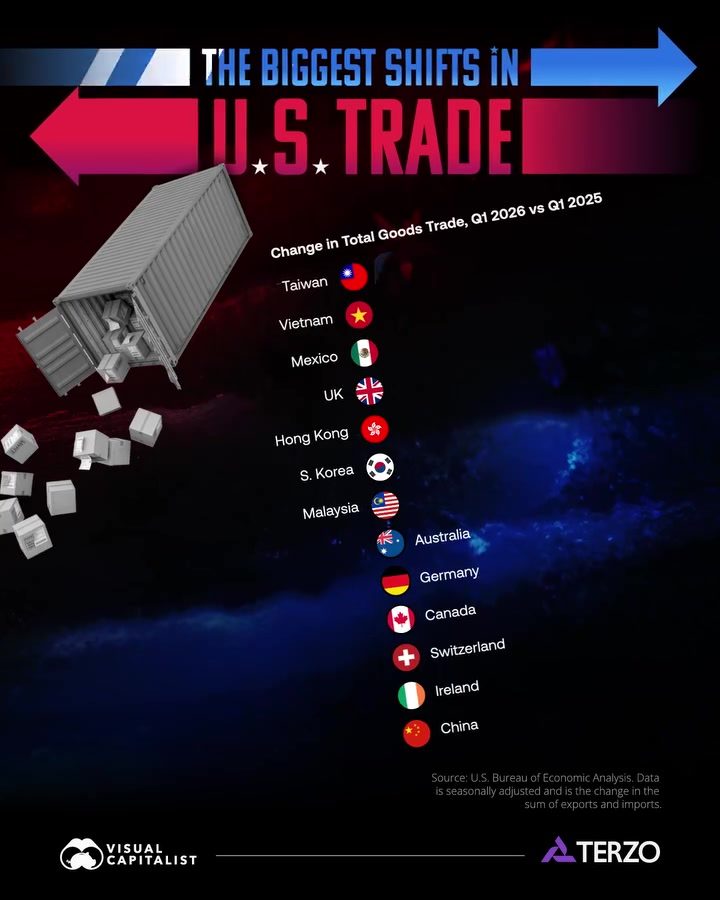
U.S. trade dynamics have undergone significant transformations, particularly in the first quarter of 2026. The trade landscape has seen notable shifts, with some countries experiencing increased trade activity while others face declines. This shift is particularly evident in the trade patterns with China and other key partners.
Why This Matters
Understanding these trade shifts is crucial for businesses and policymakers alike. Changes in trade flows can impact supply chains, economic growth, and geopolitical relations. By examining the biggest shifts in U.S. trade, we can gain insights into emerging trends, potential opportunities, and challenges that lie ahead.
Main Discussion
Declining Trade with China
One of the most significant changes is the decline in trade with China. This trend reflects a broader shift in global trade patterns, as the U.S. seeks to diversify its trade partnerships. The decline in trade with China is part of a broader strategy to reduce reliance on a single market and mitigate risks associated with geopolitical tensions. This shift has led to a re-evaluation of supply chains and a search for alternative sources of goods and materials.
Rising Trade with Taiwan, Vietnam, and Mexico
On the other hand, trade with countries like Taiwan, Vietnam, and Mexico has surged. Taiwan, for instance, saw a significant increase in trade by +$18 billion. This surge can be attributed to several factors, including favorable trade agreements, strategic investments, and the growing demand for technology and manufacturing goods. Vietnam and Mexico have also seen substantial growth, driven by their competitive labor costs and strategic locations.
Trade with Other Key Partners
Beyond these major shifts, trade with other countries has also shown notable changes. For example, the trade with the UK, Hong Kong, South Korea, Malaysia, Australia, Germany, Canada, Switzerland, and Ireland has seen varying degrees of change. While some countries have experienced growth, others have seen stagnation or even declines. This diverse picture highlights the complexity of global trade dynamics and the need for nuanced analysis.
Specific Industry Insights
Certain industries have also seen significant shifts. For instance, pharmaceutical shipments have normalized after a surge in 2025. This normalization indicates a stabilization in the supply chain, which could have broader implications for healthcare and pharmaceutical sectors. The infographic from Visual Capitalist, created in partnership with Terzo, provides a clear visual representation of these changes, making it easier to understand the complexities of trade flows.
Pharmaceutical Shipment Normalization
One notable sector that has seen significant changes is pharmaceuticals. The normalization of pharmaceutical shipments after a 2025 surge is a critical development. This normalization indicates a return to more stable trade patterns, which is essential for maintaining a reliable supply of pharmaceuticals. The stabilization in this sector is particularly important given the ongoing global health challenges and the critical role that pharmaceuticals play in public health.
Practical Tips
For businesses looking to navigate these trade shifts, several practical steps can be taken:
- Diversify Supply Chains: Reduce reliance on a single market by exploring alternative suppliers in countries like Taiwan, Vietnam, and Mexico.
- Monitor Trade Agreements: Stay informed about trade agreements and policy changes that could impact your industry.
- Invest in Technology: Utilize technology to optimize supply chains, reduce costs, and enhance efficiency.
- Engage with Local Markets: Establish partnerships and collaborations with local businesses to build stronger trade relationships.
Important Takeaways
In early 2026, the U.S. trade landscape has seen significant shifts, with notable declines in trade with China and surges in trade with countries like Taiwan, Vietnam, and Mexico. These changes highlight the need for businesses to diversify their supply chains and stay informed about global trade dynamics. The normalization of pharmaceutical shipments is a positive sign for the healthcare sector, indicating a return to stable trade patterns.
Conclusion
The shifting trade patterns in early 2026 present both challenges and opportunities. By understanding these changes and adapting to the evolving global trade landscape, businesses can position themselves for success. As the U.S. continues to diversify its trade partnerships and reduce reliance on single markets, staying informed and agile will be key to navigating the complex world of global trade.
Watch the Reel
Questions readers ask
What are the primary reasons behind the decline in U.S. trade with China in early 2026?
The decline in U.S. trade with China is primarily due to geopolitical tensions and shifts in strategic trade partnerships. Many U.S. companies are seeking to diversify their supply chains to reduce reliance on Chinese manufacturing.
Which countries are seeing an increase in trade with the U.S. in 2026?
Countries such as Taiwan, Vietnam, and Mexico are experiencing increased trade activity with the U.S. These countries are benefiting from U.S. companies looking to diversify their supply chains and reduce dependence on China.
How do these trade shifts impact global supply chains?
The trade shifts are prompting many companies to reassess and restructure their global supply chains. This can lead to increased production costs in the short term, but may result in more resilient and diversified supply chains in the long run.
What are the main drivers behind the increased trade with Mexico and Vietnam?
The increased trade with Mexico and Vietnam is driven by factors such as proximity (in the case of Mexico), lower labor costs, and favorable trade agreements. These countries offer attractive alternatives for U.S. businesses looking to mitigate risks associated with trade with China.
How do these trade changes affect U.S. imports and exports in 2026?
The trade shifts are leading to a redistribution of U.S. imports and exports. Imports from China are decreasing, while imports from countries like Vietnam and Mexico are increasing. Conversely, U.S. exports to these countries may also see a rise as trade partnerships strengthen.
What geopolitical considerations are influencing U.S. trade patterns in 2026?
Geopolitical considerations include trade disputes, political stability, and regional security concerns. These factors are prompting the U.S. to seek more stable and secure trade partners, which is reflected in the shift towards countries like Taiwan, Vietnam, and Mexico.
What opportunities and challenges arise from these trade shifts for U.S. businesses?
For U.S. businesses, the opportunities include accessing new markets and diversifying supply chains. However, challenges may include navigating new regulatory environments, potential increases in operational costs, and the need to establish new business relationships.
Recent articles
Fresh deep dives from the latest Reels we unpacked.




Comments
Be the first to comment.