U.S. Wealth Distribution
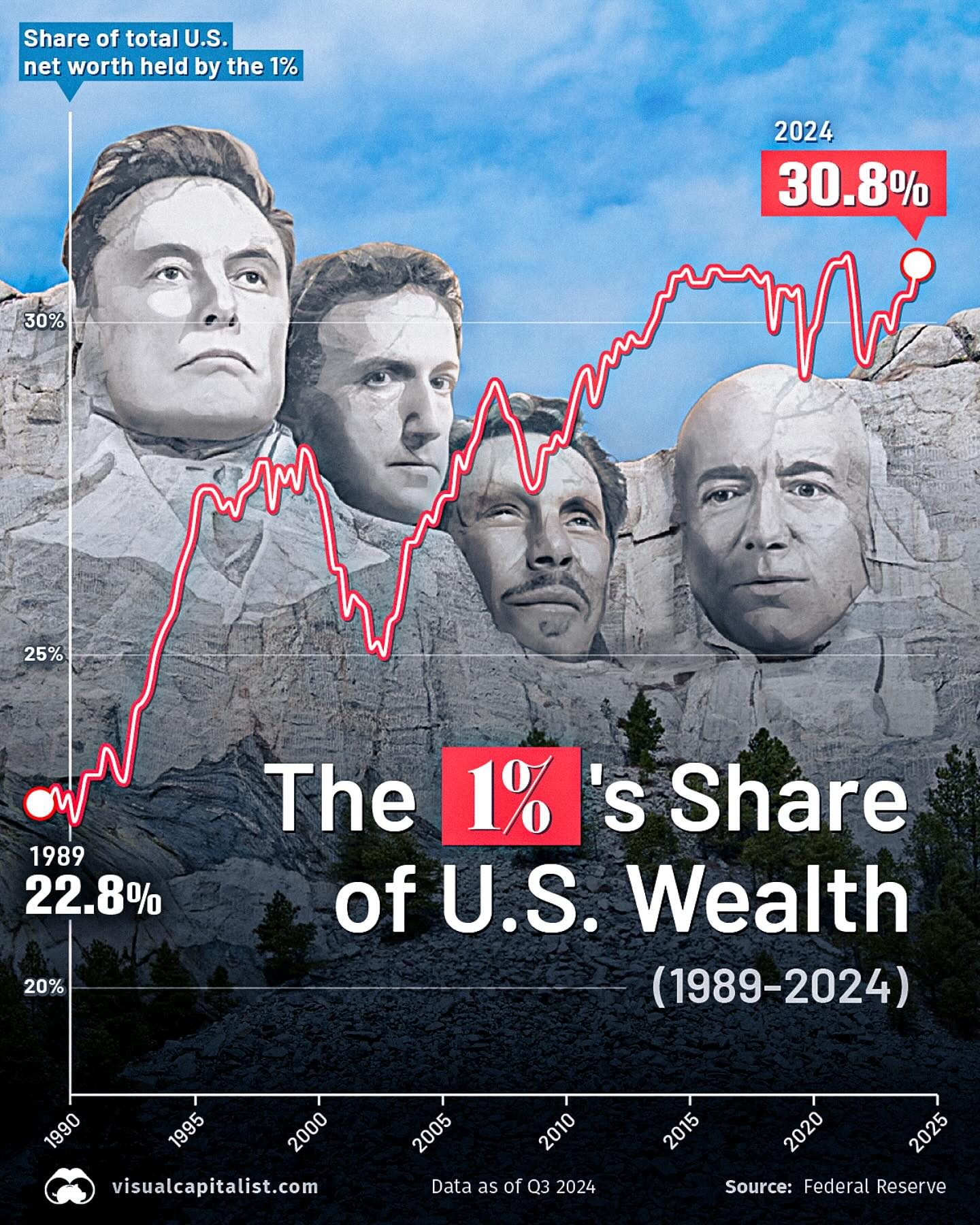
The wealthiest 1% of Americans have significantly increased their share of the country’s net worth over the last 35 years. This shift is evident in the data, which shows that in 1989, the top 1% held 22.8% of the total U.S. net worth. By 2024, this share has surged to 30.8%. This trend highlights a significant concentration of wealth among the highest earners.
Why This Matters
Understanding the distribution of wealth in the United States is crucial for several reasons. It provides insights into the economic trends, social dynamics, and financial policies that shape the nation. The wealth disparity can influence public policies, economic stability, and social cohesion. For instance, the wealth held by the top 1% can affect investment trends, consumption patterns, and tax revenue.
Main Discussion
Historical Trends
Over the past three and a half decades, the share of wealth held by the top 1% has steadily increased. In 1989, the top 1% held 22.8% of the total U.S. net worth. This figure has been rising consistently, reaching 30.8% by 2024. The significant increase in this share underscores the growing wealth concentration among the wealthiest Americans. This data, sourced from the Federal Reserve Economic Data (FRED) platform, provides a comprehensive view of the wealth distribution trends.
Factors Driving Wealth Concentration
Several factors contribute to the increasing wealth concentration among the top 1%. These include:
- Investment Returns: The top 1% often have access to higher-return investments, such as stocks, bonds, and real estate, which can generate substantial wealth over time.
- Income Inequality: The wage gap between the top earners and the rest of the population has been widening. This disparity means that a larger portion of the nation's income goes to the top earners, further increasing their wealth.
- Tax Policies: Changes in tax laws can also play a role. Policies that favor the wealthy, such as lower tax rates on capital gains and dividends, can help the top 1% accumulate more wealth.
Socio-Economic Implications
The concentration of wealth among the top 1% has several socio-economic implications:
- Economic Stagnation: Wealth concentration can lead to economic stagnation for the broader population. With a smaller share of the wealth, the middle and lower classes may have less disposable income, leading to reduced consumption and slower economic growth.
- Social Mobility: High wealth concentration can limit social mobility. Individuals from lower-income backgrounds may face barriers to upward mobility, as opportunities for education, employment, and entrepreneurship become more limited.
- Public Services: Wealth disparities can also impact public services. With a smaller tax base, governments may struggle to fund essential services, such as healthcare, education, and infrastructure.
Practical Tips
While the trend of wealth concentration is a complex issue, there are practical steps that individuals and policymakers can take to address it:
- Invest Wisely: For individuals, diversifying investments and seeking professional financial advice can help build wealth over time.
- Support Progressive Policies: Advocating for policies that promote equitable wealth distribution, such as progressive taxation and social safety nets, can help reduce wealth disparities.
- Promote Financial Literacy: Increasing financial literacy can empower individuals to make informed decisions about their finances, leading to better wealth management.
Important Takeaways
- The top 1% of Americans have significantly increased their share of the country’s net worth from 22.8% in 1989 to 30.8% in 2024.
- Factors such as investment returns, income inequality, and tax policies contribute to this trend.
- Wealth concentration has socio-economic implications, including economic stagnation, limited social mobility, and reduced public services.
- Practical steps, such as diversifying investments, supporting progressive policies, and promoting financial literacy, can help address wealth disparities.
Conclusion
The increasing share of wealth held by the top 1% of Americans is a significant trend that has implications for the broader economy and society. Understanding the factors driving this trend and its socio-economic implications is crucial for developing strategies to promote equitable wealth distribution. By taking practical steps, individuals and policymakers can work towards ensuring a more balanced and inclusive economy.
Watch the Reel
Questions readers ask
How much has the wealth share of the top 1% in the U.S. increased over the past 35 years?
The wealth share of the top 1% in the U.S. has increased from 22.8% in 1989 to 30.8% in 2024, marking a significant rise of 8% over 35 years.
What does the increase in wealth concentration among the top 1% indicate?
The increase in wealth concentration among the top 1% indicates a growing disparity in wealth distribution. This shift can influence economic trends, social dynamics, and financial policies in the U.S.
How does the wealth share of the top 1% affect the economy?
The wealth share of the top 1% can affect the economy by influencing investment trends, consumption patterns, and overall economic stability. A higher concentration of wealth can lead to different economic behaviors and outcomes.
What was the wealth share of the top 1% in 1989 and 2024?
In 1989, the top 1% held 22.8% of the total U.S. net worth. By 2024, this share had increased to 30.8%, showing a notable rise in wealth concentration.
Why is it important to track the wealth share of the top 1%?
Tracking the wealth share of the top 1% is important because it provides insights into the broader economic trends and social dynamics. It also helps policymakers understand the implications of wealth distribution on public policies and social cohesion.
What are the potential impacts of wealth concentration on society?
Wealth concentration can lead to various societal impacts, including increased income inequality, changes in political influence, and potential shifts in social mobility. It can also affect access to opportunities and resources for different segments of the population.
How does the wealth share of the top 1% compare to the rest of the population?
The wealth share of the top 1% has increased from 22.8% to 30.8% over 35 years, while the rest of the population's share has decreased accordingly. This comparison highlights the widening gap in wealth distribution between the top 1% and the rest of Americans.
Recent articles
Fresh deep dives from the latest Reels we unpacked.




Comments
Be the first to comment.